
Center Grove administration outlines plan to shift student start times and add teacher collaboration blocks
Get AI-powered insights, summaries, and transcripts
Subscribe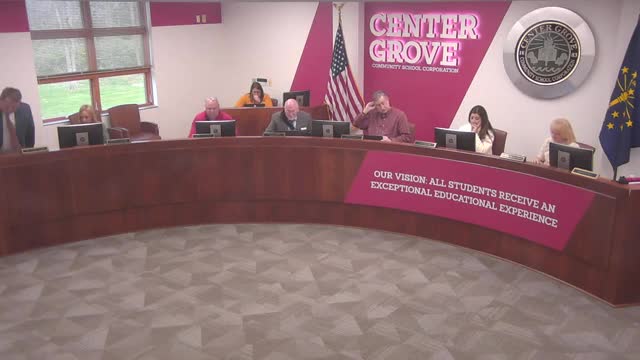
Summary
Administrators presented a final proposal to modestly shift student start times, shorten weekly teacher minutes by about 10 minutes and create dedicated PLC/PD blocks and elementary prep time. Board received the report; no vote was taken tonight.
Center Grove Community School Corporation administrators presented a final proposal to adjust student start times, create two regular blocks of teacher collaboration/professional development and add dedicated elementary prep time, saying the changes would increase on‑site teacher collaboration while keeping the district above state minimum instructional minutes. The board of trustees received the report and offered comment but did not take action; administration said the board previously approved related student schedule changes at an earlier meeting.
Administration framed the proposal as a way to align secondary start times more closely with teenage sleep cycles while providing teachers scheduled time for collective planning. “Our goal was originally to adjust the sleep time to better‑align with the sleep cycles of teenagers,” Doctor Long said in the presentation. The administration cited research on collective teacher efficacy and district survey results in presenting the schedule alternatives.
Why it matters: administrators said scheduled teacher collaboration time — PLCs and job‑embedded PD — would give teachers structured time to plan and follow up, which they argued has a larger effect on student learning than modest changes in class size. The proposed schedule also consolidates several required training hours into roughly six hours per year so training obligations are completed without taking additional whole days from instruction.
Administration-level details presented
- Current and comparison metrics: administrators said the district’s current elementary teacher workday is 7 hours 15 minutes and secondary teacher workdays are about 7 to 7.5 hours; the peer‑district average presented was 7 hours 40 minutes. Those figures were presented as minimums for comparison and administrators said many teachers work beyond the stated hours.
- Weekly change and training time: the plan trims about 10 minutes per week of teacher time in the aggregate and re‑allocates that and other small adjustments to create recurring PLC and PD blocks. The administration said collecting five minutes from multiple PLC/PD days and combining them yields approximately six hours annually that can be used for required trainings (for example, some suicide‑prevention components that require on‑site attendance every three years).
- Elementary schedule: the proposal adds three 25‑minute prep blocks for elementary teachers to use for planning and grade‑level collaboration; administrators said this was in response to elementary teachers’ heavier daily prep load. Lunches will start slightly later each day to accommodate the adjusted student day.
- Secondary schedule and supervision: high school and middle school templates keep five consistent instructional blocks for students and introduce two mornings that start earlier to host PLC/PD work. Site supervision blocks (arrival/release) remain in place; administrators described staggered schedules, no school bells, and shared teacher workspaces as components of the model.
Research, survey and community input cited
Doctor Long and other staff cited research that collective teacher efficacy has a sizeable effect on student learning; a slide referenced an effect size of 1.57. Administration also summarized internal survey results they said showed 46% of respondents felt the profession was collaborative and 64% of teachers ranked having collaboration time as their top professional priority. The presentation team said they had received 489 public comments during the planning process and used that input to revise the draft schedules.
Board and staff remarks
Board members and administrators praised the outreach and iterative process. “That effort that’s been put into this … was taken very professionally,” board member Mr. Daniels said. Doctor Simmers, a member of the administration team, said she expects the added PLC/PD time to “build the capacity” of instruction and offset reduced student minutes by improving instructional quality.
Process and next steps
Administrators said the board was not voting on the teacher start‑time or teacher workday components tonight; they characterized the schedule change as an administrative recommendation within the district’s authority and reminded trustees that a prior meeting had included a board vote on student schedule changes. Staff said they will continue building detailed school‑level schedules with principals and communicate with employees about childcare and coverage as school start times change.
Questions and clarifications raised during the meeting included class size averages (staff said typical Swedish class sizes observed during a referenced study trip were about 14), that technology use in early grades was culturally limited in the comparative example shared, and that student transportation patterns (walking and biking in the comparative example) differ from U.S. norms. Administrators repeatedly framed the proposal as a tradeoff: slightly reduced teacher daily minutes but substantially increased structured collaboration and prep time.
Taper: administrators said they will continue building implementation details with principals and staff and that additional communications to families and employees are forthcoming before the change is implemented.