
Lake Bluff trustees table Protect Lake County MOU after lengthy debate over scope and civil-liberties safeguards
Get AI-powered insights, summaries, and transcripts
Sign Up Free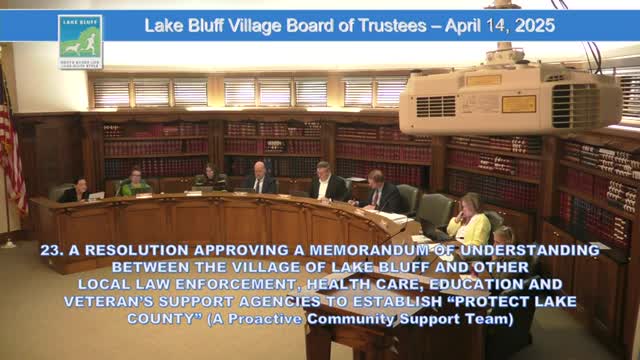
Summary
Trustees asked for more information and a workshop after a prolonged discussion of a proposed countywide multidisciplinary threat-assessment team; concerns focused on confidentiality, information-sharing and local implementation.
Lake Bluff — The Village of Lake Bluff Board of Trustees on April 14 received a detailed presentation about Protect Lake County, a proposed multidisciplinary community support team modeled on behavioral threat-assessment approaches, and voted to table the village's memorandum of understanding to join the effort until trustees receive more information.
Proponents described Protect Lake County as a county-level, multidisciplinary initiative — developed in part with university partners and a U.S. Department of Homeland Security grant — intended to identify and manage potential threats before violence occurs. The proposed membership includes local law-enforcement agencies, the Lake County state's attorney's office, schools, health-care providers, employers and social-service providers.
"You don't need names," the presenter said during the meeting, describing the team's early-stage operating concept. "We don't need to know so much of that personal identifying information ... we just need to know what's going on with the behavior." The presenter said the project draws on models used elsewhere, including New York State's county-level threat-assessment teams that grew from response to mass-casualty incidents.
Trustees and speakers pressed for clarity on how the team would operate, how confidential information would be handled and what legal guardrails would prevent overreach. Questions included when the team would convene (scheduled monthly meetings plus the ability to call emergency convenings), what partner agencies would contribute, and who would serve on an executive board that would develop policy and oversee operations. Several board members said they wanted more specifics about recordkeeping, training, allocation of costs and civil-liberties safeguards before approving a formal MOU.
Trustee discussion highlighted the tension between two goals: prevention of targeted violence and protection of individual rights. Trustees asked whether Protect Lake County would simply formalize existing informal contacts between agencies or whether the MOU would establish an operational body with different powers and reporting practices. Some trustees and attendees suggested bringing a subject-matter presenter from New York and returning the item for a focused workshop.
After extensive debate, the board did not approve the MOU; trustees agreed without objection to table the matter and asked staff to schedule a workshop and provide additional legal and operational details, including how the program would be funded and how the team would limit disclosure of confidential information.
Why it matters: The proposal would formally link law enforcement, schools, health-care, legal and social-service actors in Lake County to assess concerning behavior and coordinate responses. Supporters say multidisciplinary review can identify and mitigate threats before they escalate; critics and some trustees said the village must be sure the plan includes clear protections for civil liberties and transparent accountability mechanisms before signing on.
Next steps: Village staff will arrange a workshop, provide written clarifications of the MOU's confidentiality and governance provisions and invite external presenters to explain the New York model and its safeguards. Trustees requested a follow-up report before any final vote.