Get Full Government Meeting Transcripts, Videos, & Alerts Forever!
Get email alerts on the Zoning topic
No spam. Unsubscribe anytime.
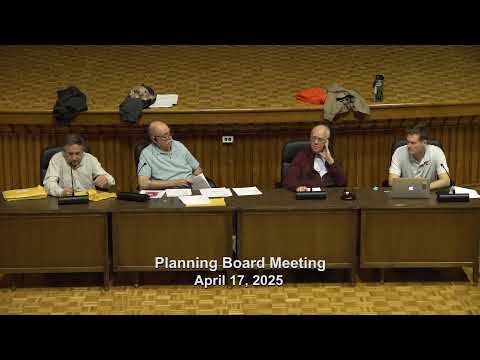
Peabody planning board deadlocks on GB2 zoning proposal for 143 Linfield Street
Summary
The planning board heard a petition to create a new GB-2 zoning district to allow multifamily housing by special permit at 143 Linfield Street. After public comment and board discussion, a motion to recommend the ordinance to the city council ended in a 3-3 tie, so the board issued no recommendation.
The Peabody Planning Board on April 17 heard a petition to create a new general business subdistrict called GB‑2 and to rezone 143 Linfield Street to that district; the board voted on a recommendation to the City Council but the motion ended in a 3-3 tie and did not pass.
The change proposed by 143 Linfield Street Holdings LLC would add multifamily residential as a use in GB‑2, require a minimum lot area of 10,000 square feet for multifamily, and leave dimensional standards (setbacks, height and frontage) the same as the existing GB district. Attorney John Kelty, representing the property owner, told the board the parcel is 25,990 square feet and that any residential development would require a special permit: "I would hope that, this evening you would consider a favorable recommendation to the city council." The applicant estimates a mixed‑use building with retail on the first floor and two residential floors above, yielding roughly eight units.
Why it matters: the petition would allow multifamily housing in a portion of the city where general business zoning has historically excluded residential uses, and opponents warned that the change would amount to spot zoning favoring a single owner. During public comment residents raised traffic, stormwater and neighborhood‑scale concerns. Lee Collins, who lives at 149 Linfield Street, told the board, "I think it is spot zoning ... trying to change the zoning to benefit the owner." Russell Donovan, an abutter, noted the city's general business definition previously excluded residential uses: "in the description, it says, residential use are not allowed." The board also discussed potential effects on inclusionary zoning and parking; staff and the applicant said residential parking would be provided to meet the parking requirements (two spaces per residential unit) and that the ground floor would remain commercial where floodplain rules prohibit ground‑floor residential.
Board deliberations focused on whether the change would be limited to this lot or create precedent that would encourage similar requests elsewhere. Attorneys and staff said that even if the rezoning were granted, any residential development would still require a special permit and follow dimensional standards. Community Development staff told the board it had worked with the applicant and had no formal objection to continuing to refine the proposal.
A motion to recommend the ordinance to the City Council was made and seconded; roll call recorded six planning board members: John Ford (yes), Roy Simos (no), Sean Walsh (yes), Matthew Ginzali (no), Tom French (no) and Thomas Bettencourt (yes), producing a 3‑3 tie. The chair announced "It does not pass," so the planning board will not send a positive or negative recommendation; the matter proceeds to the City Council for final action.
The file shows the petition would: create GB‑2 (allowing existing GB uses plus multifamily by special permit), amend Section 3.1 (new district), amend Section 4.2.5 (multifamily by special permit), amend Section 7.2 (minimum lot area 10,000 sq ft for multifamily), and redesignate 143 Linfield Street on the zoning map. The ordinance text provided by the applicant also includes standard repeal and effective‑date clauses. City Council is scheduled to hold a hearing on the petition next week; because the planning board vote was tied, the council will receive the record showing the planning board took no position.
Public comment and board members' requests for more information—particularly about the spot‑zoning risk, traffic, stormwater impacts and how the proposed GB‑2 would be applied elsewhere—were recorded repeatedly. Several board members said they wanted more time or additional analysis before making a formal recommendation.
Next steps: the planning board record will be sent to the City Council. The applicant may return with revised language or additional materials; any future development would require a special permit and site plan review if the council adopts the zoning change.