Get Full Government Meeting Transcripts, Videos, & Alerts Forever!
Get email alerts on the Fence Setback Variance topic
No spam. Unsubscribe anytime.
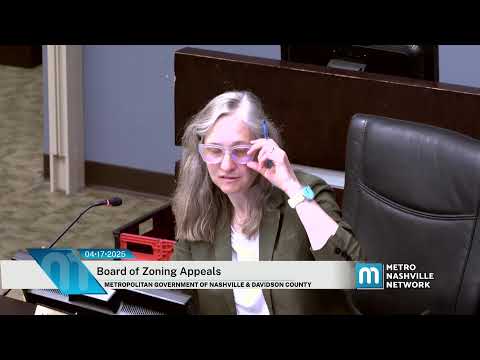
Board leaves decision unresolved on 6-foot privacy fence at 372 Glen Rose Ave.
Summary
The Metro Board of Zoning Appeals debated a variance request for a six-foot solid privacy fence built within the required 10-foot street setback at 372 Glen Rose Ave.; the board failed to adopt a denial motion and left the case on the agenda for the next 30 days so absent members may review the meeting video and vote later.
The Metro Nashville Board of Zoning Appeals on April 17 considered a variance request for a six-foot solid wood privacy fence that was built close to the sidewalk at 372 Glen Rose Avenue.
The zoning administrator, Joey Hargas, told the board the Davidson County zoning code requires solid fences to be set back 10 feet from the public right-of-way to be six feet tall; fences closer than 10 feet may be limited to 30 inches if opaque. Appellant Asen Chandra (US Healthcare Associates, property owner) said the fence was installed after repeated trespassing and break-ins at the house and that police could not guarantee security. Chandra said the installed fence sits about 2 feet 3 inches from the back of the public sidewalk.
Board members debated whether the property’s siting and topography create a hardship that justifies a variance for a solid fence. Several members, including Member Davis and the chair, expressed sympathy for the security concerns and said most of the fence complies except for a narrow front portion. Other members said a non-opaque fence or other security measures could meet code while protecting visibility at the corner. Hargas confirmed the fence does not violate the intersection visibility triangle but does sit within the 10-foot street setback that limits opaque fences.
A motion to deny the variance was made and seconded; the motion did not carry. Under the board’s rules the chair said the case will remain on the agenda for the next 30 days so the two absent members may review the hearing recording and cast votes at a subsequent meeting. If the motion remains tied after the two additional meetings that fall within the 30‑day window, the transcript record said the case will be deemed denied by operation of law.
The board did not issue a final ruling at the April 17 hearing; the applicant was told additional members who were not present could vote at the next meetings in May.
Because the board did not make a final determination at this hearing, no binding alteration of the fence was ordered; the applicant was advised of options including replacing the fence with an open-style fence that complies with the 10-foot setback or seeking the variance again when additional members participate.