Get Full Government Meeting Transcripts, Videos, & Alerts Forever!
Get email alerts on the Facilities Management topic
No spam. Unsubscribe anytime.
Victoria ISD officials outline more than $100 million in upcoming facility needs, ask board to form subcommittee
Summary
District administration presented a master facilities plan saying multiple HVAC, chiller and roof systems are at or past industry lifespans and that replacing them could exceed $100 million; trustees asked administration to prepare community outreach and an application process before appointing a subcommittee.
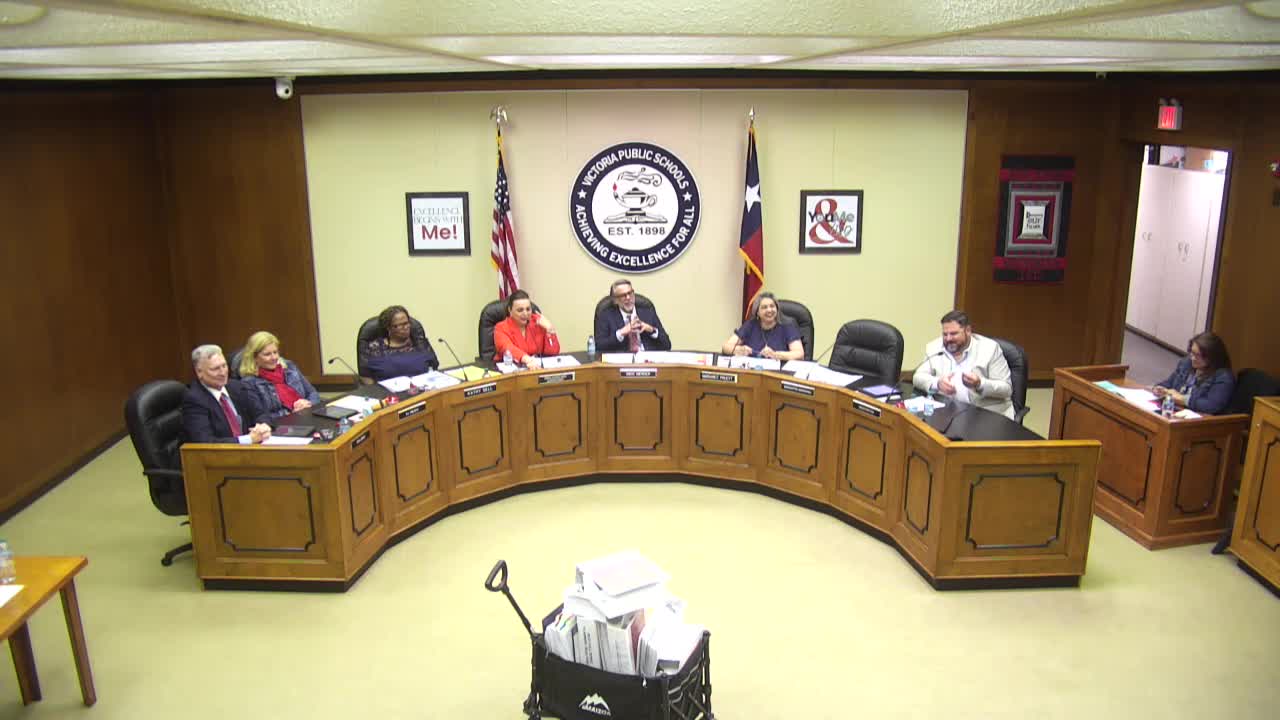
District administration told the Victoria Independent School District Board of Trustees on April 17 that the district faces large, near‑term costs to replace aging heating, ventilation and air‑conditioning systems, chillers and roofs across 29 district facilities, and asked the board to form a subcommittee to guide priorities and public outreach.
In a presentation, Randy Meyer, presenting for district administration, said the district used federal ESSER III funds to replace 136 HVAC units at a cost of $13,800,000 but that hundreds of other units remain aging and will need replacement in the next five to 20 years. “In our 29 district facilities, we have …” Meyer said, and later noted, “We were able to replace 136 units. That project was $13,800,000 that we as local taxpayers did not need to raise.”
Meyer framed facilities work as a multiyear, year‑by‑year planning problem rather than a single emergency fix. He gave counts and cost estimates: dozens of district HVAC units are past typical industry lifespans, 22 facilities have roofs 20 years or older, and district chillers (used in larger buildings and the aquatic center) are reaching or beyond their expected 20‑year lives. Meyer estimated roughly $61,000,000 to replace roofs currently 20+ years old and another $45,000,000 for roofs aged 15–19 years; chiller replacements vary by size but can cost several hundred thousand dollars apiece, and he cited a $2.5 million estimate to replace the Aquatic Center’s systems.
Meyer described tradeoffs the district has made to stretch limited funds: after bond referendums failed in 2017 and November 2021, administrators used reserve and operating funds to address urgent failures and deferred some pay increases and other expenses. He recommended developing and publishing a replacement schedule for every facility so the district and community can see what will come due in five, 10 and 20 years.
As next steps Meyer asked the board to form a facilities subcommittee, decide whether to use a community task force or a board‑driven priority process, and to consider timing for a potential maintenance bond. He described a draft timeline: form the subcommittee and community outreach in May, gather detailed cost data in June–July, and (if the board decides to call a bond) set an August deadline to place a measure on the November ballot. He noted a rough rule of thumb that a $50 million maintenance bond would cost roughly five cents on the local tax rate in current property‑value conditions, and that each penny of tax effort brings in about $10,000,000 under present values.
Board members and citizen‑oversight veterans urged early and active community engagement. Trustee Cathy Bell and others recommended replicating the Mission Valley bond oversight model that used a vetted citizen committee and frequent public communication; Meyer said administration could start an open application process now and bring nominations to the board in May for appointment. Trustees also discussed whether to wait until newly elected trustees are seated before forming long‑lived committees.
On a formal motion to create the facilities subcommittee, the board chose to postpone action so administration can prepare outreach materials and candidate applications; the chair moved to postpone indefinitely and the motion carried 6–0. The board also postponed a separate subcommittee vote on underused VISD properties, 6–0, while indicating the administration should proceed with preparatory work.
Meyer and trustees repeatedly emphasized that delayed, staggered replacement planning — rather than attempting to replace all systems at once — is the district’s preferred approach to avoid large simultaneous capital needs.
What’s next: administration will begin preparing a public brochure and an application process for citizen volunteers, provide the board with detailed replacement schedules and cost estimates through the summer, and return to the board with recommendations about committee structure and a bond timeline. The district said final decisions about bond size and tax strategy would rest with the board.