Get Full Government Meeting Transcripts, Videos, & Alerts Forever!
Get email alerts on the County Highway Facilities Relocation topic
No spam. Unsubscribe anytime.
Marathon County debates purchase of Kronenwetter parcels for new highway facility after public concerns about water and taxes
Summary
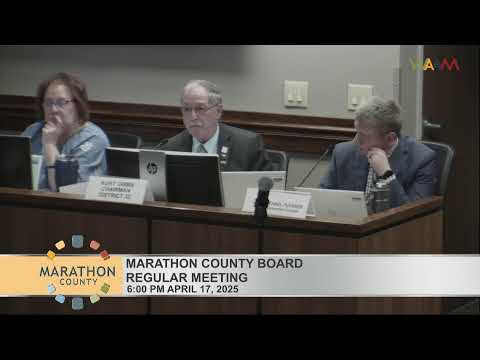
Marathon County supervisors on Monday discussed a proposal to buy parcels in the Village of Kronenwetter to relocate and expand the county highway facilities, drawing public comments that the village’s water system and taxpayers could be harmed if the sale proceeds without more local review.
Marathon County supervisors on Monday discussed a proposal to buy parcels in the Village of Kronenwetter to relocate and expand the county highway facilities, drawing public comments that the village’s water system and taxpayers could be harmed if the sale proceeds without more local review.
The issue matters because the county proposes to spend public money to buy land outside Wausau, relocate a long‑standing highway campus and potentially redevelop the current West Street site, which county staff say could offset some relocation costs.
Sean Domingue, a former member of the Village of Kronenwetter Water Board and the village utility committee, told the board he supported improving county highway facilities but said the county had not shared details with the village before placing “resolution R25‑25” on the agenda. “The assessment they gave did not consider the additional load from a residential development currently going through the approval process in Kronenwetter,” Domingue said. He urged the board to vote against the resolution, saying upgrades to the village system could cost “millions of dollars” and would require a lengthy Public Service Commission review.
Resident Guy Firdelt said the resolution, as written, would benefit Wausau by enabling redevelopment of the existing county highway site while the Village of Kronenwetter would receive no tax revenue from the new county property. “The resolution before the board would create a terrible one‑sided situation, which would greatly benefit the city of Wausau … On the other hand, the village of Kronenwetter would lose the opportunity for any development on the site,” Firdelt said, and recommended negotiating a payment‑in‑lieu‑of‑taxes.
Highway Commissioner Jim Griesbach answered water‑use concerns by estimating annual use for the proposed facility at roughly 800,000 gallons and putting that amount in local context: “A typical home uses about 50 gallons of water per person per day … If you do the math, if we’re using 800,000 gallons of water, that’s less than 11 homes a year that we’re using the water for.” Griesbach said much of the county’s water use on site would be for brine operations and would not equate directly to sanitary sewer returns.
Planning staff Shad Harvey said a municipal highway or public utility use is permitted under Marathon County and Kronenwetter zoning across residential and commercial districts, but that where properties fall in different districts the county would need to meet the separate standards for setbacks, screening and building size for each parcel. “The use would be allowed as long as you meet those standards,” Harvey said.
Corporation counsel (Mike) told supervisors that a rezone was not required for the proposed use but the project would need Kronenwetter site‑plan approval once the county owned parcels and had a finalized plan. “That involves an interaction with the village’s plan commission and the plan commission reviews the site approval plan against the applicable requirements of its zoning code,” he said.
County staff presented four conceptual layouts for the new site. The smallest proposed acquisition (three parcels, P1 and two Wisconsin Public Service parcels) would total about 18.22 acres and require no building demolition; larger layouts that include additional parcels would expand the site to about 19.6, 20.19 and up to 24.47 acres for the most expansive plan. Griesbach said Layout 4, the 24.47‑acre option, “gives adequate yard storage, so we can store material. So we are ready for emergency operations. It eliminates the blind spots.”
Administrator Lowery told the board the county has signed offers for several parcels and has offers outstanding for others; he said Phase I environmental reports had cleared for the Wisconsin Public Service parcels in front of the board and that the county would run additional environmental testing during an inspection period after an executed purchase. “If once we do architectural work and have plans to move forward with the site plan and it, for whatever reason, truly doesn't move forward, the recommendation I would make to you … is turn around and sell it,” Lowery said, adding that proceeds from any sale of the current highway site would return to the county’s highway fund.
Staff also discussed potential revenue from redeveloping the existing West Street campus to offset relocation costs. An appraisal contractor told the county the two better‑condition buildings on that site could fetch roughly $1.314 million and the remaining highway buildings another $2.285 million in one scenario, for a combined estimate around $3.6 million; staff said a strategic subdivision and sale could generate more but would take time.
Supervisors pressed staff on several procedural and fiscal points: Supervisor Lemmer asked whether the grading and excavation estimate included soil testing for contamination; Griesbach said environmental work is scheduled during the purchase inspection period and that Phase I work had already cleared for at least the parcels in the current offer. Supervisor Johnson asked whether the county could get preliminary site approval before spending roughly $750,000–$800,000 to buy parcels; corporation counsel and staff said site‑plan approval is a post‑purchase permitting process and that it is not standard to secure final plan approval before owning the parcels.
No final vote was recorded on the floor during the meeting. The resolution authorizing purchase of the P1 Wisconsin Public Service parcels (resolution R25‑25) was introduced for discussion and will be before the full board for a vote at an upcoming meeting, staff said. The county’s presentation materials and an appraisal presentation will be circulated to supervisors as follow‑up.
The discussion also included ancillary logistical details: traffic estimates from a consulting memo (staff said the site would generate roughly 200–250 vendor and delivery vehicle trips on peak days and that employee arrivals in summer could total 55–60 workers), and the county’s plan to engage Kronenwetter officials, adjacent landowners and neighborhood groups during the site‑plan process.
The board did not adopt any binding changes at Monday’s meeting; staff said offers to purchase remain in effect for several parcels and asked the board for direction when the matter is placed on the agenda for a formal vote.