
San Rafael and Marin County weigh interim shelters, tiny‑home villages and camping bans amid legal and funding constraints
Get AI-powered insights, summaries, and transcripts
Subscribe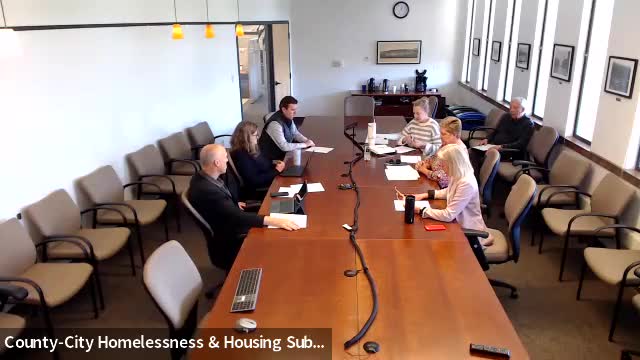
Summary
City and county officials on April 18 discussed expanding interim shelters, tiny‑home villages and sanctioned camping as part of a regional homelessness strategy, but said past court rulings, uncertain federal funding and limited local dollars complicate enforcement and long‑term operations.
SAN RAFAEL, Calif. — City and county officials met April 18 at a special joint wellness subcommittee meeting to discuss expanding interim shelter options — including sanctioned camps and tiny‑home villages — as a way to reduce street encampments while legal and funding questions remain unresolved.
City Manager Christine Lillovich told the subcommittee the city’s legal advisers have warned against imposing new, broad camping prohibitions unless “we need to have alternative shelter available to do any sort of additional prohibition.” Lillovich said the city plans to pursue interim shelter options rather than an immediate appellate legal fight over local camping rules.
The discussion centered on three practical constraints: legal risk from prior litigation, short‑term availability of operating funds, and the need for county participation. County Executive Derek Johnson told the group that housing vouchers secured during the pandemic will begin to lapse and keeping people housed will cost the county millions: “it’s about $4,000,000 a year,” he said, referring to the county’s estimated cost to preserve recently issued vouchers.
Why it matters: officials said a paired approach — adding interim shelter capacity while tightening time, place and manner restrictions in targeted locations — would make enforcement possible without displacing people into unmanaged encampments. City staff presented a hypothetical 60‑unit tiny‑home model in partnership with the nonprofit Dignity Moves, using remaining ERF (Emergency Response Fund) dollars as seed money while seeking county contributions and other funding.
During the meeting staff summarized rough order‑of‑magnitude costs presented to the subcommittee: a notional site purchase price discussed in the example was about $7,000,000; site and infrastructure costs were estimated roughly at $2.5 million; program operations were shown at about $1.6 million per year; and a three‑year program total in the materials was described as roughly $10.3–$11 million. Staff also said approximately $2.8 million remains available in the current ERF grant and the City has set aside about $1.5 million in general‑fund dollars for this purpose.
Legal context and enforcement: speakers referenced the city’s earlier litigation history and national cases that have shaped local enforcement. Officials cautioned that the federal and regional legal environment is complex and that a judge’s prior finding that the city lacked alternative shelter played a central role in earlier rulings; as a result, staff said the safer path for now is to build shelter capacity rather than immediately pursue appellate litigation. Lillovich emphasized the practical goal: provide alternatives so the city can, where appropriate, prohibit camping in defined public places and offer people an option.
Program design and operational questions: county and city officials and several presenters described operational preferences for a “closed” interim shelter model — controlled intakes, time‑limited stays and explicit plans to transition people into permanent housing — citing prior experience in other jurisdictions where loosely managed sites were overwhelmed. County and city participants discussed a graduated approach: sanctioned camping or tent sites as an initial step and tiny homes or similar units as a subsequent step, with active case management to move people toward permanent housing.
Funding and scale tradeoffs: participants debated whether to prioritize keeping currently housed people stably housed or to invest in interim sites that absorb people living in tents. Staff noted much of the one‑time funding seen in other projects is ephemeral and that operating funds, not just capital, are the principal constraint. Officials also flagged federal funding uncertainty: staff said Homekey and other one‑time sources have sunset clauses and that recent federal budget proposals could reduce health and housing funding.
Community experience and next steps: presenters said the Mahone sanctioned camping site has reduced scattered encampments and calls for service where it operates, and staff suggested that model elements could scale if paired with stable operations and funding. A public commenter, John Vidchoff, urged a systems review of coordinated entry and suggested trained volunteers supplement casework; he also urged expansion of sanctioned camping, saying camps “concentrate people for easier access to service.”
No formal vote or commitment was recorded at the meeting. Staff asked the subcommittee to indicate the county’s potential level of contribution so the city can decide whether to program the remaining ERF dollars before the grant’s June 30 deadline. Officials said they will continue drafting options and bring funding parameters to the board and the public for further discussion at future budget hearings.
Ending: Members agreed the issue requires more time than the meeting allowed and signaled a desire to present costed options and funding scenarios at upcoming budget deliberations, while continuing interagency coordination on shelter models, enforcement timing and funding plans.