Parents and staff tell Lake Travis ISD board shortages tied to pay and proposed aide cuts risk student services
Loading...
Summary
Multiple staff and parents told the Lake Travis ISD board that school psychologists and fine‑arts aides are leaving amid pay gaps and budget proposals; speakers urged restoring or protecting aide positions and raising psychologist pay to retain staff.
At the Lake Travis Independent School District board meeting, multiple teachers, aides and parents urged the board to address staff shortages in special education and to reverse or reconsider proposed cuts to fine‑arts aide positions.
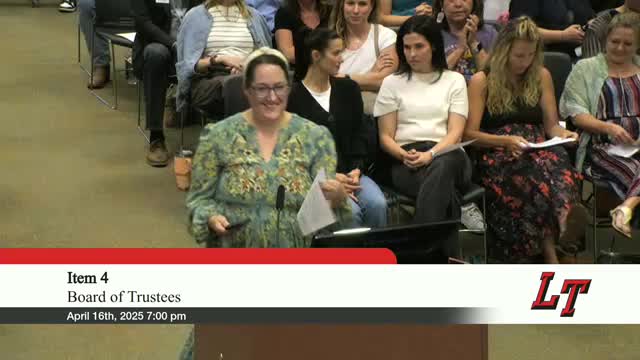
The most direct account came from Ashley Rue Hunter, a district school psychologist, who said her pay is lower than starting psychologists in neighboring districts and that resignations are rising. “As a 21‑year practicing school psychologist, I earn less money in Lake Travis ISD than a starting school psychologist … Current data shows we have lost more than 20% of our school psychologists in 2022–23 and 23–24,” Hunter said during public comment, adding that as of a Monday she emailed the board “25 percent of our school psychology and educational diagnostician team has resigned for next school year,” and that the figure had risen “to 33 percent” by the time she spoke.
Multiple elementary fine‑arts teachers and aides described how classroom aides enable the district’s music and art lessons, saying the aides’ removal would reduce instructional quality and safety. Lakeway Elementary art teacher Kristen Blauvelt said her campus’s art aide “is a rock star” who handles materials prep, one‑on‑one help and kiln work for clay projects, and warned “If you take my aide away, our parents and students will notice a difference.” Music teacher Megan Inejosa and music aide Adrian Atkins described similar classroom and rehearsal duties, including instrument setup, small‑group practice and behavior support.
Other speakers underscored the staffing and compensation problems in special education. Cindy Decker, a CPAC (Special Education Parent Advisory Council) member, read an anonymous staff letter that placed the pay gap for school psychologists at $18,451.99 compared with the highest‑paying neighboring district and said Lake Travis ranks fifteenth among 16 nearby districts for compensation.
Board President Archer and trustees thanked speakers for their comments and said the district would consider them while proceeding through budget and personnel discussions.
Community members asked the board to prioritize classroom aides and special‑education staffing over other positions and to examine recruitment and retention options. Speakers named specific effects: fewer specialized assessments on campuses, reduced ability to run advanced fine‑arts projects, and additional workload for remaining staff.
The board did not take an on‑the‑spot policy vote during public comment. Several trustees later thanked speakers and acknowledged they would consider the concerns in upcoming budget decisions.
Ending: The comments concluded before the board moved on to public hearings and scheduled agenda items; multiple speakers requested follow‑up from administration on staffing and compensation plans.