
Vermont Community Foundation warns federal funding pullback and tariffs could strain nonprofits; urges long-term focus on housing and childcare
Get AI-powered insights, summaries, and transcripts
Subscribe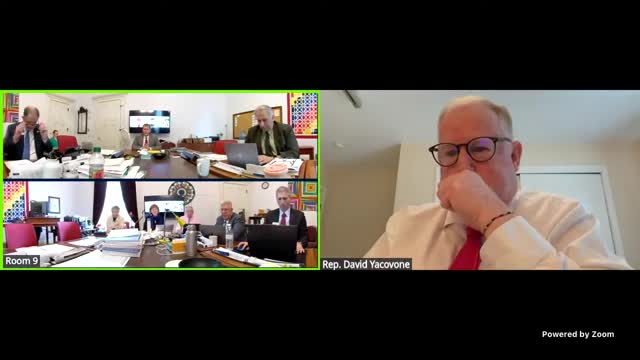
Summary
Dan Smith, president and CEO of the Vermont Community Foundation, told the House Appropriations Committee on April 18 that nonprofits face three “orders of impact” from federal funding retrenchment and rising costs, and urged the Legislature to balance urgent needs with sustained investment in housing, childcare and workforce pathways.
Dan Smith, president and CEO of the Vermont Community Foundation, told the Vermont House Appropriations Committee on April 18 that nonprofits and communities across the state face mounting pressure as federal funding winds down and costs rise, and he urged lawmakers to pair short-term crisis responses with sustained long-term investments in housing, childcare and workforce development.
Smith warned of three “orders of impact” hitting the nonprofit sector: small organizations whose budgets could be largely eliminated, larger nonprofits that lose specific grants and must shrink or reorganize, and broader system-level effects driven by higher costs and policy changes. “Organizations that are deeply afraid of what's playing out,” he said, describing staff in his community impact program fielding “inbound calls, all day, every day.”
Why it matters: Vermont’s nonprofit sector delivers many social services that state and local governments rely on. Smith said the combined effect of federal grant unwinding, potential Medicaid changes and cost increases such as tariffs on food imports could aggravate food insecurity, strain health and education systems, and force service reductions.
Smith highlighted concrete figures and examples. The Vermont Community Foundation (VCF) manages roughly $400 million in assets, he said, and has distributed about $133 million in recent years; roughly half of the foundation’s total grantmaking has occurred in the last five years. The foundation also manages a Vermont mission investment pool—about $22 million—that it uses for downtown revitalization, affordable housing and startup investments. Smith said the Vermont Food Bank buys about $1 million of food from Canada each year, and a 25% tariff would raise that cost to approximately $1.25 million.
Smith described recent waves of demand that shaped the foundation’s work: pandemic response beginning in 2020 followed by flood relief. He said those emergency efforts have left philanthropy stretched and argued the legislature should resist equating emergency relief with longer-term system-building. “Time to fix the roof is before the rain starts, but right now the rain is already starting and we still gotta fix the roof,” Smith said.
On housing and workforce, Smith urged a mix of public dollars and policy changes to speed construction and broaden ownership, saying money helps in some segments but lowering regulatory friction and empowering builders who can produce lower-cost homes will be equally important. He identified childcare, early college pathways and career training as priority areas to sustain middle-class opportunity and retain workers: “If we don't move more dramatically in shorter order on those big things, we will continue to get older, smaller, and poorer,” he said.
Committee members pressed Smith on several topics: whether downturns reduce donor contributions (Smith said VCF is somewhat insulated because many donors give through endowments and one-time events, but small-dollar giving often shrinks in downturns); nonprofit consolidation and capacity building (VCF runs a nonprofit capacity-building program and may help fund consolidation conversations); and examples of places that have reversed demographic decline (Smith cited Springfield investments including Park Street revitalization, the Black River Innovation Campus, and downtown co‑op relocation as local strategies to spur entrepreneurship and make downtowns livable).
Smith also urged state leaders to consider regional approaches that let small towns participate without losing identity. He said philanthropic funders can act as apolitical conveners to identify structural “third rails” and to push long-term civic design changes that elected officials and short budget cycles struggle to address.
No formal committee action or votes were taken during the session; Smith’s appearance was testimony and discussion. The committee adjourned until its next scheduled meeting.