Get Full Government Meeting Transcripts, Videos, & Alerts Forever!
Get email alerts on the School Bell Times topic
No spam. Unsubscribe anytime.
Marion County board hears principals' requests to tweak school bell schedules, asks staff to model Osceola alternatives
Summary
Superintendent Diane Gullett opened an April 17 Marion County School Board work session briefing on recommended start–stop bell times for the 2025–26 school year, saying the proposals came from principals and that principals were present to answer questions.
Superintendent Diane Gullett opened an April 17 Marion County School Board work session briefing on recommended start–stop bell times for the 2025–26 school year, saying the proposals came from principals, not transportation staff, and that principals were present to answer questions.
The district’s scheduling committee — made up of elementary, middle and high school principals, principal supervisors and transportation staff — recommended continuing the district’s three-tier bell system and presented specific changes: two new elementary schools (referred to as School W and School X) would follow typical elementary hours (7:35 a.m.–2:10 p.m.); Madison Street Elementary would add 10 minutes to student day (dismissal to 2:30 p.m.); Lake Weir High would begin five minutes later; and Osceola Middle was recommended to change dismissal from 3:55 p.m. to 4:11 p.m. to support a move to a seven-period day. Howard Middle and North Marion Middle requested moves from a seventh-period configuration back to a six-period day, producing earlier dismissals (4:11 p.m. to 3:55 p.m.).
Board members questioned the instructional and staffing impacts of adding a seventh period. Board member Dr. James noted earlier district goals when the seven-period pilot began — increasing students’ opportunities to recover credits — and asked whether data showed that the seven-period model achieved those aims. Principals and supervisors said early evidence is mixed: North Marion has run a seven‑period day for three years and reported little measurable credit-recovery improvement, while some schools report reduced retention and improved opportunities for intervention, depending on local needs.
Transportation Director (presenting) told the board that shifting a school from one tier to another would not simply “move” existing runs: returning Osceola to an earlier tier would add roughly 10 elementary runs to the already-heavily used first tier and likely require additional buses and drivers. He reported recent improvements in on-time AM arrival rates (about 93% or above in the last three weeks, compared with lower rates the previous year) that district staff attributed to the three-tier approach, and explained moving a school’s bell could create pressure elsewhere in the routing plan.
Several board members and speakers pressed for more, earlier communication to families when items that affect parents — bell times, schedules and pass-downs affecting teacher assignments — are placed on a work-session agenda. Dr. James urged the district to send targeted SkyAlert notices to affected schools when items that affect families appear on boarddocs. Board members also requested a quick check by transportation staff on the feasibility of moving Osceola to the second tier before the board’s upcoming vote; staff agreed to return details by email and to bring a short update to the board meeting schedule so the full board could act Tuesday if desired.
A representatives of the Marion Education Association raised concerns about the process and late timing for staffing changes: the union president said changes that shift planning or contract time can affect teacher planning time, transfer opportunities and supervision needs, and asked for clearer involvement of bargaining-unit representatives in future scheduling decisions.
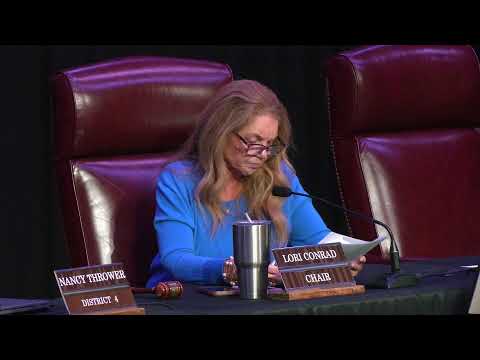
Board Chair Amber Conrad thanked transportation and principals for the work and said she supported the committee’s recommendations while asking staff to provide a second‑tier analysis for Osceola to the board by the time the matter reaches Tuesday’s agenda. The board did not take a formal vote at the work session; members instructed staff to prepare materials for the board’s April 22 work-session follow-up and an April 29 business meeting vote.
Ending: The board directed staff to model a second-tier option for Osceola and to return with routing-run estimates; the schedule proposals otherwise will proceed toward formal board consideration at the upcoming meeting cycle.