
Council pauses enforcement of commercial-vehicle rule, adds residential parking-permit discussion after residents raise concerns
Get AI-powered insights, summaries, and transcripts
Subscribe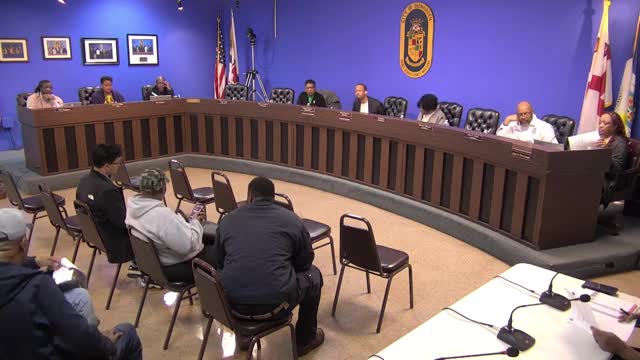
Summary
Council President Curtis on Monday moved to add discussion of the city’s residential parking permit (RPP) pilot to the agenda after several residents turned out to describe narrow streets crowded with work vans and long-term parked vehicles.
Council President Curtis on Monday moved to add discussion of the city’s residential parking permit (RPP) pilot to the agenda after several residents turned out to describe narrow streets crowded with work vans and long-term parked vehicles.
The council added the topic by unanimous consent; Curtis then described the city’s recent approach to commercial-vehicle enforcement and the county standards that govern lettering and weight limits.
Why it matters: Residents from Ward 1 and other neighborhoods told the council that multiple work vehicles on narrow streets are creating safety and quality-of-life issues and could depress home values. The exchange clarified what the city can and cannot change because Prince George’s County sets some standards for vehicle weight and lettering.
Council President Curtis said the council had paused active enforcement of parts of the city’s commercial-vehicle ordinance to get more community input: “We suspended the enforcement of Ordinance 4 — we paused enforcement; ordinance 4 is still intact, so people can have vehicles up to 8,500 pounds in their driveway.” Mr. Green (staff member) and others explained the county standard and how county code restricts commercial vehicles on residential streets.
County rule cited in the meeting: Prince George’s County Code section 27-6305(h)(2)(d), revised in January 2025, limits residential parking of commercial vehicles to one per property not exceeding 8,500 pounds gross vehicle weight and specifies that “advertising other than a firm or company name not exceeding 4 inches high” is allowed. Mr. Green read the county language during the meeting and confirmed the 8,500-pound threshold.
Residents described impacts. James, a resident of Echo Avenue, asked whether the proposed permit program would force homeowners who use a work van for their livelihood to pay for storage. “I don’t have a commercial vehicle, but I just wanted to know what are we doing about … I got a rack on my truck,” James said. Victor, who said he works in Virginia, told the council that parking limits would affect his ability to earn a living: “For me to not even be able to park a commercial small van, cargo vehicle under 10,000 pounds, it just seems unfair because that’s how I bring bread to my table.”
Code enforcement officer Tamika Jones described the on-the-ground approach: she said enforcement teams try to speak directly with vehicle owners, give seven days’ notice for clear violations and prioritize “clear-cut” commercial vehicles — vehicles that are fully wrapped, bear large lettering or exceed county size limits. Jones said most interactions were verbal notice rather than immediate citation and noted code enforcement is short-staffed: “We are trying to do everything possible… but it is very hard to please everybody.”
Council clarifications and limits: Councilman Herring and Mr. Green explained the city cannot be less restrictive than the county. Council members repeatedly noted the difference between enforcement (what officers or code staff do day to day) and what the council can change by ordinance or lobbying at the county level. Curtis emphasized that the council will not attempt to override county code: “We cannot trump the county on that rule.”
What’s next: The council added the RPP discussion to the agenda so residents could comment tonight and said staff would provide updates about the pilot’s scope and timing. Several council members urged residents who want broader changes to take their concerns to Prince George’s County, where the statutory limits originate.
Ending: The debate ended with council and staff acknowledging competing goals — protecting residential streets and accommodating residents who use vehicles for work — and a commitment to return to the topic with more staff analysis and community input.