Get Full Government Meeting Transcripts, Videos, & Alerts Forever!
Get email alerts on the School Finance topic
No spam. Unsubscribe anytime.
Silver Creek officials outline $62.8 million school referendum; residents raise tax, transfer and capacity concerns
Summary
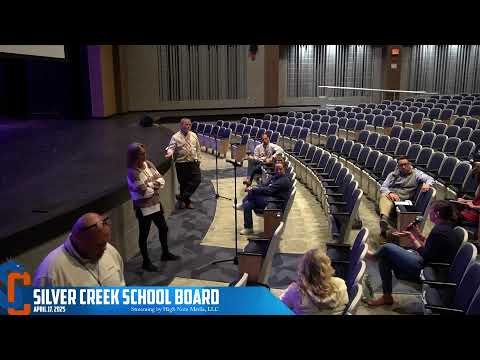
Silver Creek School Corporation leaders presented details of a $62.8 million referendum proposal during a town-hall work session at Silver Creek High School, and residents pressed officials on tax impacts, transfer-student policies and whether modular classrooms would be the fallback if the ballot measure fails.
Silver Creek School Corporation leaders presented details of a $62.8 million referendum proposal during a town-hall work session at Silver Creek High School, and residents pressed officials on tax impacts, transfer-student policies and whether modular classrooms would be the fallback if the ballot measure fails.
Superintendent Chad Briggs said the proposal would fund a new elementary school, an expansion of the primary school and adaptations to the current elementary and middle schools so grade bands shift. “We do this for our kids. It's not cheap to do it for our kids,” Briggs said, adding the district expects projects to take about three years even if voters approve the referendum.
The proposal’s estimated total is $62,800,000, which Briggs broke down as just over $50 million in construction costs and roughly $12.5 million in soft costs. Todd Ballmer, the district’s assistant superintendent and chief financial officer, showed a tax calculator on the district website and gave an example for homeowners: for a $300,000 house the district provided, the referendum would increase annual property tax liability by about $629 (roughly $52 per month) under the assumptions used in that example.
Why it matters: The projects would be paid through property-tax-supported municipal bonds spread over roughly 20 years, and the district has already used prior bond issuances for recent construction. Officials said delaying would likely raise future costs. “If we do nothing, it’s going to get there pretty rapidly,” Briggs said of building and capacity pressures, and he told the audience that the district bought about 22 acres as a site for a new school to preserve long‑term options.
What’s proposed and the timeline: Briggs and district staff said the referendum would fund three principal actions: build a new neighborhood elementary, expand the primary school to add preschool capacity and reconfigure grade spans so the elementary and middle schools gain capacity. The package also includes a proposed field house; Briggs said the field house design and price would scale with budget priorities and that the field house would be the last thing built after educational spaces were addressed.
Enrollment, capacity and transfers: District officials presented current capacities and projections. Briggs said the primary school is about 20% over capacity, the elementary about 5% over and the middle school about 21% over capacity under current grade configurations. He said the proposed reconfiguration would push many buildings below capacity (for example, the middle school would move from about 21% overcapacity to about 22% undercapacity after the changes). The district also said roughly 27% of its student body are transfer students; that figure drove repeated questions from residents about whether taking transfers has fueled the need for new buildings.
Officials’ fiscal and legal framing: Ballmer explained the 44% figure that appears on referendum wording is the formulation required by Indiana law for the ballot question and advised taxpayers to use the district’s online tax calculator to see individual impacts. Financial advisor Chad Locklock (spoke at the meeting as the district’s bond counsel/financing advisor) told residents municipal bonds of this type are typically repaid over a term of up to 20 years.
Community concerns and exchanges: Residents and parents focused on several recurring issues: - Tax burden on fixed‑income residents. Several speakers, including Carol Johnson, said the proposed levy is a steep increase for older homeowners and others on fixed incomes; Johnson said the $523–$629 annual examples she’d seen were unaffordable for some neighbors. - Whether transfer students drive capacity. Multiple speakers pressed district leaders on the role of out‑of‑district transfers. Parent and resident Brandon Nance criticized what he described as inconsistent messaging about whether the problem is class size or physical space, and asked for a clearer district vision for managing transfers. Briggs and other administrators said the district manages transfer approvals annually and that some grade levels are already closed to new transfers depending on capacity needs. - Plan B if the referendum fails. Officials said the short‑term fallback would include relocating or adding modular classrooms and other operational adjustments; Briggs said the district would “go back to the drawing board” if voters reject the proposal and continue to operate in current facilities while evaluating options. - Prior bonds and project scope. Community members asked why some earlier work did not cover all needs; board members said earlier projects were value‑engineered after construction bids came in higher than initial estimates and that detailed accounting for past bond dollars is on the district website.
Special education, “specials” and instructional space: Parents and staff described noncore instructional needs that they said lack dedicated rooms today. Briggs and several parents stressed that music, art and intervention services now often occur in classrooms or hallways (“art on a cart,” Briggs said) and that the referendum’s educational‑space elements would create dedicated rooms for those services.
Other financing, local government and policy notes: Residents asked about tax-increment financing (TIF) and whether town redevelopment funds could help. District officials said available TIF revenue in nearby redevelopment areas is largely committed and would only yield a small amount now; they also said the school district is represented on redevelopment conversations but does not control TIF disbursements. Multiple residents referenced Senate Bill 1 (SB1) and state budget changes that they said reduce district revenue; officials acknowledged state changes as an added fiscal pressure but did not cite a specific statutory citation beyond noting the broad effects on local government revenue flows.
What officials asked and next steps: District staff asked residents to use the online tax calculator and the district’s FAQ page for specifics and said written questions submitted by email would be posted on the website. No formal vote was taken at the meeting. The board adjourned after public comment; the district will place the referendum on the ballot if the board follows its planned schedule and voters approve it.
Ending: The meeting closed after roughly 2½ hours of presentations and public comment. District leaders reiterated the central pitch of the referendum as a multiyear plan to add permanent instructional space and reduce current use of modular classes and hallway instruction, while residents continued to press the board on near‑term tax impacts and how transfer‑student policy affects capacity.