
Regional ambulance service outlines operations, costs and AED program for Narberth
Get AI-powered insights, summaries, and transcripts
Subscribe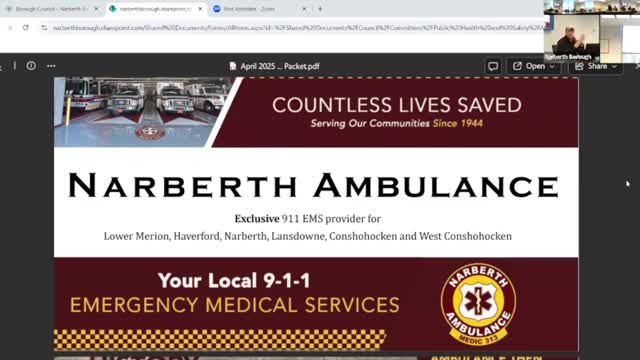
Summary
An ambulance service representative told Narberth’s Public Health & Safety Committee on April 11 that the borough generates relatively few 9‑1‑1 calls but that the service faces rising equipment costs, hospital off‑load delays and reimbursement pressures.
An ambulance service representative briefed the Narberth Public Health & Safety Committee on April 11 about local call volumes, response times, and its automated external defibrillator (AED) program.
The presenter said the service is a “pure 9‑1‑1 system” focused on emergency response, not patient transport to long‑term care, and that the organization handled about 16,000 calls countywide last year with Narberth accounting for roughly 200 of those calls. The presenter said the borough’s average ambulance response time is 7 minutes, 13 seconds, below an 8‑minute guideline, and that the service added a “float truck” about a month before the meeting to respond to peak demand.
The presentation stressed operational and fiscal pressures. The ambulance the service expects to receive within about 45 days cost approximately $350,000, the presenter said. He also described reimbursement challenges: roughly 60% of the service’s transports are covered by Medicare or Medicare supplement plans, about 20% by private insurers, and approximately 16% are self‑pay; the speaker said Medicare reimbursement can cover only about a third of the service’s actual costs and that private insurers and high‑deductible plans have made collection more difficult. Typical patient bills cited ranged from about $1,300 to $2,000 depending on level of care.
Hospital off‑load delays were a second operational concern. The presenter said delays at regional hospitals have pulled ambulances out of service while crews wait to transfer patients, citing one recent instance in which a crew waited about 90 minutes to place a patient at a receiving hospital. He also noted systemwide pressure from Delaware‑County hospital changes that have increased call volume and travel distances.
On AEDs and community resuscitation, the presenter described the service’s AED placement and management work across the region, including installations for the Lower Merion School District and area places of worship. He said AEDs can be purchased refurbished for about $750–$800 or new for roughly $1,800; replacement electrode pads typically cost about $100 every two to four years and batteries $200–$400 every four to five years. The service also works with the national PulsePoint program to notify nearby trained responders of cardiac arrests.
The presenter said Narberth recorded three cardiac arrests in the borough during the January–December 2024 reporting period in which resuscitation was attempted. He emphasized the value of bystander hands‑only CPR and AED use, saying timely bystander action can extend the survivable window substantially before an ambulance arrives.
Committee members asked whether a stationary AED in Norbert Park would materially improve outcomes given existing mobile units in police, fire and public works vehicles; the presenter and committee members agreed a mobile or pilot approach tied to recurring users and permit holders might reduce theft risk while preserving access. The presenter offered to provide zip code‑level or address‑level data on call locations and a vehicle accident injuries (VAI) query to support traffic‑safety planning.
The presenter described community engagement and revenue activities including a single annual fundraiser and standby event work (for example, at collegiate sporting events) and encouraged improved membership uptake — the service sends membership mailings but said subscriber takeup is modest. He closed by inviting borough officials to request targeted data queries.
Ending: Committee members thanked the presenter and moved to subsequent agenda items. The committee did not take formal action on funding or AED placement at the meeting but directed staff to explore a pilot AED approach tied to recurring park users and to request follow‑up data from the service.