
Los Cerritos Wetlands Authority outlines plan to restore southern wetlands in Seal Beach
Get AI-powered insights, summaries, and transcripts
Subscribe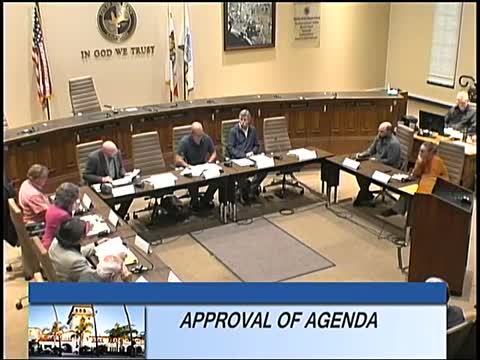
Summary
A joint special meeting of the Environmental Quality Control Board and the Recreation and Parks Commission on April 16, 2025, heard a presentation from the Los Cerritos Wetlands Authority on the Southern Los Cerritos Wetlands Restoration Project, a phased effort to restore tidal wetlands and add public access on more than 100 acres within the authority's roughly 500-acre jurisdiction in Seal Beach.
A joint special meeting of the Environmental Quality Control Board and the Recreation and Parks Commission on April 16, 2025, heard a presentation from the Los Cerritos Wetlands Authority on the Southern Los Cerritos Wetlands Restoration Project, a phased effort to restore tidal wetlands and add public access on more than 100 acres within the authority's roughly 500-acre jurisdiction in Seal Beach.
The project team, led in the presentation by Heather Altman, public engagement coordinator for the project, and Eric Zahn, principal restoration ecologist and project manager for Title Influence, said the work is funded primarily with state conservancy grants and will proceed in two phases, with a construction manager and contractor selection planned this summer and a targeted groundbreaking this fall. "We actually have the funding...to do the implementation of restoring about 50 to 60% of this land very soon," Zahn said during the meeting.
Why it matters: the authority says the project will restore tidal channels and salt-marsh habitat, provide new public access and education opportunities, create a community hub on a small State Lands Commission parcel at First Street and Pacific Coast Highway, and add capacity for coastal floodwater while designing for long-term sea-level rise.
History and approvals The Los Cerritos Wetlands Authority (LCWA) is a joint powers authority with representatives of the City of Seal Beach, the City of Long Beach, the State Coastal Conservancy and the Rivers and Mountains Conservancy. The authority completed a Conceptual Restoration Plan beginning in 2011 and certified a program-level environmental impact review (EIR) in January 2021. The specific Southern Los Cerritos Wetlands project proceeded under a project-level CEQA process, including a mitigated negative declaration certified by the LCWA in August 2023, and establishment of a Tribal Advisory Group that meets quarterly.
Design, permits and schedule Consultants told the boards that 65% design work was completed earlier and 90% design drawings were finished in December. The team said it has secured multiple permits or permit progress: unanimous support from the California Coastal Commission, a water board permit in place for about a year and a half, and pending agreements with the California Department of Fish and Wildlife (Lake and Streambed Alteration) and the U.S. Army Corps of Engineers. The team plans to finalize design work in May, hire a construction manager and issue a contractor RFP this summer, with a projected construction schedule of 18–24 months if windows for nesting-season restrictions and other constraints align. The presenters said some landscaping and habitat establishment could continue after construction.
Funding and administration Presenters said state conservancies provide the bulk of the project funding. The project team described a major Coastal Conservancy allocation of roughly $30 million and a separate $6 million contribution from the Ocean Protection Council, and additional flexible funds from AES. Officials said the City of Long Beach holds LCWA bank accounts and disburses funds on the authority’s behalf after state invoices are approved.
Project scope and community features The Southern Los Cerritos Wetlands project focuses on the southernmost area of the 500-acre complex and covers just over 100 acres entirely within Orange County and the City of Seal Beach. Phase 1 will restore roughly half of the area and create tidal channels, tidal basins, upland coastal scrub and a trail network. Project renderings shown to the boards include a "community hub" on the small State Lands Commission parcel at First Street and PCH that would act as a trailhead, space for education and nonprofit stewardship activities, storage for management equipment and limited parking (presenters described about 30 parking spaces, including two bus stalls and ADA access). The design calls for a perimeter berm for flood protection, maintenance-access trails, public trails by permit or scheduled opening, and some restricted-maintenance-only routes.
The authority also plans native tree plantings, removal of many nonnative Washingtonian fan palms on the hub parcel, construction of salt pans and interpretive features, and a moderated public-access rollout that could expand if stewardship and behavior are well managed.
Tribal and scientific components Presenters described continuing tribal collaboration: LCWA formed a Tribal Advisory Group after the program EIR and consults tribes at design stages, including on a tribal access plan. The team also said it will set aside about 1.5 acres of experimental plots in phase 2, inviting researchers (including California State University Long Beach) to conduct manipulations and monitoring under permit to inform adaptive management and sea-level-rise responses.
Operations, security and outreach To address trespass, encampments and vandalism, the design incorporates robust fixtures, a more durable fence type, cellular camera monitoring, and coordinated work with local law enforcement. The authority intends to involve the Conservation Corps of Long Beach for planting and trail work, with an emphasis on youth workforce training and ongoing stewardship by nonprofit partners. The team plans an unveiling event of final designs about two months before construction and multiple community events during construction.
Questions from local officials City and commission members asked about the study-to-construction cost mix (presenters said roughly two-thirds of the current budget is construction and about one-third planning, permitting and management for phase 1), where funds are held (City of Long Beach holds LCWA accounts), trash transport from the San Gabriel River (presenters said a small culvert connection limits large debris; they expect more trash from a direct river connection but plan management and monitoring), and coordination with Gum Grove Park (presenters encouraged coordination because Gum Grove is part of the broader corridor and could share programming and ecological benefits).
Outlook Presenters said they expect to finalize designs in May, select a contractor this summer, break ground this fall and, if schedules and permitting align, complete major construction in about 18–24 months with some landscape establishment continuing afterward. They also noted that phase 2 — which would expand tidal connection to the Haines Cooling Channel and depends on other agencies’ timelines — has CEQA coverage under the program EIR and will need additional coordination and funding.
Votes at a glance The meeting record includes an administrative vote: the meeting agenda was approved unanimously; no other formal motions or votes on projects were recorded at the meeting.