
Developers seek Brookshire approval for Brown Tract development; council presses for clearer sales-tax timing and water-district talks
Get AI-powered insights, summaries, and transcripts
Subscribe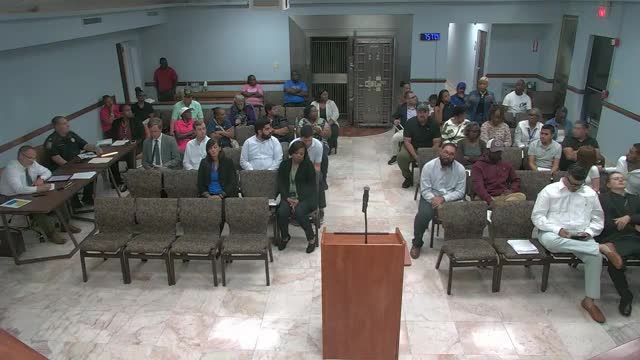
Summary
Developers proposed an industrial-and-residential build on the Brown Tract in the city’s ETJ and a MUD-financed infrastructure plan with a 50/50 sales-tax split proposal.
Attorneys and developers for a proposed project called the Brown Tract described plans for large-scale light-industrial and residential development in the City of Brookshire’s extraterritorial jurisdiction at the April 17 council meeting.
Aaron Carpenter, attorney with Allen Boone Humphries Robinson representing IDV Development Services and partners including D.R. Horton and 4 Star, told the council the proposal would develop roughly 1,800,000 square feet of light industrial space and about 650 single-family homes on land southwest of I‑10 and FM 1489 in the city’s ETJ. Carpenter said the developers expect to use a municipal utility district (MUD) to finance water and wastewater infrastructure and proposed a sales-tax sharing structure that would split qualifying sales tax receipts “50/50” with the city once receipts begin.
Carpenter said, “we are proposing a 50 50 structure that incentivizes us to try to go out and get it,” and described a 45‑year development agreement as the current draft’s term. Several council members pressed for clearer wording on when the sales‑tax split would begin and whether annexation would follow. One council member noted that the draft appeared to require full reimbursement of developer infrastructure costs before the split applied; developers said they would clarify that the 50/50 sales‑tax split would begin as soon as sales tax is generated by the tract and would not be delayed for the full life of infrastructure repayment.
Council members also requested a joint meeting with the Brookshire Municipal Water District and developer representatives to resolve how water and wastewater service would be provided, and to confirm what portions of the tract would remain inside the water district. Developers said they had been negotiating with the district and were open to further coordination.
Council members sought additional clarifications on annexation triggers and timeline language, asking the developers to add explicit covenants and a clearer timeline to the agreement. Developers said they were open to edits and to making the sales‑tax timing and MUD obligations more explicit in the written agreement.
Ending: The council did not vote to approve the development agreement on April 17. Council members requested a developers’ meeting with the water district and asked staff to return with a revised draft that clarifies the timing of sales-tax sharing, MUD governance expectations, and annexation mechanics.