
Highlands board approves engineering and permitting for Mirror Lake dredging plan
Get AI-powered insights, summaries, and transcripts
Subscribe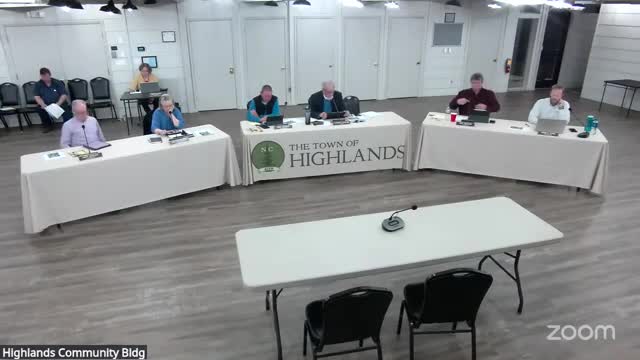
Summary
The Town of Highlands directed engineers to proceed with design and permitting for a phased dredging plan focused on open-water dredging and Mill Creek channel work, using a $5 million state grant; further wetland work and full restoration would require additional permitting and funds.
The Highlands Town Board of Commissioners voted April 17 to proceed with final engineering and permitting for a phased dredging plan for Mirror Lake, directing the town’s consultant to begin design work that will allow the town to bid Phase 2 work later this year.
The vote followed a lengthy presentation and public discussion about the lake’s history, water‑quality goals and the grant funding that made the project possible. The town received a $5,000,000 appropriation for Mirror Lake dredging; board members and consultants emphasized that state grant funds cover part of the work and that more extensive restoration would require additional permitting and substantially more money.
Why it matters: Mirror Lake is part of Highlands’ drinking‑water watershed. Town leaders said dredging is intended primarily to improve water quality and water‑supply reliability, not to reopen the lake for broad new recreational uses. The board’s action authorizes designers to pursue permits and prepare bid documents for the engineered portions of Phase 2 (deep‑water dredging) and to start the permitting process that would be needed for Mill Creek corridor work (sometimes described as Phase 3).
The board heard a technical briefing from Mike McGill of McGill Associates, the town’s engineering consultant, who presented options examined in the firm’s preliminary study. McGill said Option 2A — the plan the board approved moving forward with — shifts some dredge material from deep open‑water areas toward the Mill Creek channel so canoes can navigate the arm more easily while minimizing wetland impacts. McGill said some fringe wetland impacts are likely and would trigger mitigation requirements.
Pat Gleason of the Mirror Lake Improvement Association and other residents urged careful sequencing and emphasized the lake’s long history of local fundraising and volunteer work. Mayor (speaker identified in the transcript as the meeting chair) and commissioners described prior efforts — from local erosion control to sewering and road paving in parts of the watershed — and said those efforts remain integral to preventing future re‑siltation.
Costs and permits: Town materials and speakers described a wide gap between the grant amount and the cost of a full restoration that would remove and mitigate all wetland impacts. McGill’s materials estimate that complete removal and mitigation of all wetland areas in the study footprint could exceed $12 million; mitigation-only scenarios for partial wetland impacts were estimated in the hundreds of thousands to low millions. McGill cautioned that mitigation ratios and costs depend on permitting agency determinations and that agency review timelines can extend the schedule.
Board direction and next steps: By motion, the board authorized staff and McGill Associates to proceed with final design and permitting for Option 2A, with the understanding that: the town will advertise and bid work only after design and permitting are complete; wetland impacts will be minimized where feasible; and the consultant will provide written responses to a list of stakeholder questions the town has received. McGill said permitting and design for the approved scope will likely take five to six months, not counting the time agencies may require for review.
The board asked the consultant to prepare a written response to stakeholder questions and to return estimated bid costs once design is further along. Commissioners emphasized that any work affecting wetlands will require individual permits and that mitigation costs would be evaluated before the town commits to additional wetland removal.
"This is a water‑quality initiative," said a commissioner during debate, adding that recreation is a secondary benefit. "The grant itself says nothing about recreation," one speaker noted, and the board repeatedly tied the project’s justification to drinking‑water protection.
Ending: With design and permitting now under way, town officials said they will keep residents informed and that private donors or partner contributions could be sought for work beyond what the state grant covers.