
Resident asks council to allow backyard fence as city weighs easement’s legal status
Get AI-powered insights, summaries, and transcripts
Subscribe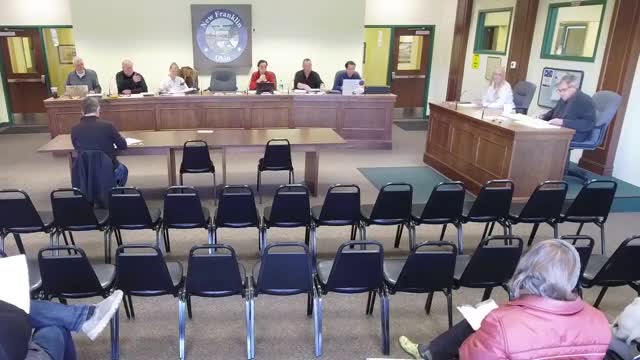
Summary
A resident seeking to install a fence along a 10-foot strip of land said the city should allow the work because the strip’s original easement was for a school that no longer exists.
A resident seeking to install a fence along a 10-foot strip of land said the city should allow the work because the strip’s original easement was for a school that no longer exists. Council members said they are reviewing competing concerns — privacy and safety for the homeowner versus possible established access to the adjacent park for roughly 50 homes — and will wait for a formal opinion from the city law director before issuing a permit.
The resident (name not specified) told council during public comment that she and her husband have paid for a survey and a title-opinion letter and that the mayor suggested the family’s attorney speak with the city attorney. “We are requesting to put a fence on our property, which there was a 10 foot easement for a school,” the resident said. She told council the school was removed in February 2018 and that she and her husband have spent money on surveys and legal advice to document that the easement was limited to school access.
Mayor (name not specified) described the legal and practical uncertainty the city faces. He said the easement’s recorded language appears to have been created when the land was deeded to a school and that the document recites access for “school purposes.” He warned that the only way to be certain the easement is no longer valid is through litigation. “The only way we would ever absolutely find out if the easement is valid is if this ends up at court,” the mayor said. He added that if the city issues a fence permit and later a party shows they still use the easement, the city could be sued; conversely, denying a permit also carries litigation risk.
Council members and staff discussed next steps. The mayor said he has asked the city law director, Sugarman, for a written opinion and asked that office be put “on the fast track.” City staff will also visit the site to measure, document options and prepare cost estimates. The mayor suggested the park fund could be used to pay for city-installed improvements that preserve safe park access while addressing the homeowner’s privacy concerns — for example, matched fencing on both sides of the path, concrete bollards, or partial fence sections that keep an unobstructed, safe route for neighborhood children.
Council and the resident spoke about scale and timing: the neighborhood has about 50 houses, the resident said, and the homeowner has already bought fence materials. Council members pressed for information on how many households currently rely on the easement for park access; staff said that count is not known and may require outreach or a site survey. The mayor said a law-office opinion normally takes a few weeks, and he would prefer to have the written recommendation before staff issues any permit. He also authorized the service director to meet with the homeowners to gather measurements and cost figures so council can weigh options quickly.
The council did not take a vote on the fence during the meeting. The immediate outcomes were directional: (1) the law director will be asked to provide a legal opinion about the easement’s status; (2) the service director will produce on-site measurements and cost estimates for a range of treatments (matching white fence, partial privacy screening, bollards, or combined approaches); and (3) staff and council will return to the matter after the opinion and cost information are available.
Council members emphasized they wanted a solution that preserves safe park access for neighborhood children while addressing the resident’s privacy and safety concerns. The mayor said he would notify the resident when the law opinion is available and that staff would discuss potential city assistance or reimbursement options once a recommended approach is identified.