
County unveils proposed economic development incentives, new investment zones and preservation grants
Get AI-powered insights, summaries, and transcripts
Subscribe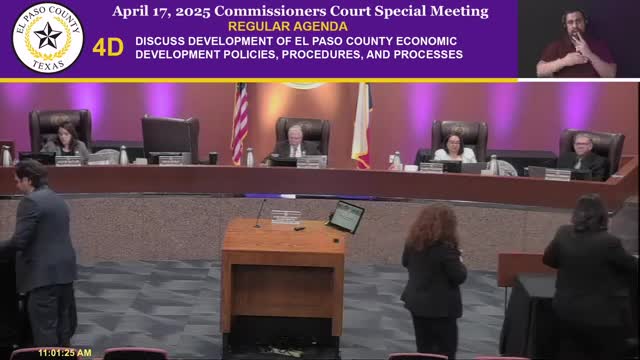
Summary
The county’s economic development team presented a broad update Thursday proposing a modernized incentive policy intended to support small businesses, target investment zones, expand historic-preservation grants and add bonus incentives tied to community benefits.
The county’s economic development team presented a broad update Thursday proposing a modernized incentive policy intended to support small businesses, target investment zones, expand historic-preservation grants and add bonus incentives tied to community benefits.
Chris Martinez, economic development manager, and Jose Landeros, director, described a tiered incentive structure that combines grants and property-tax rebates. The proposal would make micro (startup), small and medium businesses eligible for graduated grants ($3,000 for micro; up to $7,000 for small; up to $10,000 for medium) plus tax-rebate offers (base 75% rebate, potentially stackable to 90% with other incentives) and employee training grants (proposed $400 per eligible employee). The presenters said the county would tie a portion of the program’s grant funding to the existing County Economic Impact Fund, recommending a 10% annual designation to seed micro/small-business grants and historic/blighted property rehabilitation grants (split 50/50).
Why it matters: the package is intended to make the county more competitive for both small local businesses and larger projects while ensuring community benefits—presenters proposed bonus rebate increases for employers offering childcare, competitive benefits, community benefit agreements, climate-conscious upgrades or similar public benefits. Staff said the plan would replace the prior “quality jobs” bonus with a wage floor as the baseline for incentives and make multiple existing incentives available countywide rather than limited to older zones.
Staff also proposed new and revised investment zones, including an expanded Greater Downtown zone, an Alameda Corridor expansion, a combined Fabens–Tornillo Port-to-Port zone, and new East Montana, Northwest and Segundo Barrio zones; they proposed retiring underused zones such as Northgate and Horizon City while keeping those areas eligible for incentives. Dr. Cynthia Renteria presented proposed historic-preservation grants (construction grants up to 25% of property value or up to $10,000) and a proposed downtown historic revolving-loan option to buy down interest rates for rehabilitation projects. Mariana Barraza reviewed a binational strategy that would include business forums, cultural festivals and cross-border tech and tourism initiatives in coordination with Destination El Paso and Mexican counterparts.
Next steps: staff will incorporate court feedback, finalize a redline policy draft in May, route the draft for legal and administrative review in June and return to the court for adoption in mid-summer. Commissioners asked staff to continue outreach to local venture funds, Destination El Paso and municipal partners and to prepare return information on demonstrated outcomes for prior funding (ROI and program results).