
Lancaster County EDA weighs loan programs, bonds and a new website to boost local business and housing
Get AI-powered insights, summaries, and transcripts
Subscribe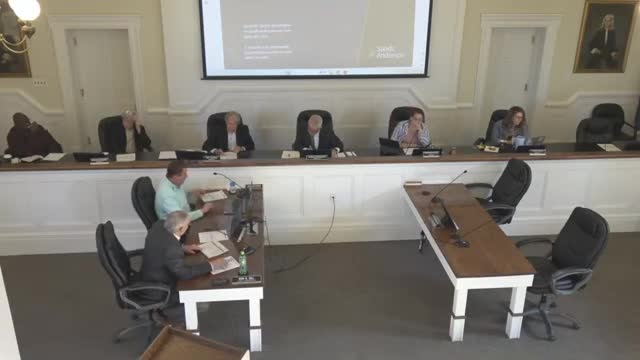
Summary
At its April 17 meeting the Lancaster County Economic Development Authority reviewed finances, discussed possible involvement in county borrowing for capital projects, and agreed to pursue redesign of its grant program, explore a revolving/microloan program and a public-facing website to better connect businesses with state and federal resources.
The Lancaster County Economic Development Authority on April 17 reviewed its accounts and spent most of the meeting discussing how to expand its role in county financing, small-business support and housing initiatives.
The EDA received a financial update showing its Community Partnership checking balance and related holdings. A staff member reported the checking account beginning balance as of Jan. 16, 2025, of $40,610.07, noted interest credits of $9.60 and a January grant payment of $2,500 to Rishi Yoga and Wellness, and identified a separate 10-month certificate of deposit carrying interest credited to an April 16, 2025, balance of $42,209.64.
Why it matters: Board members framed the discussion around how the EDA can move beyond small grants toward more sustainable financing tools — including sponsoring lease revenue bonds, creating a revolving loan or microenterprise loan fund, and improving public information through a website — so limited EDA funds can have greater measurable impact.
Most immediate financing question discussed was the county’s planned borrowing. County staff told the EDA that Lancaster County expects a $15 million bond this fall through the Virginia Public School Authority for a school project, and separately is pursuing $10 million for capital projects (parks and other non-school items). The county’s consultants issued an RFP to banks for direct loans and will also apply to the Virginia Resources Authority (VRA) by May 1. If the Board of Supervisors selects a bank loan over VRA, the EDA could serve as conduit via a lease revenue bond; if VRA is chosen the EDA would not be involved. Staff said a special EDA meeting likely would be needed in June to approve any lease revenue bond prior to Board of Supervisors approval in late June, if a bank option is chosen.
EDA members spent the bulk of the meeting on program design. Staff reviewed examples from neighboring localities: a telemedicine/telework incubator (Hub 33) funded in part by a federal Economic Development Administration (EDA) grant; Gloucester County’s revolving loan and loan-guarantee partnerships; James City County’s tiered incentive and entrepreneurship hub with William & Mary; and a multi-jurisdictional acquire-renovate-sell housing program used in Southwest Virginia that mixes DHCD programs, low-income housing tax credits and housing choice voucher support.
Discussion points included: redesigning the EDA’s small-grant criteria to favor performance-based, incentive-driven awards; developing a microenterprise/revolving loan program aimed at gap financing that banks will support; embedding the Virginia Economic Development Partnership (VEDP) site-selection tool into a public EDA web page; and better outreach on state programs (enterprise zone and HUBZone) and federal resources. Board members suggested partnering with the Chamber of Commerce for an informational brochure or a welcoming committee for new businesses.
Board members and staff discussed program scale and administrative burden. Several participants noted that existing small grants (maximums historically around $1,000) are unlikely to move the needle and that a loan fund with repayable capital could grow over time and make larger, targeted investments (staff noted sample loan sizes discussed elsewhere in the region around $40,000 with flexible repayment but said terms would be defined by program rules). Staff also flagged administrative options including using the regional Planning District Commission to administer a local loan program to reduce EDA administrative burden.
On enterprise zone administration, staff said Lancaster’s enterprise zone (a shared zone with Kilmarnock) was recently renewed and can be modified by swapping acreage within statutory caps; state job-creation and investment thresholds for enterprise zone incentives were cited (job-creation grant baseline: five jobs; real-property investment baseline: $100,000). Staff said the EDA should take a more proactive outreach role so businesses and brokers know how to access those incentives.
Next steps agreed: staff will circulate the Lancaster 2035 plan sections relevant to the EDA, prepare a draft revised grant application/manual, continue compiling content for a public-facing website and gather more detailed information on microenterprise and revolving loan program models and potential partners (Virginia Small Business Financing Authority, USDA Rural Development, regional EDOs). The EDA’s subcommittee on funding and direction will reconvene to refine program criteria and to invite external partners to present program specifics.
Votes and formal action: the board approved the minutes from the Jan. 16, 2025 meeting by voice vote. The approval was recorded as adopted; the transcript does not record a roll-call tally. One board member (Billy Barrack) was noted as absent earlier in the meeting.
The meeting closed with announcements about Chamber of Commerce events and the EDA’s next regular meeting scheduled for July 17 at 8:30 a.m.