
El Paso health officials warn of measles cases, urge MMR vaccination and expanded outreach
Get AI-powered insights, summaries, and transcripts
Subscribe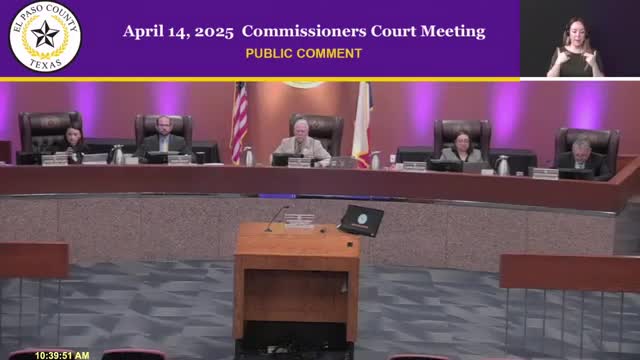
Summary
El Paso County public health officials reported five confirmed measles cases as of April 11 and outlined vaccination, testing and outreach plans, urging residents to get MMR shots and avoid travel to outbreak areas.
El Paso County public health officials on Monday outlined their response to a regional measles outbreak, saying the county had confirmed five cases as of April 11 and urging residents to get the measles-mumps-rubella (MMR) vaccine and avoid nonessential travel to areas with active outbreaks.
Dr. Hector Ocaranza, an El Paso County public health official, told the County Commissioners Court that measles is highly contagious — infecting an average of about 15 people from a single case — and that vaccination remains the most effective protection. “Prevention is the best tool that we have available because there is no treatment,” Ocaranza said.
The county’s health department is distributing health advisories to local clinicians, running vaccination clinics at community events and at four county immunization clinics, and working with schools and hospitals to identify and isolate cases. Ocaranza said the state has authorized ‘‘outbreak doses’’ of MMR so the county can provide vaccine without standard eligibility restrictions. He directed residents unsure of their immunization status to county clinics and to the department site, ephealth.com, for clinic locations and hours.
Why it matters: Measles can cause severe complications, including pneumonia and encephalitis, and can spread before symptoms appear. Ocaranza said the county’s kindergarten MMR coverage is about 96.37% and seventh‑grade coverage about 98.83%, but that rising parental vaccine exemptions since 2020 have left clusters of unimmunized children vulnerable.
Supporting details: Ocaranza described measles transmission via aerosols that can remain airborne for at least two hours after an infected person leaves a space. He reviewed the routine MMR schedule (first dose at 12–15 months, second dose at 4–6 years) and noted some adults may be eligible for vaccination if they are unsure of prior doses. The department has distributed informational materials, run vaccine events at Earth Day and other venues, and is coordinating with hospital and clinic partners to ensure testing and case confirmation.
Court response and next steps: County Judge Samaniego and several commissioners pressed for clear public messaging and a public dashboard if the outbreak expands. Ocaranza said the department is working with regional partners and academic groups on forecasting and would provide a public dashboard when enough de‑identified data are available. Commissioners also asked about collaboration with Ciudad Juárez and cross‑border outreach; Ocaranza said the department will not ask for immigration status when vaccinating and is coordinating with the Mexican consulate and other binational partners.
The county provided these operational clarifications during the update: the health department sent a health advisory to clinicians in February, the MMR used is a long‑established vaccine (live attenuated), and the county can provide outbreak vaccine doses at no cost to those who request them. Ocaranza emphasized that people who are sick should avoid large gatherings and consider masks to protect the most vulnerable.