Get Full Government Meeting Transcripts, Videos, & Alerts Forever!
Get email alerts on the Human Resources Comp Time topic
No spam. Unsubscribe anytime.
Moscow School District drafts compensatory-time white paper to formalize flex-time for building activities
Summary
District staff and association representatives reviewed a white paper on compensatory time for building-sponsored activities, agreed on wording changes and directions for next steps and asked administration to supply a clean copy for final review.
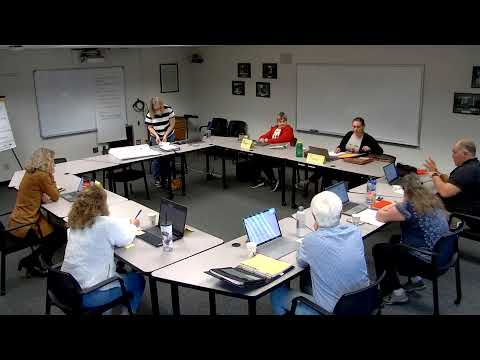
The Moscow School District’s labor-negotiation working group reviewed a white paper on compensatory time for building activities Wednesday, agreeing on edits and direction for implementation while asking administration to return a clean copy for final review.
The discussion focused on defining compensatory time ("comp time") as non-monetary flex time given to certified and hourly staff after completion of required, building‑approved activities, and on who may authorize it and when it may be used.
Committee members said administrators will determine which activities qualify and must approve both accrual and use of comp time, and they recommended making clear that comp time may not be used during a teacher’s instructional or student-contact time. Participants also agreed the district should state explicitly that comp time is an exchange of time rather than pay, and that it will be granted on a 1:1 basis (one hour earned = one hour of time off). The working group instructed the document author to replace the phrase "compensation" with "compensatory time" or the shorthand "comp time" throughout the paper to avoid implying monetary payment.
Members debated operational details. They favored administrator discretion to approve or deny requested comp time based on coverage needs and professional obligations; recommended that comp time usage be limited to regular contract hours; and discussed keeping the system simple to avoid an administrative tracking burden. The group noted existing related rules elsewhere: the classified handbook and district policy already set accrual and use limits for classified staff (committee members cited a 20-hour accrual cap and a 60-calendar‑day use expectation in the classified handbook), and they said any comp‑time practice should be compatible with those limits and with negotiated agreement language.
The working group also discussed edge cases: whether comp time should apply to interview committees or small, one‑off errands; how principals might handle discretionary approvals; and whether comp time can be banked across multiple days. Participants generally preferred a narrow, building‑level approach that protects principals’ discretion and prevents the policy from encouraging routine substitution of paid time for work obligations. They agreed the white paper should be positioned as a trial (“white paper”) for roughly a year, and that if it proves successful the district and union could consider codifying it in the negotiated agreement or other documents later.
Next steps: the document author will produce a clean copy reflecting the agreed edits (terminology changes, administrator approval language, the 1:1 statement, and the prohibition on use during student contact) and circulate it for acceptance at the next working-group meeting. The working group asked administrators to double‑check compatibility with the classified handbook and existing board policy before the next review.