Get Full Government Meeting Transcripts, Videos, & Alerts Forever!
Get email alerts on the School Improvement topic
No spam. Unsubscribe anytime.
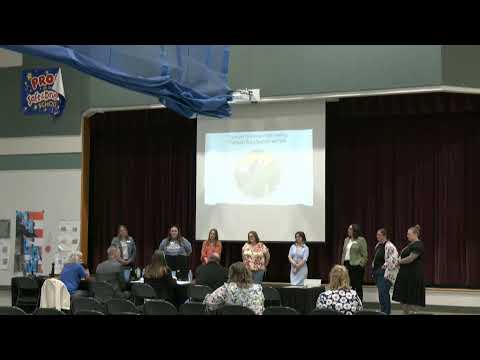
Orting elementary students perform as school staff outline improvement goals, literacy gains
Summary
At a school presentation hosted by the Orting School District that began at 6 p.m., third-grade students performed “Lean on Me,” and school staff described a school improvement plan focused on professional learning communities, family engagement, social-emotional learning and early-grade reading interventions.
At a school presentation hosted by the Orting School District that began at 6 p.m., third-grade students performed “Lean on Me,” and school staff described a school improvement plan focused on professional learning communities, family engagement, social-emotional learning and early-grade reading interventions.
School leaders said the work aims to boost academic outcomes and student connection. Principal-level staff and teachers outlined three broad goals: raise academic performance through coordinated team planning, increase two-way family communication, and strengthen student self-efficacy. Staff also described a pilot of the UFLI phonics curriculum in second grade and shared recent local assessment results they said show progress.
Teachers and school specialists presented the improvement work in front of families and board members. Jason Garcia, identified in the presentation as the school music teacher, introduced the student performance and described the song’s theme: "It's a song about empathy, kindness and friendship." Administrators described regular PLC (professional learning community) and PLT (professional learning team) meetings used to align unit and backward planning across grade teams. "We sent five teachers to the PLC conference to really become the leaders in developing these skills," one presenter said.
Staff described three measurable goals. On family engagement, teachers reported sending goal-focused postcards to families; staff said they had reached a little over 50% of the planned postcards to date. On social-emotional learning, the school cited Panorama survey results showing about 90% of students reporting a strong connection with the school. The presentation included a stated target to increase measures of growth mindset/self-efficacy in kindergarten through second grade by 24 percent and to move third- through fifth-grade self-reported measures from 36 percent to 60 percent as measured by the Panorama instrument.
On early reading, staff described shifting assessment and intervention tools. Presenters said AIMSweb is used in kindergarten and first grade, while i-Ready is used as an additional benchmark. Staff reported i-Ready data for kindergarten showing a reduction in students at Tier 2 from 69% in the fall to 24% in winter, and a reduction in K–2 students identified as Tier 3 from 28% to 12% after the UFLI pilot and expanded core instruction. The presentation characterized overall K–2 growth from fall to spring as 64% and said the school was "currently meeting our goal." Teachers said second-grade students in the UFLI pilot showed gains in phonics and reading fluency.
Classroom teachers described how they use assessment data for student goal setting. A fourth-grade teacher explained classroom routines in which students review AIMSweb reports, write SMART goals and check progress regularly: "They did a self reflection at the beginning of the school year of where they felt they were at math and where they felt they were at reading," the teacher said. Third-grade teachers described collaborative data sheets and regrouping students by performance levels to close gaps.
Staff also described tiered supports. The school counselor and MTSS (multi-tiered system of supports) specialist outlined Tier 1 activities such as a monthly rotating "self-efficacy" skill of the month and a golden-ticket recognition system tied to positive calls home. They said they had run seven small groups (Tier 2) with four to five more planned for the remainder of the year and that a community counseling partner, Comprehensive Life Resources, helped deliver additional group services.
Families and board members in attendance praised the presentation and the student performances; one board member noted the value of affirmations and family partnerships. Presenters invited families to observe small-group rotations and the UFLI lesson later in the evening and reminded attendees that the student group would perform again at the district cultural fair on May 18.
No formal motions or votes were recorded in this presentation segment; items presented were informational, and staff said teachers and the district would continue implementation and monitoring of assessments and interventions.