Get Full Government Meeting Transcripts, Videos, & Alerts Forever!
Get email alerts on the Land Use Zoning topic
No spam. Unsubscribe anytime.
City Commission debate narrows East Stewart code changes; vice mayor moves to require public notice for larger projects
Summary
City of Stuart — The City Commission spent hours debating proposed changes to the city’s land development code for the East Stewart neighborhood, with Vice Mayor Collins asking the commission to require a conditional‑use review — including public notice and a hearing — for larger or more intensive projects such as multifamily buildings, mixed‑use developments and hotels.
City of Stuart — The City Commission spent hours debating proposed changes to the city’s land development code for the East Stewart neighborhood, with Vice Mayor Collins asking the commission to require a conditional‑use review — including public notice and a hearing — for larger or more intensive projects such as multifamily buildings, mixed‑use developments and hotels.
Collins said the change would give neighbors “the opportunity to be made aware” and to comment when projects that could yield three‑ and four‑story buildings are proposed. “I would like to make a motion that we keep under the conditional‑use process … multifamily, which is apartments. Mixed use, which is that 3 and 4 story stuff,” Collins said during the meeting.
The proposal and the broader land‑use work behind it drew sustained public comment and legal questions. Property owners and their counsel warned that some of the proposed amendments may conflict with state requirements that local land‑use regulations be consistent with an adopted comprehensive plan. “The pending amendments violate these fundamental statutory requirements,” said Kimberly McCarty, a lot owner who spoke with an attorney. She said several lot owners are prepared to seek legal remedies if the commission proceeds without additional review.
Why it matters: The city is updating its land development code to implement a form‑based overlay for East Stewart created through earlier planning work. Supporters of Collins’ approach said conditional‑use review for large projects would preserve neighborhood input when development intensity changes; opponents said the added layer could be an unnecessary burden on property owners and developers and could create uncertainty for projects already underway.
What was discussed: Commissioners, planning staff and residents debated two distinct but related items: the ESN‑08 “permitted uses” table (which lists uses and whether they require a public hearing) and separate map amendments that would change which parcels are designated for commercial, mixed‑use or residential treatment.
- Staff and the city attorney identified two scrivener’s errors in the draft code and proposed corrected footnote language clarifying that parcels with assigned parcel IDs as of 09/04/2024 would be conforming and exempt from a new 6,000‑square‑foot minimum lot requirement; newly created parcels after that date would have to comply with the new minimums.
- Collins described the motion as narrowly targeted to “more intensive uses” likely to produce three‑ and four‑story structures and listed uses he would keep under conditional‑use review, including multifamily housing, mixed‑use projects, hotels, office buildings, theaters, public utilities and parking garages. He said smaller scale local businesses such as barbershops, salons, small retail and community gardens should remain by‑right.
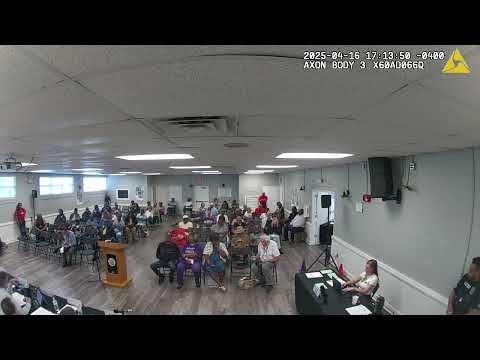
Public comment and legal concerns: Dozens of residents and property owners spoke in a lengthy public‑comment period. Some urged that East Stewart be preserved as predominantly residential and warned of displacement and gentrification; others urged that the neighborhood needs new housing and jobs. Several speakers urged the commission to slow the process, hold additional facilitated community workshops (charrettes) and ensure the overlay implements the community’s vision rather than broad, top‑down changes.
Property owners who retain counsel argued the code changes may not have followed the state’s prescribed sequence for plan and land‑development regulation amendments and said they were prepared to challenge the ordinance if it is adopted without additional review. City staff acknowledged the concern and noted the commission had previously voted on many of the zoning code updates on Feb. 24 but had tabled the East Stewart permitted‑uses table for separate discussion.
Outcome and next steps: Vice Mayor Collins made the motion to treat larger‑scale and potentially taller uses as conditional uses; Commissioner Gioby seconded the motion and the commission reopened public comment. The record of the meeting in the transcript does not show a completed roll‑call vote on Collins’ motion during the session. Staff and several commissioners repeatedly urged clarity about whether the meeting was limited to ESN‑08 (the permitted‑uses table) or whether it would reopen broader parts of the East Stewart code; commissioners and staff agreed the two items are related but distinct. The commission indicated it would continue deliberations and bring mapped changes and any final ordinance language back for formal action at a future meeting; at the conclusion the commission said it would return to the map item at a subsequent meeting.
For people affected: Owners of parcels in East Stewart should note the commission is considering whether some uses that currently could be done as a matter‑of‑right would instead trigger a conditional‑use process requiring notice to nearby property owners and a public hearing; property owners who already have active permits or pending applications raised concerns about how code changes could affect those approvals.
What’s next: The commission instructed staff to clarify the scope of the meeting and to prepare a clear, side‑by‑side presentation of the ESN‑08 permitted‑uses table and the map changes so residents can see how uses map to particular streets and parcels. Several commissioners and many speakers asked for additional, facilitated outreach before the commission takes final legal action.
No formal adoption of Collins’ conditional‑use motion is recorded in the meeting transcript; the matter remains under consideration and may be subject to amendment or legal challenge.