Get Full Government Meeting Transcripts, Videos, & Alerts Forever!
Get email alerts on the Property Tax topic
No spam. Unsubscribe anytime.
Punta Gorda finance director explains property-tax basics, millage comparisons and hurricane-recovery funding
Summary
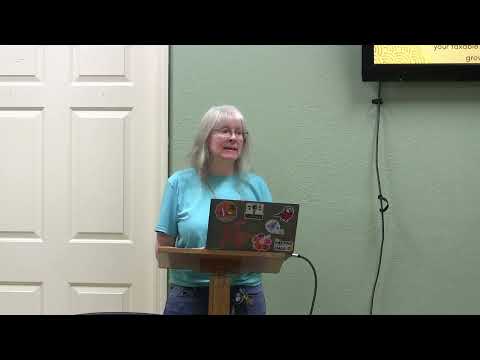
Kristen Simeone, finance director for the City of Punta Gorda, laid out how property taxes are calculated and how those revenues feed municipal services during a public presentation to residents on Oct. 12, 2025.
Kristen Simeone, finance director for the City of Punta Gorda, laid out how property taxes are calculated and how those revenues feed municipal services during a public presentation to residents on Oct. 12, 2025. Simeone described what millage rates are, how homestead exemptions and statutory caps affect taxable value, and how hurricane damage and federal reimbursements affect the city budget.
Simeone said property tax "is also known as an ad valorem tax," calculated on a percentage of a property's taxable assessed value, and added that "the millage rate is how we determine the total property tax that you would see on your tax bill." She emphasized that a homeowner's assessed value for market purposes can be higher than the taxable assessed value used for taxes because exemptions and state caps reduce the taxable figure.
The presentation explained two common Florida limitations: a 3% annual assessment cap for homesteaded properties (often called Save Our Homes) and a 10% cap sometimes applied to non‑homesteaded properties. Simeone said those caps mean a new buyer can face a higher taxable value on purchase because the prior owner's taxable value had been limited by the cap. She noted that the property appraiser determines homestead eligibility and assessments and that the city does not perform property appraisals.
Simeone compared Punta Gorda’s millage and assessment structure with neighboring jurisdictions, noting that municipal tax bills typically include multiple taxing authorities — for example, Charlotte County, the Charlotte County School Board and regional water districts such as the Southwest Florida Water Management District. She told residents that some services other municipalities collect as separate non‑ad valorem assessments (for example, fire service, roads, drainage or stormwater) are included within Punta Gorda’s single municipal millage; sanitation, in Punta Gorda’s case, is billed on the utility bill rather than appearing on the tax bill.
Using sample figures shown in the presentation, Simeone contrasted two example taxable assessed values with a $50,000 homestead exemption (approximately $361,000 and $162,000 in the slides) to show how assessments and separate county or district levies change total bills. She cautioned that comparing only millage rates between cities can be misleading because taxable values and non‑ad valorem assessments vary between jurisdictions.
On reserves and hurricane recovery, Simeone said the city reduced reserves during the recession and lowered them to about 5%, while noting a best‑practice target of about 16.7%. "When the economy started turning around, the council did start doing a half a percent increase each year to start getting back to that," she said. Simeone explained that FEMA reimbursements are paid as reimbursements and require documentation — payroll, procurement records, debris monitoring — and that the city generally must pay for repairs up front while awaiting federal reimbursement: "FEMA is a reimbursement, so we do have to pay those things upfront."
Simeone also reviewed timing and legal deadlines the city must follow when setting millage and budgets. She said the county property appraiser provides a first estimate by June 1 and the formal values used to set millage are supplied by July 1; the city’s fiscal year runs Oct. 1 through Sept. 30. She reminded listeners that Florida’s TRIM (Truth in Millage) advertising and hearing schedule requires the city to set its millage before the fiscal year starts, typically concluding with final millage action the third Wednesday in September.
On other revenues, Simeone said Punta Gorda receives shared fuel taxes (a 5% and a 6% component discussed in the presentation) that are apportioned with Charlotte County; she also confirmed the city collects communication services tax revenue. When asked about potential future effects from electric vehicles, she said the city is monitoring changes but had not yet seen declines tied to EV adoption.
Audience members asked about homestead eligibility and parcel consolidation. Simeone reiterated that those matters are decided by the property appraiser’s office and that combining parcels can affect how assessment units are counted for certain local assessments even if the appraiser’s valuation outcome is not decided by the city.
Simeone closed by saying city staff have begun earlier budget work so departments can present options if property values or shared revenues shift: some programs could be cut and others ramped up depending on final assessed values and revenue projections. The presentation supplied residents with illustrative comparisons and timing information ahead of the city’s formal budget and millage hearings.