Get Full Government Meeting Transcripts, Videos, & Alerts Forever!
Get email alerts on the Groundwater Management topic
No spam. Unsubscribe anytime.
Public meeting focuses on groundwater extraction reporting, subsidence risk and mitigation timeline
Summary
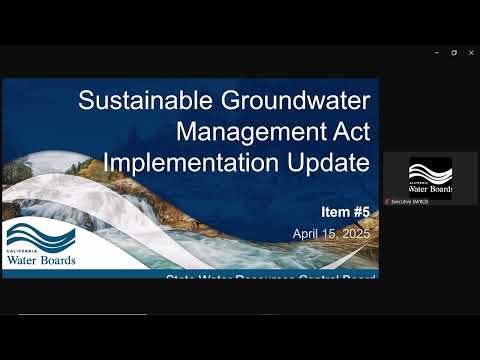
Participants at a public meeting discussed plans for monthly extraction reporting, data-quality improvements, mitigation programs to address subsidence, and a transition timetable; no formal votes were taken.
At a public meeting, participants discussed proposed requirements for groundwater extraction reporting, monitoring to address subsidence, and a transition and mitigation program timeline for affected basins.
The discussion centered on establishing a monthly extraction information table and making reporting easier through electronic submissions, improving data quality, and creating a mitigation and transition program to reduce land subsidence. Participants also raised concerns about contaminants in groundwater, including references to uranium and nitrate testing, and the need to align local practices with surface-water guidance and state regulations.
The meeting included detailed conversation about how extraction data should be reported and tracked. Presenters described a proposed monthly extraction table and an “extractor information” report intended to capture pumping amounts and locations. Participants said the reporting tool should support multiple languages and electronic submission to increase compliance. A timeline was discussed with references to September 2024 and an early-year checkpoint around January–February (dates discussed in the meeting but not tied to a formal adoption). One speaker mentioned a figure of $2,000,000 in the context of management or damage funding; the transcript did not specify the purpose or source of that amount.
Speakers flagged subsidence — the sinking of land over pumping areas — as a primary objective for mitigation. A presenter described the “sigma intent” as minimizing subsidence and noted the need for monitoring and mitigation programs during a transition period. Several participants pressed for stronger data-quality checks before relying on extraction reports for regulatory decisions.
Public-engagement steps were mentioned: presenters referenced public workshops, solicitation of comments and feedback, and additional evaluation reports to inform next steps. Multiple comments indicated the need to reconcile groundwater management plans across basins and to interpret surface-water guidance consistently with local assumptions. Groundwater contaminants, specifically uranium and nitrates, were noted as monitoring priorities; the transcript records the contaminants being named but does not include specific testing frequencies or thresholds.
No formal motions or votes were recorded in the transcript excerpt provided. Participants indicated follow-up work, including preparing implementation updates and further discussion of data quality, reporting formats, and mitigation options.
Members and staff closed the item after discussion; speakers thanked participants and noted the meeting record would include further updates. The meeting transcript does not specify any formal adoption, deadline for final rules, or funding authorizations tied to the items discussed.