Get Full Government Meeting Transcripts, Videos, & Alerts Forever!
Get email alerts on the Liquor License Conflict Of Interest topic
No spam. Unsubscribe anytime.
Geneva committee advances proposal to remove exception allowing council members to hold liquor licenses
Summary
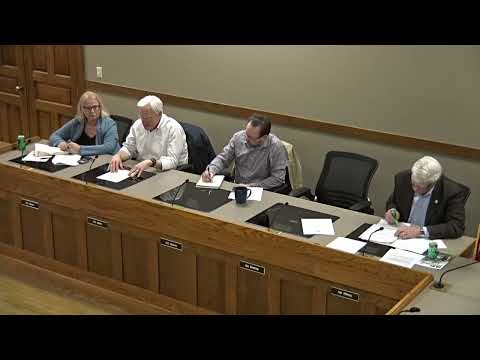
The Geneva City Committee of the Whole on May 20 voted to advance to the full City Council consideration of an ordinance that would remove language in the city code allowing an elected official to hold a liquor license.
The Geneva City Committee of the Whole on May 20 voted to advance to the full City Council consideration of an ordinance that would remove language in the city code allowing an elected official to hold a liquor license.
The proposal, introduced by staff as “an ordinance to amend Title 4, Businesses and license regulations, chapter 2, liquor control, section 4‑2‑10,” was the focus of an extended Committee discussion about conflicts of interest, local enforcement, and whether the change would discourage business owners from seeking elected office.
The issue drew sharply divided comments from aldermen. Alderman Bruno, who opened the discussion by saying he was not seeking reelection, framed the change as a conflict‑of‑interest concern: “I don’t like to recuse myself if I can avoid it,” he said, adding that the timing after an election cycle made it “opportune” to revisit the rule.
Alderman Kilberg called the proposal “somewhat of an ordinance change looking for a solution to a non existent problem,” noting that staff records show only two liquor‑control enforcement actions in the past decade and that liquor‑license requests are “99% of the time” approved unanimously. “It seems to be somewhat of a fast track to me, and I just don’t sense the urgency,” he said.
Other aldermen pushed back on the restriction. Alderman Marx said he preferred to “allow more people to run and let the voters make the choice,” arguing voters should decide whether a candidate’s liquor‑license status is disqualifying. Alderman Swanson warned the rule could exclude owners of restaurants and other storefront businesses that hold incidental liquor licenses, and he cited a recent Highland Park advisory vote opposing similar restrictions.
Alderman Maladra, citing conflict‑of‑interest concerns, argued the ordinance should be restored to its pre‑2016 language that prevented elected officials from holding liquor licenses. Maladra said license holders “can depend on alcohol sales to drive their profits” and that the perception of changing rules for a single candidate is problematic. Alderman Paschke said law‑enforcement feedback suggested officers prefer separation between who they enforce and who they report to.
City staff described the existing code language as derived from the state statute (referred to during the meeting as “Dylan’s Law”). Miss Dawkins, introducing the item, said the council had directed staff on April 7 to return the topic for Committee discussion.
Committee members discussed enforcement history and how violations are handled. Alderman Kilberg noted two violations in recent years—one involving a convenience store and one involving a bar—that resulted in roughly $1,000 fines and 24‑hour suspensions. City staff explained that many alleged violations are settled by stipulation before a formal liquor‑control hearing and that total revocation of a license is rare.
After floor debate, the Committee took a roll‑call vote on a motion to recommend revoking the exception and sending that recommendation to the full City Council. Recorded votes during the Committee roll call included Alderman Bruno (Aye), Alderman Hilberg (Nay), Alderman Klosera (Aye), Alderman Malecki (Nay), Alderman Marks (Nay), Alderman Swanson (Nay) and Alderman Paschke (Aye); the mayor recorded an aye that produced a tie. The mayor then cast the deciding vote to break the tie and advance the ordinance to the City Council for full consideration.
The Committee did not adopt a final ordinance tonight; it voted to forward the draft for full Council debate and vote at a subsequent meeting with the expectation that the two absent alderpersons will participate then.
Why this matters: The change would remove a local exception that currently allows an elected official to hold a liquor license under conditions in the city code. Supporters say the change reduces even the appearance of conflict; opponents say it needlessly restricts who may run for office and disproportionately affects small business owners whose liquor sales are incidental to their primary business.
Next steps: The ordinance will return to the full City Council for debate and a formal vote at a future meeting.