Get Full Government Meeting Transcripts, Videos, & Alerts Forever!
Get email alerts on the Budget topic
No spam. Unsubscribe anytime.
Harrison County Board of Education reviews 2026 budget; presenters warn of large reserve drawdown
Summary
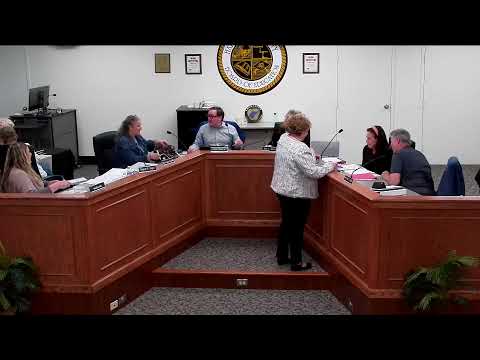
At a special work session, staff for Harrison County Schools presented the draft 2026 budget and warned that the plan depends on uncertain state and federal revenues and would require using roughly $20 million of district reserves if left unchanged.
At a special work session, staff for Harrison County Schools presented the draft 2026 budget and a calendar for public review and adoption, telling the Board of Education the district faces delayed state and federal aid, a projected shortfall in property-tax revenue tied to recent state legislation, and a large one-time draw on reserves if current spending plans hold.
“The only item on our agenda this afternoon, this evening is the budget,” the presenter said, opening the session. Staff recommended a public budget hearing on May 6 and adoption on May 20 and reminded the board the legally required budget must be submitted by May 30 and published at least 10 days before the hearing.
Why this matters: staff said personnel is by far the largest budget driver (about 81.7% of operating costs) and that the proposed plan would use roughly $20.2 million of district reserves during the 2026 fiscal year if no additional cuts or revenue materialize, leaving the district with significantly lower reserves going into future years.
Revenue and timing Staff told the board final state aid and federal entitlement grant amounts remain uncertain because the state legislative session ran long and federal releases are delayed. The presenter said the district had been scheduled to receive final state aid allocations April 25 but had to meet the statutory budget deadline regardless. Staff added that the Community Eligibility Provision (CEP) calculation did not change materially and that updated CEP figures boosted the district’s budget picture by about $800,000 in the current plan.
The presenter said changes to state law tied to oil and gas valuations are reducing local assessed value and will lower general-fund revenue that the district historically used to offset other costs by about $1.1 million next year. Staff also noted an impact to the excess-levy rate of about $0.99 (noted in the presentation as an excess-levy rate change) that the district has relied on largely for salaries.
Personnel, enrollment and supplements Staff said the draft budget includes about 965 professional personnel in the payroll forecast and that personnel costs represent roughly 81.67% of the operating budget (the state guideline cited in the materials is about 85%). The presentation showed enrollment falling from 10,544 students (a prior year) to about 9,355 in 2025, a decline of 1,189 students that increases per-student personnel counts and raises the district’s above-formula staffing figures.
“We have a very tight budget, and it’s very scary,” the presenter said, summarizing the financial pressure caused by declining enrollment coupled with near-flat revenues and fixed personnel expenses.
Board members and classroom-teacher advocates pressed staff on supplements for nationally board-certified teachers. Board member Santilli, who identified herself in discussion as a national-board-certified teacher, told the board the county’s current $500 classroom supplement lagged neighboring counties and supported increasing the county supplement for national-board-certified classroom teachers to $1,500 this year to improve recruitment and retention. Staff said fully equalizing all similar supplements across specialists and administrators would increase the cost materially and likely require cuts elsewhere or a multi-year plan to address personnel costs.
Special education and related costs Staff described the district’s approach to special-education costs, including out-of-district placements. Staff said state special-education allocations can be fully consumed by high-cost out-of-state placements; as an example staff noted a year in which the district received a special-education allocation that was entirely offset by placement costs and still owed additional sums on final invoices. Board members asked staff to clarify recurring versus one-time costs and how the state bills and re-bills districts for placements.
Facilities, transportation and capital projects The proposed capital and facilities spending items highlighted by staff included: a $2.2 million request for HVAC/heat-pump work at a primary school listed in the materials; about $360,000 for replacement playgrounds removed earlier for construction; paving for approximately $435,000; and a maintenance request for one truck and two pieces of equipment totaling roughly $220,000. Staff said they will seek outside reimbursement or grants where possible before using local funds.
On transportation, staff said the district requested six new buses at an estimated total cost of $971,000, of which the state would pay about $838,000 under current funding rules. Staff also noted a change in a state policy that increases the permitted passenger count for vans (from 10 plus driver to 12 total, as cited in the presentation), which the district may explore for some routes.
Security and student safety items in the levy-funded plan include secured entrances for all school facilities by the end of FY2026 and funding for seven school resource officers funded through the excess levy (seven from the sheriff’s office and two from the City of Bridgeport were noted in the materials as being funded through the excess levy portion).
Employee benefits and a proposed HRA In response to rising premiums, staff proposed a health-reimbursement-account (HRA) benefit for employees with district health coverage. The draft would fund roughly $40 per month ($480 per year) for each enrolled employee to help offset increases in deductibles, co-pays and out-of-pocket maximums. Staff described the plan as a non-taxable benefit funded locally and noted it is included in the presented budget numbers.
Extracurriculars, coaching pay and other supplements The budget materials included a number of adjustments to extracurricular pay schedules: raising per-event pay for coaches from $150 to $250 per game/day for select activities, adjusting middle-school assistant stipends “based on need,” and correcting math errors in several line items. Staff also discussed adding or modifying stipends for music, choir, show choir competitions (with limits on paid appearances), library curricular support, yearbook sponsors, and other extracurricular roles.
Speech-language pathologists and other specialist supplements A request from speech-language pathologists to increase their annual supplement was raised during the meeting; staff did not act immediately and asked for more comparative data from other counties. Staff agreed to check certified staffing lists and regional comparables and to return with numbers before the formal budget hearing.
Reserves and outlook Using the budget figures presented, staff showed an estimated general-fund carryover of about $20,741,777 but said the proposed budget would draw roughly $20.2 million from reserves in FY2026 under current assumptions. Staff and board members repeatedly described that drawdown as unsustainably large if maintained year after year and said managing vacant positions and attrition would be a primary tool to shrink personnel costs in future years.
Next steps and board direction Staff recommended retaining the public hearing on May 6 and the adoption meeting on May 20 to meet the legal deadline for filing by May 30. At the end of the session staff summarized follow-up homework for the board packet: confirm the certified list and comparables for speech-language pathologists; finalize extracurricular assistant stipends and a limit of one paid assistant where “based on need” is cited; and ensure required publications and advertisements are scheduled to meet the 10-day notice rule for the hearing. A motion to adjourn was moved and taken without a recorded roll-call tally.
What’s next: The board will hold the public budget hearing, hear public comment, and consider adoption at the scheduled meeting; staff noted the hearing date is intended to give time for changes before formal adoption if public testimony requires adjustments.