Get Full Government Meeting Transcripts, Videos, & Alerts Forever!
Get email alerts on the Education topic
No spam. Unsubscribe anytime.
Education committee cites five strategic priorities; task force discusses workforce readiness and resource-bank idea
Summary
The task force’s education committee reported five strategic priorities to address disparities; members also discussed workforce-readiness supports and compiling resource banks across committee areas.
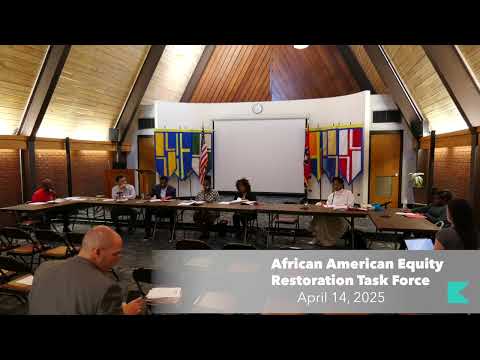
At the April 14 meeting, the African American Equity Restoration Task Force’s education committee summarized an assessment event that produced five strategic priorities aimed at reducing educational disparities affecting the Black community.
The committee identified four outcome areas discussed during the assessment event: improving kindergarten readiness, boosting graduation rates, increasing access to enrollment and career-readiness programs, and reducing absenteeism. Suggested strategies included expanding early-childhood education, enhancing educator support and retention, growing college- and career-preparation opportunities, and strengthening community engagement through parent-education and support services.
Committee members said they need data from “region 5, Knox Access, and Tiscat Chiefs” (as referenced in the meeting transcript) to inform next steps and to create clearer milestones for implementation. The committee emphasized focusing on a narrow set of priorities rather than attempting to tackle every identified issue at once.
Relatedly, members discussed workforce-readiness work: strengthening transferable employment skills, connecting residents to job fairs held at local venues, and expanding summer and youth-employment models so more businesses can take small numbers of trainees. Members suggested compiling resource banks for each committee bucket (education, health, workforce) and turning those lists into public-facing publications to guide referrals.
Ending: The education and workforce committees will continue developing data-driven priorities, and the task force intends to centralize resource information for community distribution.