Get Full Government Meeting Transcripts, Videos, & Alerts Forever!
Get email alerts on the State Budget School Funding topic
No spam. Unsubscribe anytime.
Westerville officials warn House substitute could 'call back' millions and deepen school funding shortfall
Summary
District officials and board members told the Westerville City Schools Board on April 7 that a House substitute to House Bill 96 would require the state to reclaim local fund balances above 25% of prior-year expenses, potentially causing multi‑million dollar revenue losses to the district and prompting calls for community advocacy.
Westerville City Schools officials told the school board on April 7 that a provision in the House substitute for House Bill 96 would let the state “call back” general fund balances above 25% of the preceding year’s expenses, a change presenters said could cost the district millions and push it into state oversight.
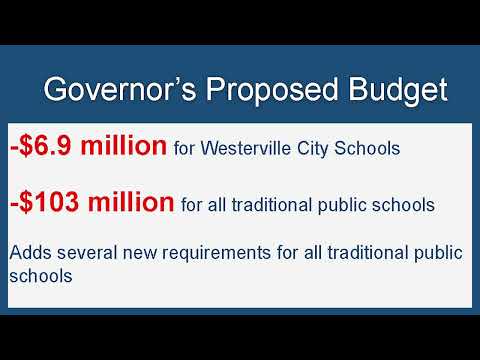
The district’s presenter, Nicole (presenter), said the governor’s original budget and the House substitute differ, and that the substitute bill’s callback provision “would require the common budget commission to call back any general fund balance over 25% of the preceding year's expenses.” She said that, under the introduced language, Westerville could lose about $21,000,000 in local resources and that the governor’s proposal as introduced would mean roughly $6,900,000 less in revenue for the district over two years.
Why it matters: Nicole said the callback would affect long‑range financial planning and certifications the district must make. “We would immediately be in fiscal watch,” Nicole said, adding that the change could “require substantial cuts in programs and services for all students” and “jeopardize the district's ability to meet payroll obligations throughout the fiscal year.” Board members and staff warned the change could also damage bond ratings and raise borrowing costs for the district.
Board discussion and context: Superintendent (Angie) and multiple board members urged community members to contact state leaders and shared plans to testify before the House Finance Committee. The presenters described the state budget process timeline: after the House moves a substitute, the measure goes to the Senate, followed by a conference committee to reconcile differences before the governor’s signature. Nicole said lawmakers aim to finish the budget process by June 30 so the state’s fiscal year can begin July 1.
Presenters also raised related concerns about voucher expansion. Nicole told the board that the state appears to be adding funding for vouchers and private or charter schools while reducing traditional public school funding. During board comment a member said, “they are cutting funds from the public ed side, but they're adding to the voucher side,” and cited an organization’s estimate that vouchers could receive several hundred million dollars in new funding.
Next steps: Board members said district staff and parent groups will continue to testify and to provide contact information for legislators on the district website. The presenters urged residents to contact Governor Mike DeWine, Speaker Matt Huffman and Senate leadership to oppose the callback provision and other amendments they said would reduce state support for traditional public schools.
Quotation evidence: Quotes in this article are drawn from the April 7 board meeting. The district identified the House substitute for House Bill 96 by name; presenters and board members repeatedly urged constituents to contact named state leaders during the week of the hearing.