Get Full Government Meeting Transcripts, Videos, & Alerts Forever!
Get email alerts on the Landfill Gas And Environment topic
No spam. Unsubscribe anytime.
St. Clair County approves EGLE consent order for Smiths Creek landfill after heated debate over bioreactor
Summary
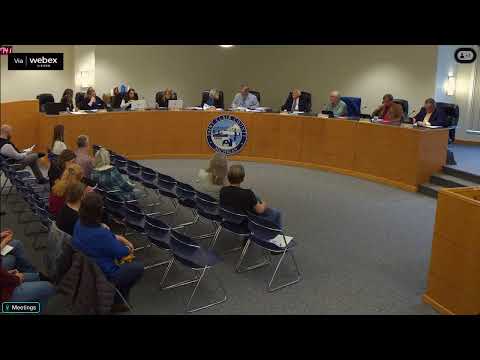
The St. Clair County Board of Commissioners voted 6–1 on April 17 to approve an administrative consent order with EGLE requiring upgrades and monitoring at the Smiths Creek landfill.
The St. Clair County Board of Commissioners voted 6–1 on April 17 to approve an administrative consent order with the Michigan Department of Environment, Great Lakes and Energy (EGLE) addressing odor and gas-collection problems at the Smiths Creek landfill.
The order, presented to the board as the Eagle Administrative Consent Order, directs work to improve the landfill's gas-collection system, adds monitoring and compliance steps, and formalizes a negotiated enforcement outcome with the state. Corporation counsel told the board the order is a negotiated compromise intended to resolve EGLE enforcement without litigation; counsel did not quote a single settlement figure during the presentation.
Why it matters: Commissioners and residents said the odors had interfered with daily life in nearby townships and that taxpayer money already has been spent to mitigate the problem. The board's decision avoids immediate litigation and sets specific technical and reporting requirements the county must meet under the order.
What the meeting record shows - The board motioned to approve the EGLE consent order as presented; the vote was recorded as: VandenBosch — Yes; Commissioner Angie — Yes; Commissioner Beaton — Yes; Commissioner Trello — Yes; Commissioner Felix — No; Commissioner Rushing — Yes; Chairperson Samasco — Yes. Outcome: approved (6 yes, 1 no). - Corporation counsel told the board EGLE's investigation focused on the landfill's gas-collection system and monitoring of Cell 8, not the county's bioreactor design; he said EGLE staff met onsite, reviewed plans and technical material and negotiated the order based on collection-system deficiencies cited in notices of violation.
Discussion and dissent Commissioner Robert Felix cast the lone no vote and explained at length that he has investigated the site since 2014, lives about a mile from the landfill and attributes the magnitude of the gas generation to the county's use of a septage "bioreactor" process. Felix said the county's practice of adding septage and certain paper-mill wastes increased gas and hydrogen-sulfide emissions and that the community still expects the county to pursue eliminating the bioreactor practice.
Corporation counsel and other commissioners pushed back on that single-cause framing. Counsel said EGLE's investigation did not find evidence tying the bioreactor to the specific violations that led to the enforcement action, and that EGLE's negotiated order addressed the gas collection system and monitoring practices. Several commissioners said the county had already spent significant sums to mitigate odors and that accepting the order would avoid a costly lawsuit and allow the county to proceed with the remedial work.
Public comments and community concerns Residents from Kimball and St. Clair townships spoke at the meeting. Dawn Nowicki said surrounding residents have suffered odors "ever since" the landfill began operations and urged closing the bioreactor. Carolyn Richards thanked the board for transparency but asked when the fines and mitigation would stop; she referred to roughly $2.3 million the county has spent to address odors. Others asked whether responsible individuals would be held to account and raised concerns about leachate and chemicals in the landfill cell.
Implementation and next steps - The consent order requires technical work on gas-collection and monitoring; counsel said many requirements are technical compliance steps and that the order will be followed by an EGLE public hearing. Counsel said the monetary penalty shown in the final order was the number EGLE proposed in the negotiations but he did not read the order's dollar figure into the public record at the meeting. - Commissioners discussed seeking additional bids or proposals for landfill engineering/operations work. A motion asking the county administrator to obtain competitive proposals/RFPs for the services currently provided by the landfill consultant/engineer was offered; the board voted not to authorize an immediate county-wide RFP at the meeting and instead agreed to place further study on a committee agenda.
Voices from the meeting (selected) "I will be voting no on this Eagle consent order, and I'd like to explain why...the odor was hydrogen sulfide with the landfill gas. It burns your eyes, irritates your sinus passages...I live a mile away." — Commissioner Robert Felix "If we do not do this, we'll be in a lawsuit...I am going to support this because I don't want to spend more taxpayer money on something that we can potentially fix here on the board." — Commissioner (name recorded on the roll as) Rushing
Ending note The board's approval puts the county on a schedule to implement the technical fixes and monitoring EGLE required; several commissioners said they intend to continue discussing longer-term policy options, including whether to continue the septage bioreactor practice and whether to seek new engineering contracts for ongoing landfill oversight.