Get Full Government Meeting Transcripts, Videos, & Alerts Forever!
Get email alerts on the Wage Transparency topic
No spam. Unsubscribe anytime.
Bill would require salary ranges in job postings and ban salary‑history questions, sponsor says
Summary
Representative Genevieve Mina introduced House Bill 156 to require employers to include salary ranges in job postings, protect the right of workers to discuss pay, prohibit asking applicants about salary history, and create penalties and a civil claim for retaliation. The nonprofit 4Acre Group testified in support, citing pay‑equity research.
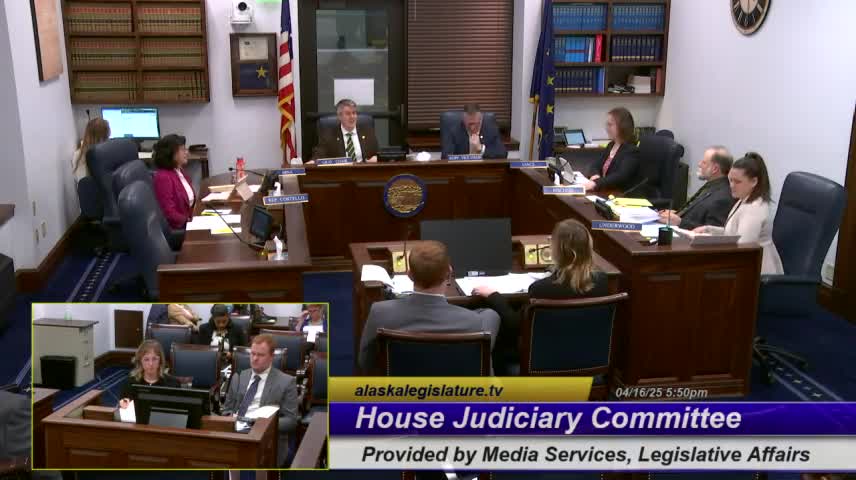
Representative Genevieve Mina (House District 19) presented House Bill 156 to the House Judiciary Committee on April 16, 2025. The bill would add a new article to AS 23.10 (employment practices) creating state law requirements for pay transparency in job postings and protections for employees who discuss compensation.
Mina summarized HB 156 as a tool to improve Alaska’s competitive labor market by standardizing hiring practices and increasing transparency. “What House Bill 156 does is seeks to improve Alaska’s competitive labor market and strengthen our workforce by standardizing fair, transparent hiring practices,” she said.
The staff sectional summary presented to the committee described the bill’s provisions: employers must include a salary or salary range in job postings; applicants and employees may discuss current pay; employers may not ask an applicant about salary history; an employee is not obligated to disclose compensation and an employer may not use voluntarily disclosed salary history to set pay for a new hire. The bill would require employers to post a summary of the law, prohibit retaliation and create a civil claim for damages with a three‑year statute of limitations. The draft directs the Commissioner of the Department of Labor and Workforce Development to adopt regulations and authorizes penalties between $100 and $2,000, with discretion for the commissioner to reduce fines or allow corrective audits.
Dr. Michael Walsh, vice president for public policy at the 4Acre Group (a statewide nonprofit association), testified in support. Walsh said pay transparency helps address the gender pay gap and aids recruitment and retention. “Pay transparency is a critical tool in addressing gender pay equity,” he said, and noted that the 4Acre Group requires pay ranges for nonprofit job postings on its job board.
Committee members asked procedural questions about covered employers, the status of independent contractors (the draft exempts independent contractors), and which entities count as employers (the bill defines “employer” to include the state, the University of Alaska, Alaska Railroad Corporation, political subdivisions, and any person who employs one or more employees). Members also asked how many other states have similar laws; Dr. Walsh said roughly two dozen states have related pay‑transparency laws but did not identify specific states during the hearing.
Action: The committee set HB 156 aside for further consideration and indicated it will be heard again a week later. No committee vote on final passage occurred at this hearing.
Why this matters: HB 156 would create statutory pay‑transparency requirements and anti‑retaliation protections that could affect hiring practices across public and private employers in Alaska and contribute to efforts to reduce pay disparities.
What’s next: The committee will take HB 156 up again at a future meeting; staff and interested parties will have an opportunity to submit amendments and comment.