Get Full Government Meeting Transcripts, Videos, & Alerts Forever!
Get email alerts on the Pfd Child Support topic
No spam. Unsubscribe anytime.
Panel reviews bill letting state apply for PFDs to collect child‑support arrears; legal questions prompt withdrawal of amendments
Summary
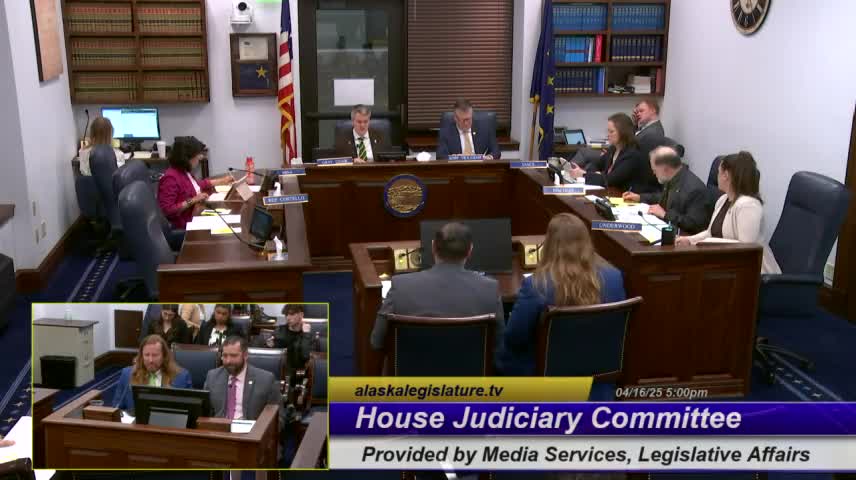
Representative Ashley Kerrick (West Fairbanks) introduced House Bill 137 on April 16, 2025, a proposal that would allow the state to apply for a Permanent Fund Dividend on behalf of residents who owe child‑support arrears and who have not timely filed their own PFD application.
Representative Ashley Kerrick (West Fairbanks) introduced House Bill 137 on April 16, 2025, a proposal that would allow the state to apply for a Permanent Fund Dividend (PFD) on behalf of residents who owe child‑support arrears and who have not timely filed their own PFD application.
Kerrick told the committee the bill is intended to help children owed support. “There are around 30,000 child support cases eligible to have PFD garnished,” Kerrick said, noting that about 10,000 of those individuals voluntarily apply for a PFD, leaving roughly 20,000 cases that could be affected if the state applies on their behalf.
The committee heard amendments and detailed questions about residency screening and potential legal exposure. Griffin Seque, staff to Representative Kerrick, described an amendment offered in committee intended to clarify that applying for a PFD on behalf of an obligor is not evidence that the person is an Alaska resident; the amendment was offered as a safeguard in the event a person had moved out of state and depended on the PFD for benefits elsewhere. That amendment (offered by Representative Eisheide) was withdrawn after members expressed legal and policy concerns.
Officials from state agencies participated in the hearing. Chris Tran, Director of the Child Support Enforcement Division (CSED) at the Department of Revenue, explained how cases are screened and submitted to the Permanent Fund Division: CSED sends cases with a baseline arrearage (the division cited a threshold of $5 or more) and matches by Social Security number, name and date of birth to identify PFD recipients for potential garnishment. Genevieve Wojczesik from the PFD division and legal counsel from Legislative Legal and the Department of Law were available to answer questions.
Committee members pressed for clarity about how the state would avoid applying for PFDs for people who are no longer Alaska residents and about whether criminal nonpayment or “criminal abandonment” should make victims eligible for other compensation (for example, the Victims’ Compensation fund). Deputy Attorney General John Skidmore said he had not reviewed this bill and could not answer specific legal questions at that moment; Legislative Legal Services attorney Emily Naumann said she did not see a takings clause problem with an amendment that would direct unused remainder amounts to the Permanent Fund, noting precedent where dividends otherwise ineligible for felons were set aside for a restorative fund.
Action in committee: Members offered and discussed multiple amendments; Representative Eisheide withdrew amendment 1 and later amendment 2 was also withdrawn. The committee set the bill aside for further study and said it will be brought back at a later meeting to allow staff and legal counsel to answer outstanding questions.
Why this matters: HB 137 would change how the state collects child support arrears by using PFDs as a collection vehicle for eligible arrears when obligors do not file for their own dividend. The bill affects program administration and raises legal questions about residency screening, interjurisdictional effects and precedent for diverting otherwise eligible funds.
What’s next: The committee will revisit HB 137 at a later date after additional legal review and agency follow‑up; no final vote occurred at this hearing.