Get Full Government Meeting Transcripts, Videos, & Alerts Forever!
Get email alerts on the Electronic Identification topic
No spam. Unsubscribe anytime.
Committee hears bill to recognize electronic driver licenses; DMV says mobile ID will remain companion to physical card
Summary
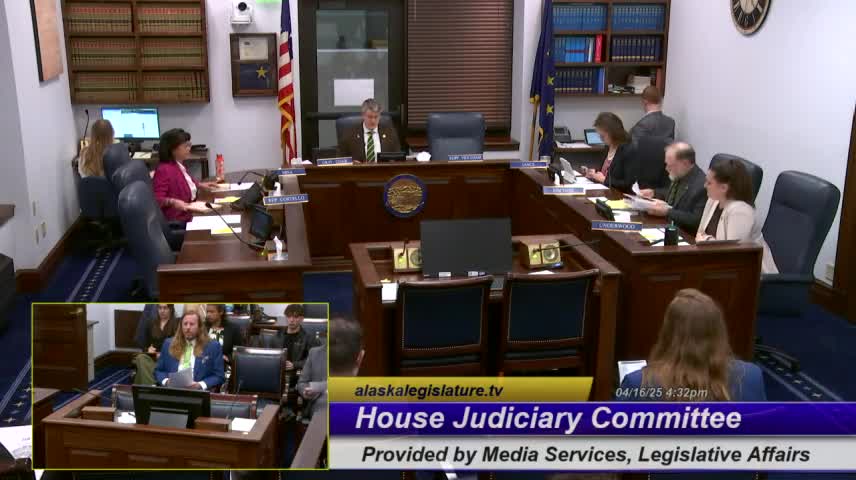
House Judiciary Committee Chair Representative Gray opened a public hearing on House Bill 180 on April 16, 2025, a bill from the governor that would authorize the Department of Administration to issue electronic driver’s licenses and state IDs as a digital companion to existing physical cards.
House Judiciary Committee Chair Representative Gray opened a public hearing on House Bill 180 on April 16, 2025, a bill from the governor that would authorize the Department of Administration to issue electronic driver’s licenses and state IDs as a digital companion to existing physical cards.
Department of Administration acting administrative services director Eric Demulan told the committee the bill “authorizes the Department of Administration in conjunction with already existing physical ID cards to also offer electronic driver’s licenses to constituents here in Alaska,” and that it is “designed to strengthen privacy protections” while clarifying legal procedures for law enforcement.
The bill, presented by Forrest Wolf, legislative liaison for the Department of Administration, would amend multiple Alaska statutes to recognize an electronic identification card while maintaining a statutory requirement that a person retain a physical identification or driver’s license card. Wolf described provisions that would (as written) require return of a physical card when a license is canceled, suspend or revoke physical cards, and allow the commissioner to enter into agreements with law‑enforcement or data‑exchange services to support electronic credentials.
Lauren Whiteside, division operations manager for the Division of Motor Vehicles (DMV), said Alaska already operates an “Alaska Mobile ID” (M‑ID) as a companion credential and that HB 180 would provide legal recognition and clarity for its use. “The Alaska MIB [M‑ID] offers enhanced security features compared to physical ID cards,” Whiteside said. “Users have control over the personal information they share, allowing them to verify their identity or age without disclosing unnecessary details.”
Whiteside described privacy and technical safeguards discussed in the bill and in DMV implementation: the proposed language prohibits officers from accessing other data on a mobile device when a presented electronic driver’s license is being checked and grants immunity to law enforcement for damage to a device except in cases of intentional misconduct. The draft also directs the department to adopt regulations governing issuance and use, and requires electronic credentials to display notices of revocation, cancellation, limitation, restriction or suspension across the front of the electronic license.
Committee members asked operational questions about interoperability and acceptance. Whiteside said the M‑ID can indicate Real‑ID compliance and that Alaska is working toward acceptance by the Transportation Security Administration, with a target of late 2025 for federal checkpoint acceptance. She said the DMV developed and released a free verifier app for businesses and retailers and that verifiers must opt in; businesses that choose to accept mobile IDs can set the verifier’s required fields (for example, requiring an address), and if a user declines to share those fields they can present their physical card instead.
The witnesses also said the DMV followed ISO standards in development, uses best practices promulgated by the American Association of Motor Vehicle Administrators, and participates in an industry digital trust program. Whiteside stated that the personalization facility for physical cards occurs in the United States and described the credential vendor relationship as one the DMV has used for the last decade.
Committee action: Chair Gray set the bill aside for further work and set an amendment deadline of Wednesday, April 23, 2025 at 5:00 p.m. The committee also noted Captain Kidchan of the Alaska State Troopers was available online for questions. No final vote on the bill occurred at the hearing.
Why this matters: HB 180 would put Alaska’s current, opt‑in mobile credential on explicit statutory footing while preserving the legal and practical role of the physical card. The bill’s provisions on privacy, law‑enforcement access, and verifier standards shape how Alaskans and businesses will be expected to use electronic IDs if enacted.
What’s next: The committee will accept amendments through April 23, 2025, and the bill will be returned for further consideration.