Get Full Government Meeting Transcripts, Videos, & Alerts Forever!
Get email alerts on the Historic Avenue Overlay topic
No spam. Unsubscribe anytime.
Planning Commission backs 'Historic Avenue' overlay to allow smaller lots, ADUs and cottage courts in older neighborhoods
Summary
The commission voted to adopt Article 15 to the Unified Development Code, a 'Historic Avenue' overlay that reduces minimum lot area and width, allows accessory dwelling units, cottage courts and small attached units in specified neighborhoods, and sets a 2,000‑square‑foot minimum for newly created lots.
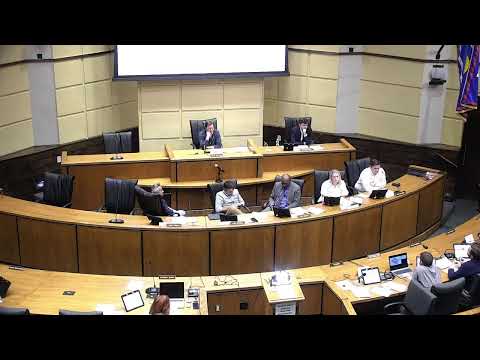
The Mobile Planning Commission on April 17 voted to forward and approve an amendment to the Unified Development Code creating a new Historic Avenue overlay (Article 15) intended to ease development constraints in older, narrow‑lot neighborhoods.
Staff explained the overlay aims to encourage infill housing types that fit the historic fabric of neighborhoods such as The Campground, Lafayette Heights and The Bottom. The overlay reduces dimensional standards compared with the base UDC: newly created lots may be as small as 2,000 square feet; minimum lot width can be reduced to 20 feet in specific circumstances; lot coverage may be increased to 75 percent; and the overlay explicitly allows accessory dwelling units, cottage courts, duplexes, triplexes and attached townhomes as appropriate housing types. “These challenges predated the UDC … This is our way of seeking to address that,” a planning staff presenter said during the public hearing.
Commissioners asked staff about the number of existing narrow lots in the area (staff estimated about 100 existing lots at or near 20‑foot widths) and whether the overlay would permit newly created 20‑foot lots; staff said the standards are tailored to allow redevelopment compatible with historic footprints and that new lots would be subject to the overlay’s dimensional rules and review. “The intent was to recognize the historic layout of that neighborhood and try to honor that,” a staff speaker said.
After discussion, the commission approved the overlay amendment and will forward it to the City Council per the local process. The staff packet included an amendment adopted shortly before the meeting clarifying that newly created lots must meet a 2,000‑square‑foot minimum; that modification was noted to the commission and included before the vote.