Get Full Government Meeting Transcripts, Videos, & Alerts Forever!
Get email alerts on the Utilities Outside Connections topic
No spam. Unsubscribe anytime.
Sebring council approves ordinance limiting outside-city utility hookups and adopts a standard utility services agreement
Summary
The City of Sebring approved Ordinance 15-38 requiring City Council approval before properties outside city limits can connect to Sebring utilities and adopted a template utility services agreement intended to limit later claims of promised capacity. Developers and an attorney raised concerns about broad discretion and legal risk.
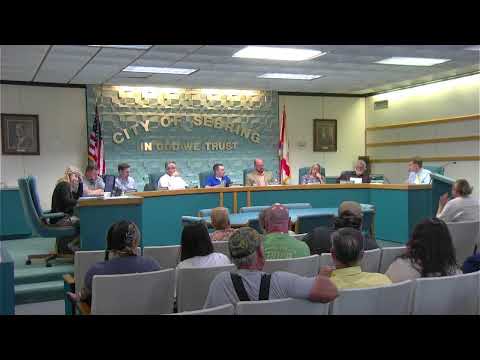
The City of Sebring City Council on April 15 approved Ordinance 15-38, which amends chapter 23 of the city code to require City Council approval before properties located outside the city limits may connect to a Sebring utility system. Council also approved a proposed utility services agreement that the city said creates an enforceable record of what capacity and service were promised when outside users request hookups.
City staff said the ordinance and the agreement are intended to give the city clear, written terms when it offers water or sewer service to properties outside the corporate limits, reducing later disputes about whether the city promised service. City attorney or staff (Mr. Swain) explained the template agreement requires the property owner — not just a developer — to describe the proposed development so council approves service based on that specific proposal.
The nut of the measure, staff said, is to protect the city following litigation over outside users: if the city has no signed agreement, it may be construed as having promised capacity. The agreement includes a declaration by the owner describing the development and the applicant’s service needs.
At the meeting, consultant Dana Riddell of Stonehenge Lane Development Consultants urged council to delay the ordinance and consider alternatives. Riddell said the ordinance’s standards are broad and give council “a lot of latitude” that makes it hard to advise clients and could chill development. She suggested the city revisit past tools such as a select area plan or coordinate with the Central Florida Regional Planning Council to adopt clearer, objective standards rather than the current language that she said reads as discretionary.
After the votes, attorney MacGregor Love said he had submitted a letter (provided to council earlier that day) warning the council that case law requires objective criteria when a municipality exerts planning-level discretion over property outside its boundary. Love said the ordinance, as written, risks giving too much subjective discretion and asked the council to note that legal concern.
Council approved Ordinance 15-38 on the council motion and later approved the proposed utility services agreement as presented. The recorded roll calls showed council members present voting to adopt both measures.
The ordinance is described on the agenda as "an ordinance amending chapter 23 of the Code of Ordinances of the City Of Sebring by requiring City Council approval for property located outside the City limits to connect to a City utility system and providing for an effective date." The utility agreement was introduced as a standard form the city will use when outside properties request capacity.
The council did not provide detailed objective standards at the meeting for how it will decide outside-utility requests; multiple speakers asked for clearer, objective criteria and for the city to explore other planning mechanisms. Staff said the agreement helps limit future liability by tying city approval to a specific, owner-signed description of the development.
Council action on the ordinance and the adoption of the template agreement conclude the item for this meeting. Any future service approvals will be considered under the new ordinance and will use the approved form of utility services agreement.