Get Full Government Meeting Transcripts, Videos, & Alerts Forever!
Get email alerts on the Watershed Planning topic
No spam. Unsubscribe anytime.
Tampa details watershed planning, neighborhood fixes and homeowner options after last season's storms
Summary
City engineers described a citywide watershed master plan, potential FEMA flood insurance discounts, cross-jurisdiction coordination with Hillsborough County, and neighborhood‑level micro projects. Staff recommended homeowners consider elevation where feasible and described check valve use and green infrastructure.
City of Tampa stormwater engineers used a public town hall to outline longer-term planning and neighborhood strategies intended to reduce flood risk citywide and to explain what residents can do to protect property.
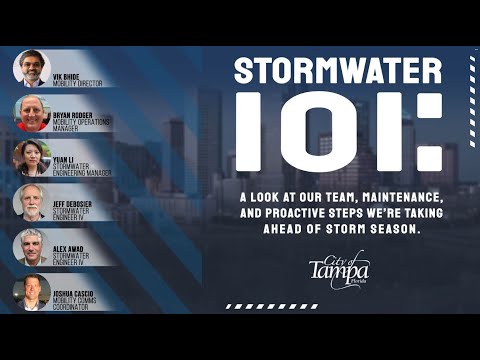
"A citywide watershed master planning effort is currently underway to get a better feeling about the flood risks and identify future improvement projects," said Yuan Li, head of stormwater engineering. Li said the watershed planning work is intended to inform future capital projects and policies and to provide data that could help residents with flood insurance discounts through FEMA's Community Rating System. City staff said the current CRS discount is 25 percent and that the watershed effort could help secure an additional 10 percent discount for residents once completed.
Officials stressed that stormwater management crosses jurisdictional boundaries and requires coordination with Hillsborough County. "Some basins go across both the county and the city with the city being the downstream receiving stormwater from the county," Li said, adding that Mobility leadership meets quarterly with county public‑works officials and that the county has engaged an independent firm for a post‑hurricane regional assessment.
On localized measures, stormwater staff described a mix of micro projects — inlet widening, additional grates, added piping, and resurfacing — in neighborhoods such as Palmasia Pines and Parkland Estates to produce near‑term relief while larger capital projects proceed. The Lower Peninsula and Southeast Seminole Heights projects were cited as completed or near completion, and staff noted several ongoing projects including MacDill 48.
Engineers also discussed technical fixes: Alex Awad (stormwater engineer) said the city has installed about nine flap gates/check valves where appropriate to reduce bay or tidal backflow into local storm systems, but warned such devices require a certain head (water level difference) to operate and can affect outflow during heavy rain. "We have installed approximately 9 check valves or flap gates," Awad said. Staff said they evaluate sites case by case and have requests under review for additional locations.
To protect water quality, Chief Design Engineer Jeff DeBosier described programs and design features the department uses: street sweeping to remove debris and nutrients before they enter waterways, inlet baskets, rain gardens, pervious pavement in capital projects, and underground baffle boxes that capture silt and floating debris for later removal. DeBosier said material collected in cleaning operations is hauled offsite to appropriate disposal facilities.
City staff encouraged homeowner actions where feasible: Jeffrey DeBosier noted that some riverfront residents have had success with waterproofing or temporary sandbags but that raising homes above FEMA coastal flood levels is the most permanent option. "There’s really no easy solution to the storm surge situation in Tampa," DeBosier said; residents were told to weigh cost and feasibility when considering elevation or reconstruction.
Information and public materials: staff pointed residents to quarterly stormwater reports and new monthly maintenance reports on tampa.gov/mobility/stormwater and to project websites such as lpstormwater.com for the Lower Peninsula work. The department also publicized a post‑disaster redevelopment plan meeting scheduled April 29 at the Hanna Center.
What officials did not promise: no regulatory changes were announced at the town hall and large projects remain contingent on funding and interagency coordination. Staff emphasized the watershed plan will identify options but that implementing some measures will require additional resources and approvals.