Get Full Government Meeting Transcripts, Videos, & Alerts Forever!
Get email alerts on the Probation Revocation topic
No spam. Unsubscribe anytime.
Panel backs cleanup to probation revocation rules, exempts specialty courts from automatic revocation
Summary
House Bill 214, a tidy-up measure addressing probation revocation and the statutory removal of 'street credit,' was reported favorably by the House Committee on Criminal Justice after debate about judicial discretion and drug‑court participants.
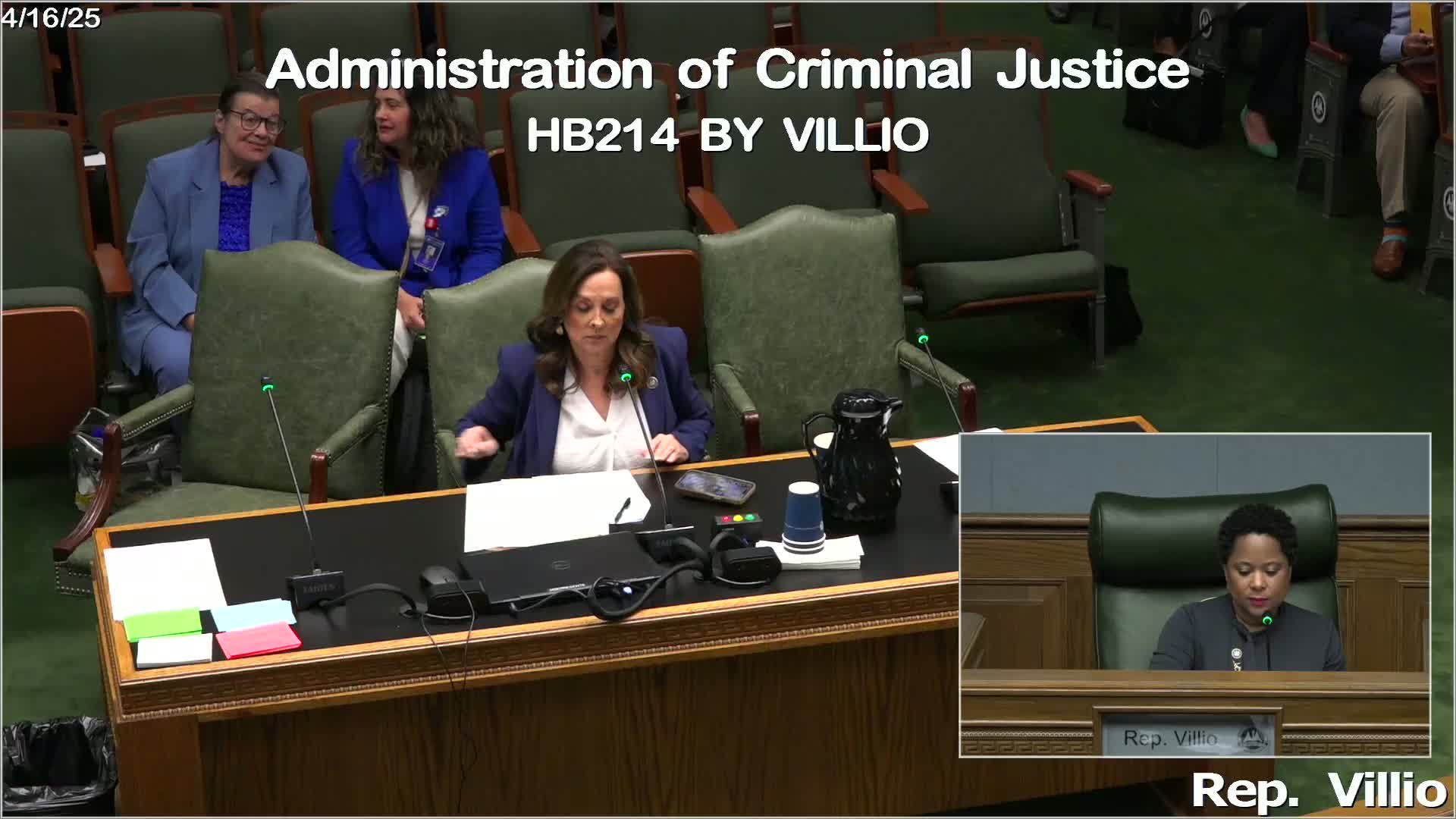
The House Committee on Criminal Justice reported House Bill 214 favorably on April 16 after debate over statutory cleanup to probation revocation rules.
Chairwoman Debbie Villio explained HB 214 corrects a drafting oversight after a prior repeal of “street credit” and removes references that could be read to allow good‑time or street credit while a defendant is on probation. She told members the bill “mandates the revocation of a felony probation when the defendant subsequently commits and is convicted of a felony while on probation” while removing the ability to revoke felony probation for the commission of a misdemeanor.
Villio also said the bill exempts a defendant participating in a drug or specialty court from mandatory revocation of a felony probation unless the participant fails to complete the court-ordered program.
Opponents argued the measure removes judicial discretion and could lengthen effective punishment if time already served on probation is not credited when a revocation occurs. Bruce Riley of the public testified in opposition, saying removal of credit for time served could produce sentences longer than courts originally imposed and could harm people seeking help in drug-treatment courts.
Supporters from the prosecutorial and law-enforcement community — including district attorneys and the Louisiana Sheriffs Association — filed green cards and many did not wish to speak. Chair Villio said the bill is intended to reflect the committee’s original intent from last year and to allow judges discretion for technical violations while removing certain automatic-credit rules.
Representative Bakala moved to report the bill favorably. Representative Walters objected, and the committee called the roll. The chair recorded the final tally as 10 yeas and 1 nay; Representative Walters cast the lone recorded no vote. The bill will be reported to the next stage of the House process.