Get Full Government Meeting Transcripts, Videos, & Alerts Forever!
Get email alerts on the State Benefits topic
No spam. Unsubscribe anytime.
Committee hears bill to eliminate SmartHealth wellness incentives for state and school employees
Summary
A Ways & Means briefing and public hearing on Senate Bill 5807 focused on eliminating the SmartHealth online portal and a $125 annual wellness incentive for members of the Public Employees Benefits (PEB) and School Employees Benefits Board (SEBB) plans, with unions opposing the cut and staff citing multi‑year savings in fiscal notes.
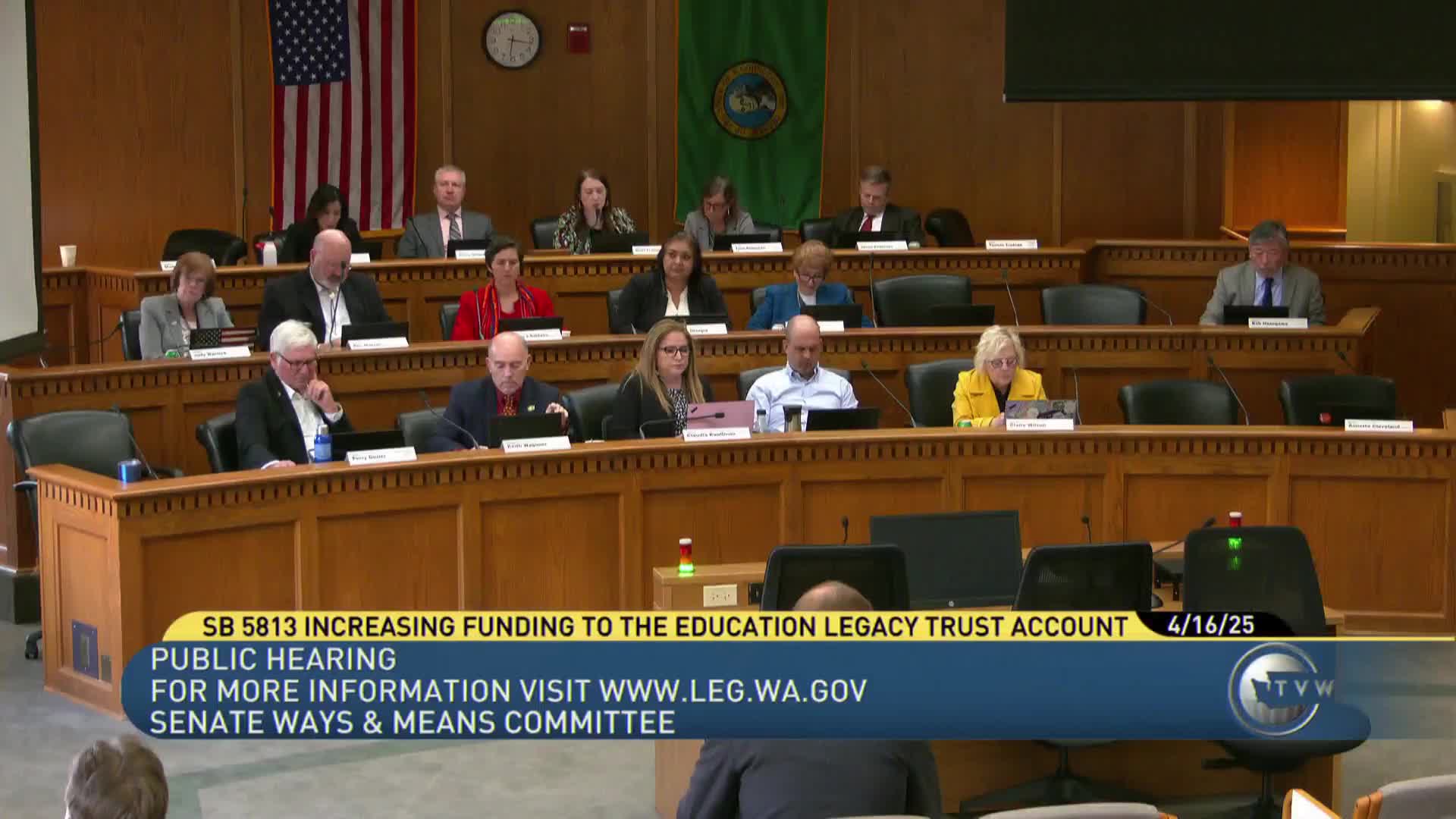
Senate Bill 5807 would end the SmartHealth wellness online portal and the $125 annual wellness incentive for employees covered by the Public Employees Benefits (PEB) and the School Employees Benefits Board (SEBB) plans, the committee heard at its April 16 Ways & Means hearing.
The bill’s staff briefing said the portal would be eliminated as of Jan. 1, 2028, and employees who earn an incentive by Dec. 31, 2027, would still receive it during calendar year 2028. The fiscal note presented to the committee showed savings beginning in fiscal 2028 and larger ongoing savings in fiscal 2029, tied to both ending the portal and eliminating the $125 payments.
Tianyi Lin and Amanda Cecil (staff) explained the policy and budget effects. Amanda Cecil, committee staff, told the committee that the wellness incentives currently focus on “proven strategies, such as smoking cessation, injury and accident prevention, reduction of alcohol misuse, appropriate weight reduction, exercise, automobile and motorcycle safety, blood cholesterol reduction and nutrition education,” and that PEB and SEBB already offer programs such as smoking cessation and diabetes management.
Cecil said the fiscal note projects $2.1 million in savings in fiscal 2028 related to eliminating the online portal and about $7.4 million ongoing beginning in fiscal 2029 when both the portal and the $125 incentive are removed; staff estimated the change would reduce per‑member monthly rates by an average amount across the plans.
Representing employee groups, Seamus Petrie of the Washington Public Employees Association and Kurt Spiegel, executive director of the Washington Federation of State Employees, each testified in opposition. Petrie said WPEA represents nearly 5,000 state employees and that members “cannot support the bill” because it cuts a bargained benefit. Spiegel, whose union represents more than 52,000 state employees, said the $125 reduction “helps offset health care costs” for lower‑wage workers and urged lawmakers to pursue revenue options instead of reducing employee benefits.
No formal committee vote was recorded during the public hearing. The chair noted procedural timing and encouraged written testimony for sign‑ups who could not be heard before the hearing closed.
Why it matters: The hearing pits a relatively small annual incentive against projected general‑fund savings; staff presented concrete dollar estimates and a timeline for budget impact, while unions warned about the effect on lower‑wage state employees who rely on the incentive to offset healthcare costs.
The bill record and submitted testimony will remain available through the committee’s written‑testimony portal.