Get Full Government Meeting Transcripts, Videos, & Alerts Forever!
Get email alerts on the Seafood Transparency topic
No spam. Unsubscribe anytime.
Committee backs bill to move seafood import testing and reporting to agriculture department
Summary
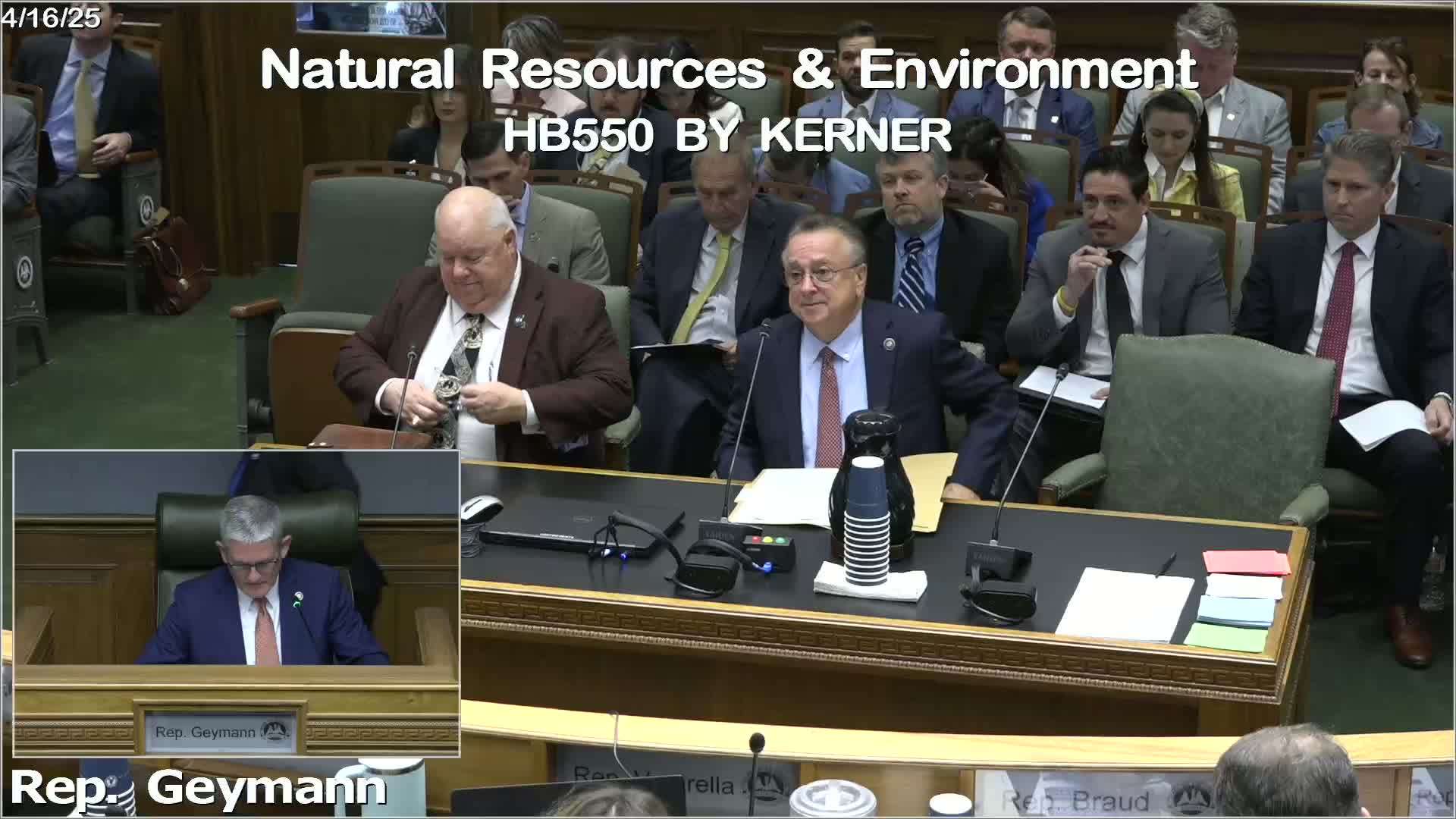
The House Natural Resources Committee adopted amendments and reported favorably a substitute for House Bill 550 (substitute 12-57) to centralize reporting, testing and enforcement for imported seafood under the Department of Agriculture and Forestry, with fines and adjudicatory procedures established.
A House committee on April 16 adopted amendments and reported favorably substitute 12-57 for House Bill 550, transferring authority and day-to-day responsibility for imported seafood reporting and testing to the Louisiana Department of Agriculture and Forestry.
The measure, carried by Representative Kevin Kerner, would require importers and processors to submit reports and samples so the state can track whether domestic seafood is being mixed with imports and to enable lab testing for adulterants.
"This bill is just for transparency," Representative Kevin Kerner said during the committee hearing. "We want to make sure that the less than 10% that’s caught domestically is not being mixed in with any foreign imports and being sold at, from the processing plants."
The Department of Agriculture and Forestry, represented in committee by Commissioner Mike Strain, told lawmakers the agency already operates the state agricultural chemistry lab in partnership with the LSU AgCenter and has adjudicatory structure to handle enforcement. "We do the testing through the agricultural chemistry lab which is a joint lab that we have with the LSU AgCenter," Strain said. "This will streamline the process."
Under the substitute language, the department would collect reporting data, run required tests and forward any positive findings to Health and Hospitals (for stop orders or public-health actions) while adjudicatory steps such as fines would be handled through the department’s established administrative process.
Committee members asked about civil penalties and how labeling fines interact with the new authority. Committee discussion cited a sequence of escalating fines for failure to report: up to $1,000 for a first violation, $2,500 for a second and up to $5,000 for a third. Separate statutory penalties for mislabeling packages noted in committee testimony were described as higher (witnesses cited first-offense labeling penalties at $15,000, escalating on repeat violations).
Representative Ed DeWitt moved favorable action on the substitute and the committee reported the bill favorable with amendments; the amendments were adopted on a voice vote prior to the favorable report.
Support and opposition cards were filed; supporters included individuals who did not speak at the table and the Lieutenant Governor’s office was listed as having helped develop substitute language. Opponents on the card list included representatives of the Louisiana Retailers Association.
The department testified it expects most processors to comply and that the program’s goal is improved transparency rather than heavy fines. "If they miss a date, they will get a noncompliance letter, and after that the fines start," Strain said. "Generally, those entities are not going to let it escalate."
The committee sent the measure forward with the adopted substitute language. Implementation details—including where fines will be deposited and precise licensing-fee flows—were discussed as follow-up items for the department to clarify to the committee.