Get Full Government Meeting Transcripts, Videos, & Alerts Forever!
Get email alerts on the Party Recognition And Registration topic
No spam. Unsubscribe anytime.
Committee advances bill to dissolve ‘Independent Party’ and reclassify affected voters ahead of closed primaries
Summary
The committee advanced legislation to dissolve the recognized Independent Party, converting its registered members to an unaffiliated ‘no party’ status and increasing the threshold and fee for new party recognition.
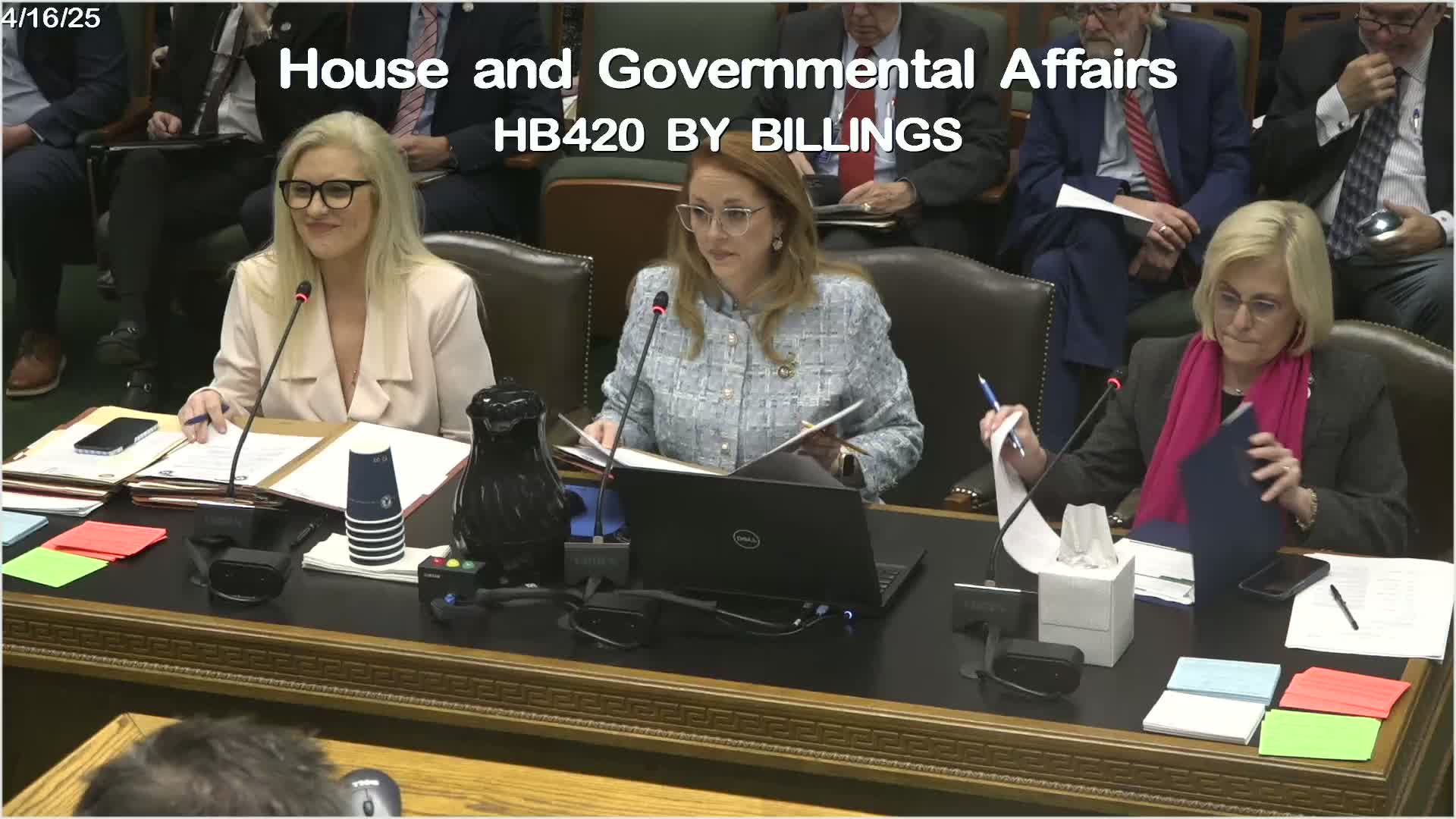
The House and Governmental Affairs Committee reported House Bill 420, by Representative Billings, favorably as amended after extended questioning and testimony from the secretary of state and party representatives. The bill would dissolve the recognized Independent Party and reclassify its roughly 150,000 registered members as “no party” (the statutory term for unaffiliated voters). It also raises the recognition threshold for a political party from 1,000 registered members to 5,000 and increases the registration fee from $1,000 to $5,000.
Secretary of State Nancy Landry told the committee the change seeks to reduce voter confusion under newly enacted closed primary rules. Landry said many voters who wrote “independent” on registration forms were moved, when the Independent Party was recognized, into that party without realizing they had joined an organization. Under the bill, voters who registered with the Independent Party and those who register as Independent after Aug. 1, 2025, would be designated “no party.” The bill requires the Department to mail notices to affected registrants describing the change; the committee adopted an amendment (12-64) to add an explanatory notice that will accompany the mailed letters.
Representative Billings said the change restores prior practice and makes clear how a political party may dissolve using its own bylaws. Supporters argued the change would allow those voters to participate as unaffiliated voters in closed party primaries in 2026. Representative Newell and other lawmakers asked about outreach, timetables and whether people who want to affiliate with a newly formed Independent Party would be able to do so; officials said the bill would prohibit parties naming themselves “Independent” going forward, consistent with prior law, and that a party could instead form under another name and meet the 5,000 threshold and fee.
The bill’s supporters said the secretary of state’s office plans an outreach campaign — mail, radio, TV and social media — after the current election to inform voters of changes. The committee adopted Representative Bowyer’s amendment requiring an explanatory notice, and a final voice vote (no objection) reported HB 420 favorably to the House calendar.