Get Full Government Meeting Transcripts, Videos, & Alerts Forever!
Get email alerts on the Emergency Medical Services topic
No spam. Unsubscribe anytime.
Committee holds bill on emergency lights for trauma surgeons for further drafting after liability and training concerns
Summary
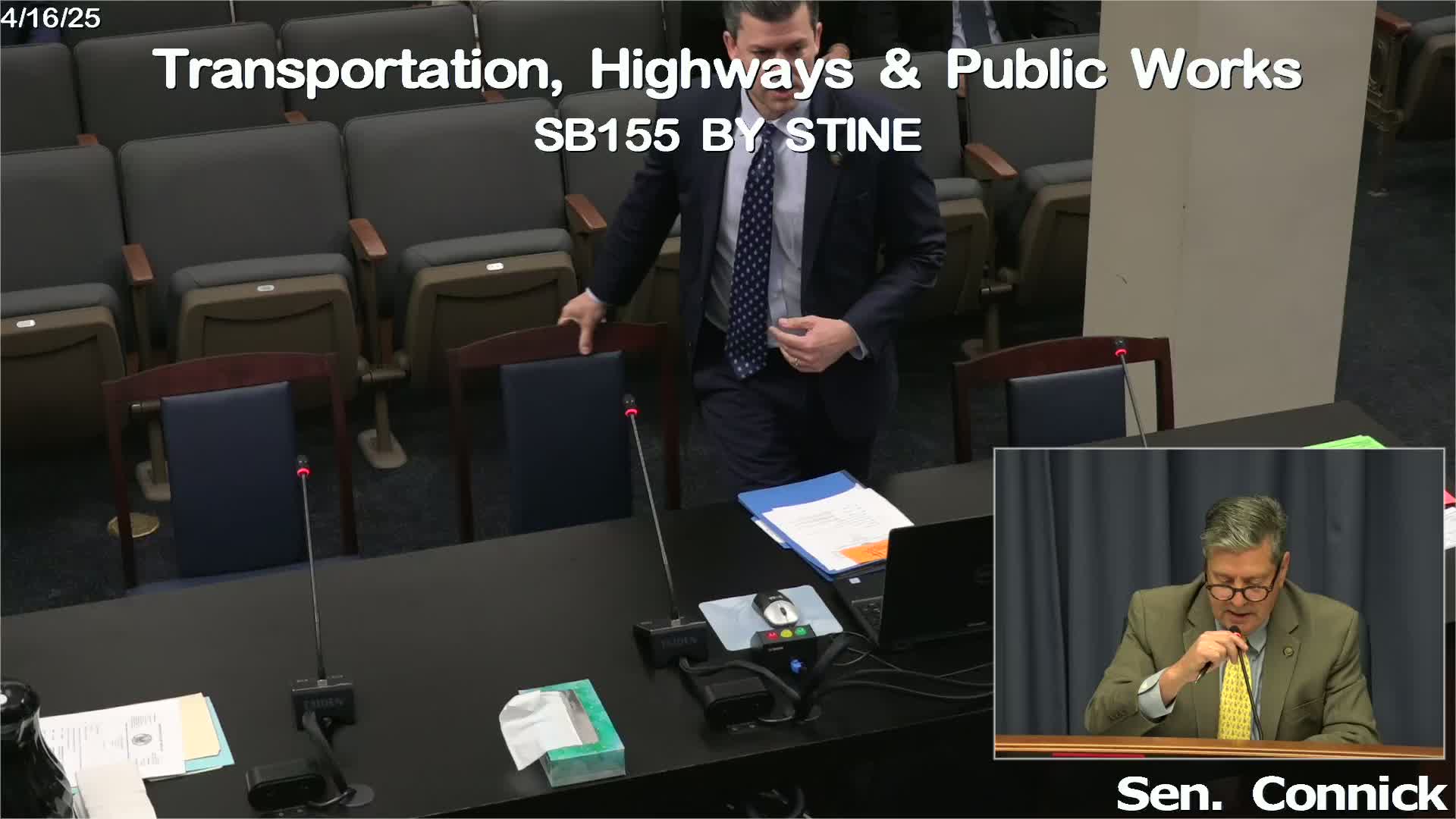
Senate Bill 155, which would permit certain trauma surgeons to use emergency lights and sirens when driving to trauma centers, was held for further work after senators and state police raised questions about scope, training and liability.
Senate Bill 155, which would allow certain trauma surgeons to operate motor vehicles with emergency lights and sirens when responding to bona fide life‑threatening emergencies, was held in committee for further language work after senators and state police raised training and liability concerns.
Senator Stein introduced the bill and said it was prompted by accounts from trauma surgeons who missed time‑sensitive operations because of traffic delays. “There’s been some very close calls... they feel that they could have saved a life or had a better done a better job with the surgery,” Stein said, describing cases where a surgeon’s delayed arrival may have affected outcomes.
The bill as presented would permit trauma‑1 surgeons to use lights and sirens to reach trauma‑1 centers; it directs the Department of Public Safety to promulgate rules including surgeon identification and verification procedures. Committee members, including Senator McMath and Senator Carter, and representatives of Louisiana State Police urged clarifications: limit the scope to surgeons actively practicing in-state, define which trauma centers qualify (members suggested adding level 2 and 3 centers), require training similar to that required for emergency vehicle operators, and address liability and insurance questions.
Kevin Lance of the Louisiana State Police told the committee that law enforcement had discussed language to help clarify how officers would interact with surgeons using emergency privileges and emphasized training needs for safe high‑speed driving. Senators also discussed whether existing liability standards for volunteer emergency responders would apply to physician drivers.
After extended discussion, Senator McMath proposed staff and sponsor work to tighten the bill’s language and retain it in committee for a week for revisions; the sponsor agreed and rescinded a prior motion to advance the bill. The chairman confirmed the bill would be held so staff could prepare clarified language for future consideration.