Get Full Government Meeting Transcripts, Videos, & Alerts Forever!
Get email alerts on the Donation Bins Regulation topic
No spam. Unsubscribe anytime.
Findlay staff proposes permit, setbacks and size limits for clothing‑donation bins; committee asks for size, fee and exemptions
Summary
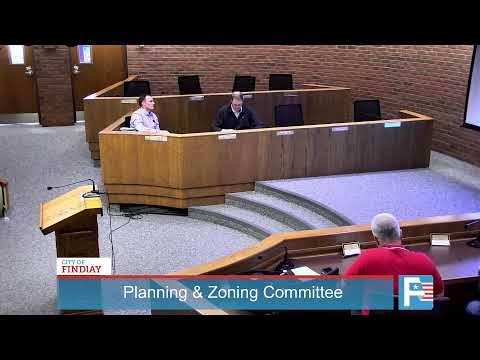
Planning staff briefed the Findlay Planning & Zoning Committee on a proposed ordinance to regulate clothing‑donation bins and on possible zoning changes to move certain commercial uses to conditional review; the committee directed staff to add a size limit, fee/renewal details, and relief for on‑site collection operations and voted to continue drafting.
Planning staff presented a draft ordinance and zoning changes for the committee’s review and the committee voted to continue developing the measures.
Staff said an intern’s inventory found many donation bins across the city — “I believe there were 30 donation bins on Tiffin Avenue,” staff said — and presented a proposed code section numbered in the transcript as 1161.16 that would regulate donation‑bin placement, identification, maintenance and permitting. “We would require a letter of permission from the property owner,” planning staff said, describing the application requirements.
Key elements staff proposed or the committee discussed include: - A letter of permission from the property owner before a bin may be sited on a parcel; no more than two donation bins per parcel; bins must meet property setbacks and not interfere with drive aisles. - Bins shall not be located between the primary building and the roadway and must be located no further than 20 feet from the primary building, a placement rule staff said would keep bins to the side or rear of a building. - Existing donation bins would be required to obtain a permit within 90 days of the ordinance’s effective date; enforcement would proceed through the city’s zoning enforcement process rather than immediate removal, per the law director’s advice relayed by staff. - Permit application must list the owner’s name, address, phone number and e‑mail and the name and contact for the party responsible for servicing the bin so staff can request prompt cleanup when material is outside a bin. - The committee asked staff to add a maximum size restriction (committee members discussed container dimensions in the roughly 8–15 foot range in examples shown and asked staff to research standard limits). Staff said they will add a size restriction and survey other communities’ approaches. - Staff proposed a permit fee (options discussed ranged from $25 to $50 in committee comments); the ordinance draft left the fee amount to be finalized. Committee members agreed on a renewal/inspection timeframe and suggested a two‑year permit renewal as a starting point.
On enforcement, planning staff said the law director advised using the zoning‑violation process and court remedies rather than direct removal of bins by the city. Staff also noted existing container maintenance standards in the draft (reference in the draft: 1161.16 0.4) addressing paint, rust and cleanliness; enforcement would be handled by the zoning department (staff identified Eric Adkins as the primary enforcement contact).
Committee members asked that the draft include consideration for on‑site collection operations (for example, Salvation Army or Goodwill collection bins that serve an on‑premise retail/processing facility) and asked staff to include relief or a variance option for those operations. Staff said they will add an exemption path for bins that directly serve on‑site collection/processing facilities.
During the same working conversation, staff proposed moving a set of uses to conditional‑use review in certain districts. Uses discussed for conditional‑use review included fueling stations, quick lube/oil‑change facilities, car washes, small‑box retail stores and self‑storage facilities; staff had been asked to consider those changes after public feedback. The committee removed pawn shops from the list of uses to be moved and left pawn shops permitted rather than conditional. Members discussed pros and cons of moving fueling stations and others to conditional status so the city can more closely review siting, traffic, noise, lighting and neighborhood impact on a case‑by‑case basis.
The committee voted to send staff back to draft the ordinance with the following direction: add a size restriction for donation bins; define the fee structure and renewal period (staff recommended a fee in the $25–$50 range and a two‑year renewal as a working proposal); include consideration and relief for on‑site collection operations like Salvation Army and Goodwill; and remove pawn shops from the conditional‑use proposal. The motion to continue work with those elements passed unanimously.
Votes at a glance - Motion to direct staff to revise draft donation‑bin ordinance (1161.16) with size restriction, fee/renewal definition, on‑site collection relief, and to remove pawn shops from the conditional‑use list: Motion moved by committee chair or member; seconded; outcome: approved (unanimous).
Next steps: staff will research maximum container sizes used by peer cities, propose a specific fee amount and renewal period, add an exemption pathway for on‑site collection operations, and return the revised draft to the committee and then to planning commission and council for formal consideration.