Get Full Government Meeting Transcripts, Videos, & Alerts Forever!
Get email alerts on the Insurance Regulation topic
No spam. Unsubscribe anytime.
House committee advances bill giving commissioner broader power to reject "excessive" insurance rates
Summary
Governor Jeff Landry urged the House Insurance Committee to give the state insurance commissioner power to disapprove “excessive” rates regardless of whether a market is labeled competitive, saying the change would let regulators force insurers to deliver reduced premiums when laws are changed.
Governor Jeff Landry pushed House Bill 576 to expand the state Department of Insurance’s authority to reject insurance rate filings that are “excessive,” arguing the change would let regulators hold insurers accountable and lower consumer premiums.
Landry told the House Insurance Committee the bill and a set of amendments mirror language used in Mississippi and would remove a statutory barrier that prevents the commissioner from finding rates excessive in a so-called competitive market. “If we empower the insurance commissioner with the ability to hold those that are profiting off of our misery accountable, then we'll have the power to ensure that the rates are lowered every time you touch the law,” Gov. Jeff Landry said.
The bill’s supporters framed it as a check on high premiums. Vice Chair Chad Brown, authorized to present the measure for Representative Robbie Carter, said amendment set 1265 changes the definition of “excessive” to mean a rate likely to produce a profit “unreasonably high for the insurance provided” or that contains an expense provision unreasonably high for the line of business, and it would allow the commissioner to set interim rates and escrow funds if a filing is disapproved.
Opponents — including Insurance Commissioner Tim Temple and trade groups representing insurers — warned the change would give the commissioner broad, subjective authority and could chill insurers’ willingness to do business in Louisiana. Commissioner Temple said the department already evaluates actuarial filings and rejects those that are not justified, and warned the proposed standard could be used to suppress actuarially justified rates for nontechnical reasons: “Giving the commissioner the authority to subjectively find a rate excessive in a competitive market would open the door for undue manipulation of the market,” Temple said.
During more than three hours of testimony and questions, the committee heard competing data claims about loss ratios, profits and whether tort reform or increased regulatory authority would produce lower premiums. Lawmakers pressed both the governor and the commissioner for evidence that the change would meaningfully reduce rates; the governor said Mississippi’s experience and a balanced package of reforms supported the approach.
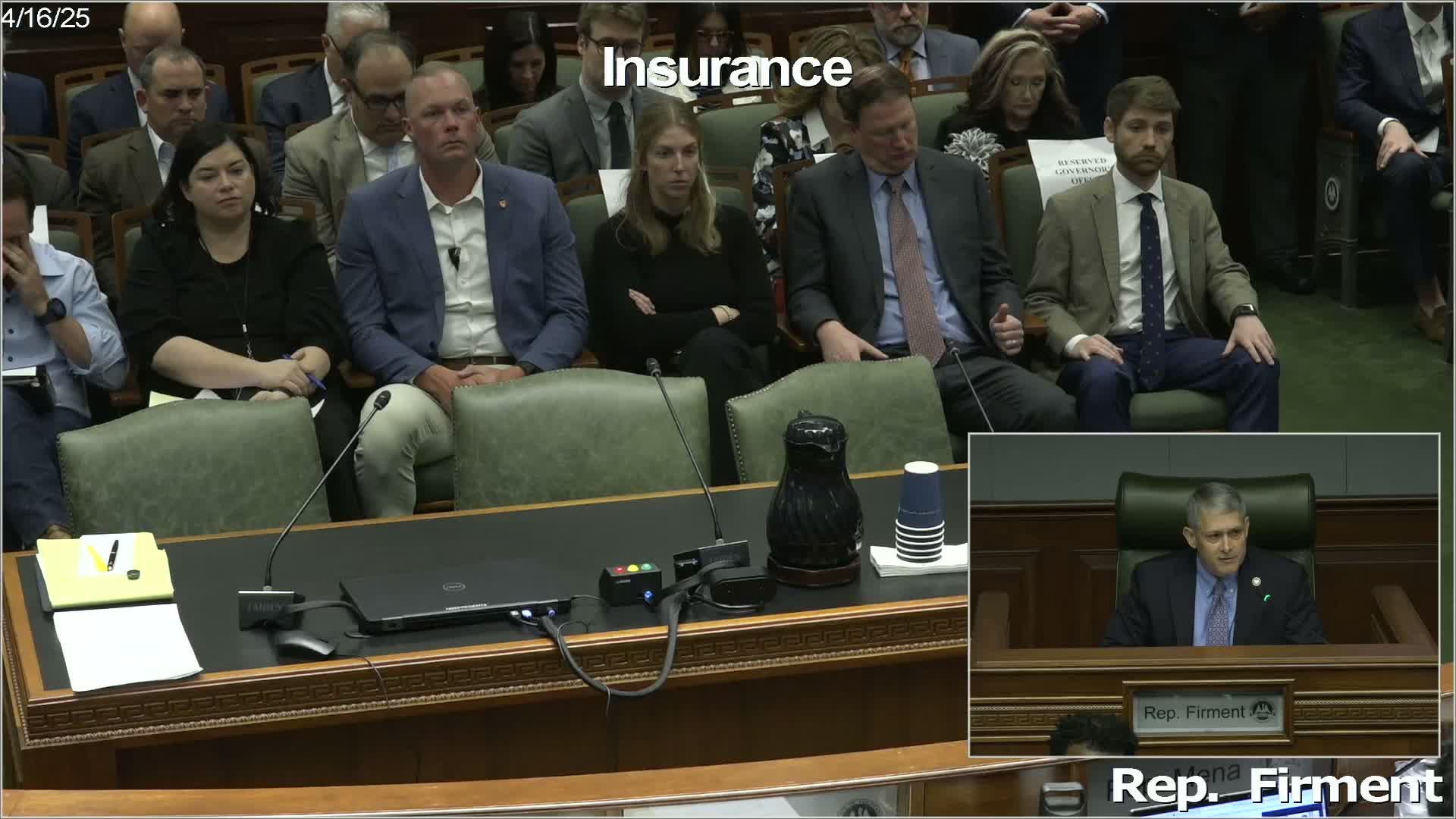
Committee action: Vice Chair Brown offered amendment set 1265; the committee adopted that amendment by roll call (tally reported as 12 yays, 3 nays). Later the committee voted to report HB 576 with the adopted amendments (roll call result reported as 13 yeas, 4 nays). The bill, as amended, would let the commissioner evaluate and disapprove filings as “excessive” under the new definition, authorize interim rates and permit escrow of contested premiums pending final resolution.
What’s next: HB 576 passed from committee with amendments and will move to further consideration in the House. The committee record shows substantial disagreement about likely market effects; the commissioner and industry representatives said the change risks raising regulatory uncertainty, while supporters said greater oversight is needed to ensure promised savings reach consumers.
Ending: Lawmakers on the committee said they will continue to question implementation details — including how the commissioner will apply actuarial standards, how interim rates would be set and how appeals would be handled — as the bill moves through the process.