Get Full Government Meeting Transcripts, Videos, & Alerts Forever!
Get email alerts on the School Health Diabetes topic
No spam. Unsubscribe anytime.
Committee advances bill to expand early type 1 diabetes detection in schools
Summary
Senate Bill 26, sponsored by Senators Gerald Boudreaux and Richie Edmonds, was reported favorable after testimony about early detection of type 1 diabetes and plans to coordinate with schools and the Department of Health.
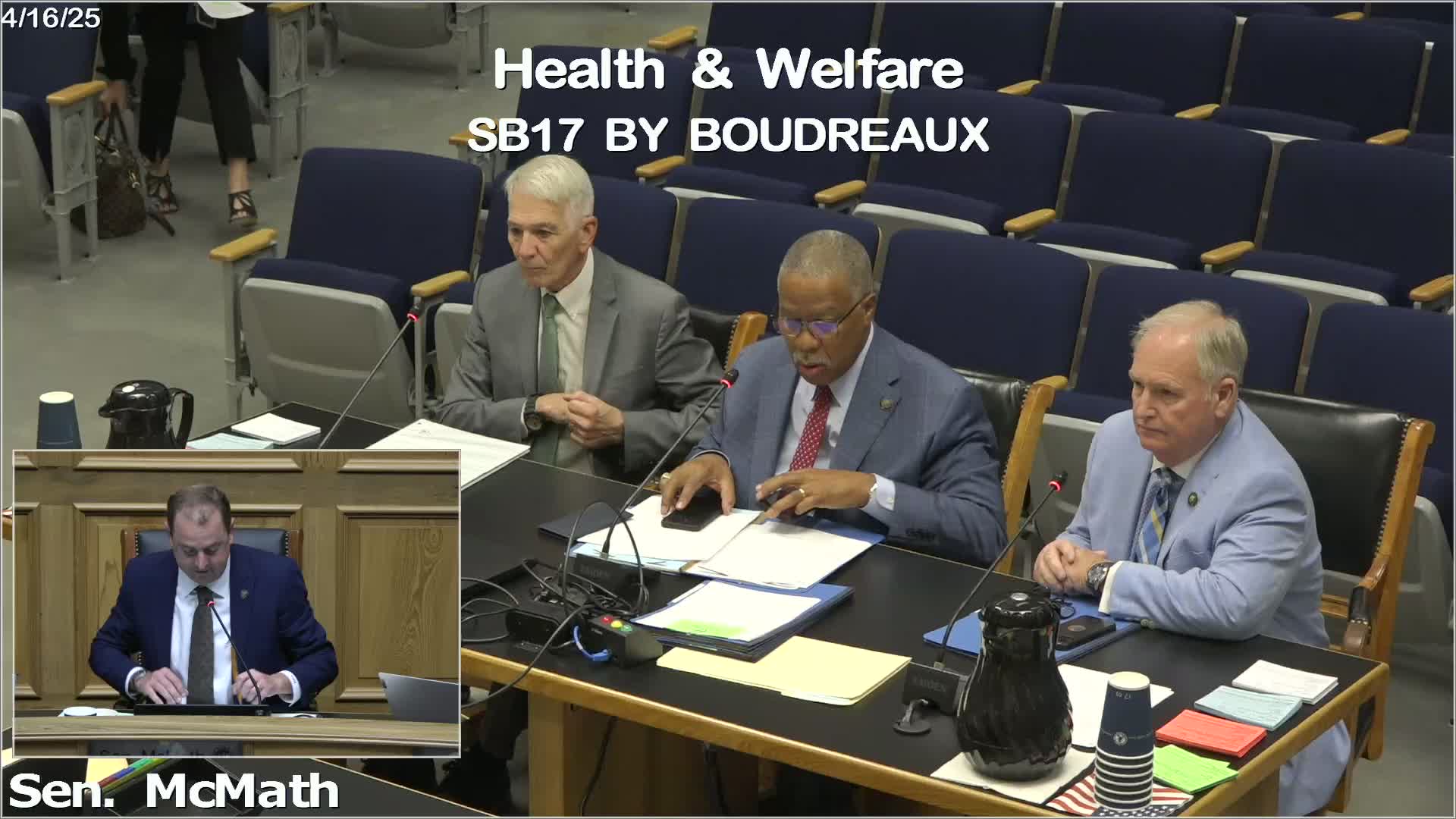
Senators Gerald Boudreaux and Richie Edmonds presented Senate Bill 26 to the Senate Committee on Health and Welfare on April 16, proposing measures to increase early detection of juvenile type 1 diabetes through school-based awareness and screening initiatives.
Senator Edmonds described a family experience to illustrate the stakes: his grandson was diagnosed at age 7 and the diagnosis “changed our entire family's life,” Edmonds said. He called for increased awareness in schools and among teachers so warning signs such as excessive thirst, weight loss and fatigue are recognized sooner.
Dr. Abraham, a physician at the committee table, told senators that type 1 diabetes is an autoimmune disease that can present rapidly in children and that early detection can prevent life-threatening complications such as diabetic ketoacidosis and intensive-care admissions. “If we can head this off, if we can discover the problem before it gets to that point… it will change lives significantly,” Dr. Abraham told the committee.
Senators discussed practical barriers raised in testimony and public comment, including access to continuous glucose-monitoring sensors, insurance coverage and Transportation Security Administration screening problems for patients using devices. Senator Luno moved to report SB 26 favorable; the motion carried by voice vote with no objections.
Committee members read several written support cards into the record. The bill was reported favorable and will proceed to the Senate floor.