Get Full Government Meeting Transcripts, Videos, & Alerts Forever!
Get email alerts on the Marine Metagenomics Biotech topic
No spam. Unsubscribe anytime.
Lecturer highlights metagenomics and marine biotechnology as sources of new medicines and tools
Summary
The seminar emphasized metagenomics' revelations about microbial diversity in oceans, novel marine‑derived compounds with biomedical potential, and risks posed by biodiversity loss and overfishing.
A university lecturer told the President's Lecture Series that metagenomics and marine microbiology are revealing vast, previously hidden diversity that could yield new biomedical compounds and research tools.
The point matters because genomic and metagenomic surveys now find most microbial species in seawater cannot be cultured, and sequencing environmental DNA can identify population structure, functional genes and novel natural products with medical applications.
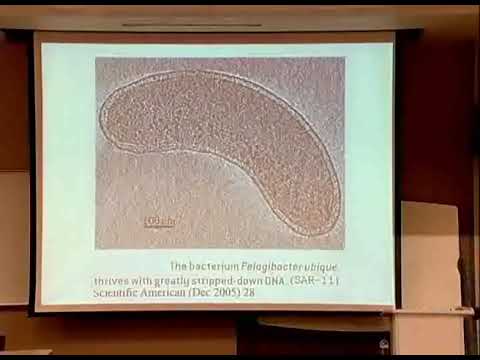
The lecturer said a single teaspoon of seawater contains large microbial populations, and roughly 1 percent of those species have been cultured and described. With modern DNA sequencing, genomics, metabolomics and proteomics, researchers can profile mixed microbial communities. The lecturer cited the Sargasso Sea sequence releases in 2005 and work by Ed DeLong characterizing depth‑stratified microbial populations (for example, roughly 20% unique DNA at 40 feet versus 35% at 200 feet in some studies).
Applications discussed included marine‑derived pharmaceuticals and molecular probes: antiviral and anticancer compounds isolated from marine sponges and other organisms; polymerases from vent organisms now used by biotech firms; and furanones from microbiota shown in field trials to reduce biofouling and, in mouse models, to reduce gram‑negative lung infections. The lecturer also described engineered materials inspired by nacre (the nautilus shell) and sensor networks such as NEPTUNE and NEON for long‑term ocean and ecological monitoring.
The lecturer warned that commercialization is still early stage and said the loss of biodiversity — for example, overfishing and declining cod and salmon stocks — threatens potential discovery. She said it would be “a tragedy if we destroy that which we have not even named, studied, or even understood.”
The lecture concluded by placing marine biotech in a conservation context: preserving marine diversity supports both ecosystem health and future biomedical discovery.