Get Full Government Meeting Transcripts, Videos, & Alerts Forever!
Get email alerts on the Ev Charging topic
No spam. Unsubscribe anytime.
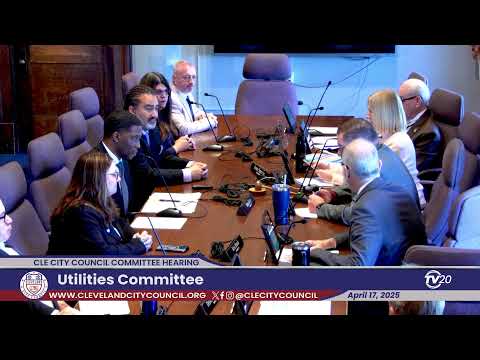
Committee amends EV charging ordinance to cap spending, tables original bill
Summary
A substitute ordinance giving the director of public works authority to hire consultants to manage city-owned EV charging stations, set user fees and create a dedicated revenue fund was amended by the Utilities Committee on April 17 to include a $100,000 "not to exceed" cap on purchases and contracts.
A substitute ordinance giving the director of public works, on behalf of the Office of Sustainability, authority to hire consultants to operate city-owned electric vehicle charging stations, set user fees and create a dedicated revenue fund was amended by the Utilities Committee on April 17 to include a not-to-exceed spending cap.
The committee added language limiting purchases and contracts tied to the charging program to $100,000 without additional legislative approval, and then tabled an earlier, related ordinance (1329-2024) that had been on the agenda.
The amendment was proposed and moved on the committee floor and adopted after discussion about how revenue and spending would be handled. Chairman Casey led the committee’s consideration; the administration said the ordinance creates a revenue fund in which fees collected from station users will be deposited and used to pay vendors and operating costs. "Those fees will be put into that fund, and they'll be used to pay the third party vendor who manages this system for us," said Director O'Keefe of the Office of Sustainability.
Committee members asked for specifics about scope and risk. Committee members were told the ordinance covers four locations with five charging stations (two ports per station) that already exist or are soon to be installed, and that stations and equipment already were paid for or are imminent. The administration said the contract term is three years with two one-year renewal options (total potential term five years). The administration estimated parts could cost as little as about $300 for a minor repair and said complete replacement of a charging station—an event the administration described as unprecedented—could run about $5,000 per unit.
Council members repeatedly pressed for fiscal limits and clarity about what sources may be used to pay for maintenance. One committee member proposed a $50,000 annual ceiling; the committee ultimately approved an amendment inserting a $100,000 "not to exceed" cap into the section of the ordinance authorizing purchases and contracts. Council members clarified that the cap limits the amount the administration may spend from the dedicated fund without returning to council for approval; it does not restrict the amount of revenue the city may collect into the fund.
The administration said finance had set up the revenue fund (fund number corrected in the legislation to 109981) and that no certification of funds was required at the time of the hearing. Committee members also asked whether the city currently operates EV fleet vehicles; Director O'Keefe said the city has a small number of EVs assigned to building and housing and to utilities and that those are fueled at a city-only charging station.
After adopting the amendment, the committee tabled ordinance 1329-2024 at the request of a council member. The substitute ordinance (503-2025) with the newly inserted not-to-exceed language remains under committee consideration.
Questions raised during the hearing that the administration said it would follow up on included: a ward-by-ward list of other city properties under consideration for chargers; an inventory of existing city EVs with assignments, models and performance tracking; and confirmation of the fund number and how the board of control would set user pricing and oversee contracts.
No formal ordinance adoption occurred in committee; the recorded actions were the amendment to the substitute ordinance (approved) and tabling of ordinance 1329-2024 (tabled).