Get Full Government Meeting Transcripts, Videos, & Alerts Forever!
Get email alerts on the Indigenous Sustainability Energy Food Security topic
No spam. Unsubscribe anytime.
Winona LaDuke urges land-based sustainability, criticizes coal and nuclear, outlines White Earth energy and food work
Summary
At a University of Montana President’s Lecture Series event in Missoula, Winona LaDuke urged a shift from extractive economies to land-based, intergenerational stewardship, criticized coal and nuclear energy plans, and described White Earth Reservation initiatives on energy conservation, wind, biodiesel and seed recovery.
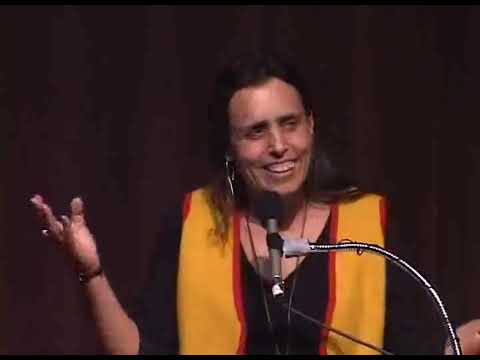
Winona LaDuke, an Ojibwe enrolled member of the Mississippi Band and executive director of Honor the Earth, urged Missoula attendees Thursday to embrace land-based, intergenerational approaches to sustainability and described steps her White Earth community has taken on energy and food security.
LaDuke opened by describing Indigenous, cyclical worldviews and the “creator’s law” that she said should guide human behavior and resource use. “It is possible to have a world without emperors,” she told the audience, arguing that modern, linear approaches such as trading pollution credits, heavy reliance on fossil fuels, and monocultural agriculture are unsustainable.
The talk focused on three interlinked challenges LaDuke identified as defining the coming decades: climate change, peak oil and food security. She criticized what she called federal and corporate responses that rely on “clean coal” or nuclear power, and said large-scale coal and nuclear plans overlook local impacts, including water use and community health. “There is no such thing as clean coal,” she said, and described longstanding opposition to uranium mining and nuclear technologies in Indigenous communities.
Why it matters: LaDuke framed the issues as immediate and practical for tribal communities and wider society — not only moral arguments. She described concrete steps taken by the White Earth Land Recovery Project and the tribal government to reduce dependence on imported fuels, lower energy costs, and rebuild local food systems.
Details from White Earth: LaDuke said an energy audit of her reservation showed roughly 8 megawatts of demand and that the tribe spends about a quarter of its local income on energy — higher than the U.S. average. The tribe’s response, she said, started with conservation and low-tech solar heating, moved toward a local wood economy where appropriate, and then examined biofuels and community-scale wind. White Earth installed a small wind turbine in 2002 and planned larger installations, including a 750-kilowatt turbine and additional 250-kilowatt units. The reservation has also piloted biodiesel for buses and school vehicles and revamped a school-lunch program to increase local, traditional foods.
Food and seeds: LaDuke highlighted efforts to restore heritage seed varieties and protect culturally significant foods. She described a multi-year struggle to stop genetic-engineering trials of wild rice in Minnesota and said heritage varieties can be far more nutritious than industrial hybrids — noting, for example, that some Potawatomi limas grown near her community measured higher in antioxidants and nutrients than grocery-store varieties. “Genetically engineered wild rice — those phrases should not appear together,” she said, explaining concerns about contamination of lakes where wild rice grows.
Q&A highlights: In response to audience questions, LaDuke said federal mismanagement of tribal assets — referenced as the Indian (trust) accounts — has deprived many communities of capital and that resolution would be “justice, not charity.” Asked about protection of traditional medicines and intellectual property, she said Indigenous knowledge systems are often undervalued and that communities should craft reciprocal, locally controlled arrangements to prevent over-harvesting and commercial appropriation. On regional coal projects such as Desert Rock and other coal-fired plants, she said tribes and communities face water and health trade-offs and urged that renewables and efficiency be prioritized alongside any economic transition.
Context and examples: LaDuke described broader patterns she sees nationally — a waste-management industry built on linear consumption, a large prison population tied to social policy, and an industrial food chain highly dependent on fossil fuels — and contrasted those with the local economies she advocates: diversified seed stocks, local processing, and community-based energy. She referenced NAGPRA (the Native American Graves Protection and Repatriation Act) and the recent United Nations Declaration on the Rights of Indigenous Peoples as markers of broader legal and cultural change.
Ending: LaDuke closed by calling on the audience, especially young people, to act: “Do something of consequence. Don’t be mediocre,” she said. She remained for a short question-and-answer session and a scheduled book signing in the lobby.
Sources: Remarks and audience questions at the University of Montana President’s Lecture Series event, Missoula, Nov. 13, 2008; Winona LaDuke, executive director, Honor the Earth, and founding director, White Earth Land Recovery Project.