Get Full Government Meeting Transcripts, Videos, & Alerts Forever!
Get email alerts on the Holocaust Perpetrators topic
No spam. Unsubscribe anytime.
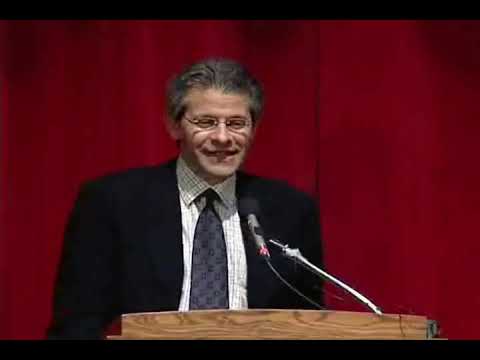
Goldhagen argues ordinary Germans were willing executioners in University of Montana lecture
Summary
In a public lecture in Missoula, historian and author Daniel Jonah Goldhagen argued that most German perpetrators of the Holocaust acted from assent rooted in antisemitism rather than coercion or obedience, citing postwar interrogations, victim testimony and courtroom evidence.
Daniel Jonah Goldhagen, author of Hitler's Willing Executioners: Ordinary Germans and the Holocaust, told a University of Montana audience in Missoula that the central explanation for the Holocaust is widespread assent among German perpetrators rooted in antisemitism, not coercion or mere obedience.
Goldhagen opened by saying his research shifted attention from Nazi institutions and leadership to the individual agents who carried out mass murder. He said postwar legal investigations and victim testimony provide a substantial, underused documentary record about perpetrators and their motives.
"Beating Jews was our daily bread," Goldhagen told the audience, citing repeated postwar testimony and photographic records. He said German investigative files list more than 300,000 names suspected of service in institutions of killing and that, by his definition, at a minimum "a hundred thousand Germans" knowingly participated in killing or facilitating killings, while the number of slave laborers in the German economy exceeded 7,000,000, and there were at minimum 10,000 concentration camps across Europe.
Goldhagen said several commonly offered explanations for perpetrator behavior — coercion, blind obedience to authority, peer pressure or bureaucratic routinization — do not fit the empirical record. He pointed to units raised from ordinary-age cohorts, many of whom were not SS or Nazi Party members, who nonetheless volunteered for and carried out killing operations with documented zeal. He emphasized that prosecutors and subsequent legal inquiries found no cases where a German perpetrator was seriously punished for refusing to kill Jews.
"The Jew was not considered by us to be a human being," Goldhagen quoted a postwar testimony by a member of a police battalion to summarize perpetrators' attitudes recorded in interrogations and memoirs. He also described how Germans photographed killings, kept albums of images as "mementos," and sometimes held celebrations tied to killing operations — evidence he said supports his conclusion that many perpetrators approved of what they were doing.
In a question-and-answer session, audience members pressed Goldhagen on broader causes. He said antisemitism provided necessary recruitment and cultural groundwork but that prejudice alone is not sufficient to produce genocide; it requires political leadership and the capacity to act. He described the Nazi rise and Germany's wartime power as part of a singular confluence that made the scope of the Holocaust possible.
Goldhagen also responded to questions about comparisons with other genocides and the role of intellectuals, saying scholarship shows educated elites and professionals were frequently complicit in antisemitic ideas and policy. He said his broader work examines the origins and character of the antisemitism that motivated perpetrators and that comparative study of other genocides is under way.
Gerald Fetz, dean of the College of Arts and Sciences, introduced Goldhagen and noted the lecture was the ninth in the University of Montana President's Lecture Series; Fetz credited Professor Richard Drake and President George M. Dennison for supporting the program. After the lecture Goldhagen invited audience questions and acknowledged exceptions to his general argument while urging the audience to weigh the documentary record presented.