Get Full Government Meeting Transcripts, Videos, & Alerts Forever!
Get email alerts on the Arts Culture topic
No spam. Unsubscribe anytime.
Playwright John Guare tells Missoula audience dialogue is the playwright’s primary tool
Summary
At a University of Montana President’s Lecture Series event in Missoula, playwright John Guare argued that dialogue is the essential instrument for building a play’s dramatic world, illustrated with examples from Shakespeare, Chekhov, Harold Pinter and Guare’s own work. A question-and-answer period and book signing followed the lecture.
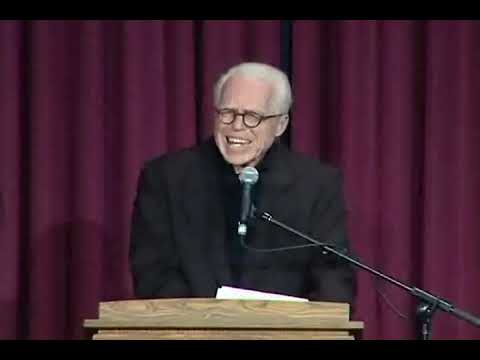
John Guare, the American playwright and council member of the Dramatists Guild, told an audience at the University of Montana in Missoula that “the main tool the playwright has is dialogue,” and that dialogue serves as the gateway to the play’s interior life.
Guare opened by placing the playwright’s task in musical terms: “When dialogue is working right, meaning when the play is cooking, it is music,” he said, arguing that dialogue supplies the clues actors, directors and designers use to build a theatrical world.
Guare used examples from theatre history to show how dialogue shapes dramatic meaning. He cited Shakespeare’s sensory metaphors, Harold Pinter’s compressed clues in The Homecoming, and Anton Chekhov’s stage directions in The Cherry Orchard as instances where brief lines or placement of a scene reveal a character’s emotional world. He also referenced his own plays — including House of Blue Leaves, 6 Degrees of Separation and a musical adaptation of Two Gentlemen of Verona — to illustrate how dialogue and theatrical form interact in performance.
Guare discussed differences between stage and screen, saying plays rely on the shared, immediate relationship between actors and an audience in a single space, while film uses more naturalistic means. He described theatrical devices that invite the audience to accept a premise — for example, a stage announcement that makes an older performer read as a young ingenue — and argued those devices depend on the audience’s willingness to accept the “costume” the play offers.
During a question-and-answer period, Guare described his writing process, including an instance in which new factual information allowed him to finish a play that had long felt like a mystery. He also addressed how monologues function when an audience understands its role: he said a monologue works when “the audience is your best friend” and can act as a confidant to the speaking character.
Greg Johnson, artistic director of the Montana Repertory Theatre and a professor in the University of Montana drama-dance program, introduced Guare and told attendees the evening would include a lecture, a question-and-answer session, and a book signing in the lobby. Guare closed by saying he would sign books after the event.
The lecture placed practical guidance for playwrights — be generous with clues, make dialogue serve the play’s world — alongside reflections on theatre’s civic and emotional effects, such as how art can heighten audience awareness of larger political and social issues.
After the lecture Guare took questions from the audience and then moved to the lobby for a book signing, as announced in the introduction.