Get Full Government Meeting Transcripts, Videos, & Alerts Forever!
Get email alerts on the Noise And Nuisance topic
No spam. Unsubscribe anytime.
Caldwell County first reading approves racetrack ordinance changes amid resident complaints about noise and unbuilt sound barrier
Summary
The Caldwell County Board of Commissioners voted 3-2 on first reading to approve amendments to the county ordinance that govern hours and operations at Tri County Motor Speedway, moving the measure to a required second reading while commissioners and community members continued to debate noise impacts and whether promised sound barriers have been installed.
The Caldwell County Board of Commissioners voted 3-2 on first reading to approve amendments to the county ordinance that govern hours and operations at Tri County Motor Speedway, moving the measure to a required second reading while commissioners and community members continued to debate noise impacts and whether promised sound barriers have been installed.
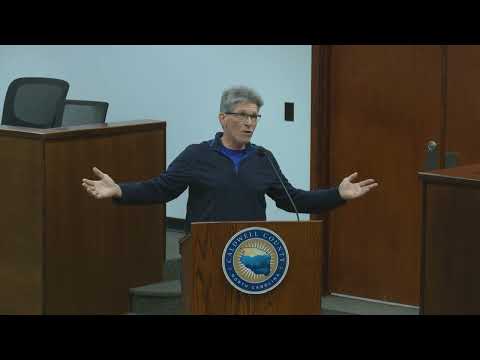
Supporters of the Speedway told the board the track is an economic and community asset and said its operators have helped residents in times of need. Neighbors who live within a mile of the track urged the board to require stronger noise controls and to delay any permanent change until a previously promised sound barrier is built.
The proposed amendment would add the month of February to the existing operating season, extend the season into the first 15 days of November, permit test‑and‑tune sessions on weekdays Monday through Thursday between 10 a.m. and 4 p.m., and allow race‑day activity to start at 10 a.m. (race end times would remain at or before 11 p.m. under the proposal). Interim county staff read the ordinance language into the record and said test‑and‑tune events are defined as laps and settings adjustments with “no racing, no crowd, and no money taken at the gate.”
Why it matters: Commissioners said the change is meant to help the Speedway attract visiting professional teams and boost revenue, which supporters say helps the business survive and improves the county’s recreational offerings. Opponents said the weekday test sessions — even without crowds — would increase noise during daytime hours and cut into sleep for shift workers, lower adjacent property values and disrupt nearby Baynton Elementary School.
Residents described repeated, recent examples of noise they say exceeds tolerable levels. “It’s quite loud with the test and tune stuff…[it] affects our quality of life,” said C.R. (Charles) Davis, who told commissioners his home is about six‑tenths of a mile from the track and that his wife works from home. Jackie McCool, another neighbor, said she “is the one that sleeps in her basement” on race nights because she cannot sleep at her main level. Michael Rawls, who said he lives about six‑tenths of a mile away and supports racing, asked the board to require completion of the sound barrier and to require before‑and‑after noise testing tied to any barrier installation.
Track supporters, including longtime residents and people who said they had close personal ties with the Higgins family that operates the Speedway, asked commissioners not to close the business. Rex Brown told the board the family “ministered to me deeply” during a personal tragedy and described the owners’ community work; Daniel Duncan, who lives across from the track, warned about traffic, large trailers and broken bottles on neighborhood roads when events are held.
At the meeting Speedway representative Ronnie “Crate” Payne told commissioners he has been trying to secure contractors to install the promised sound barrier but said scheduling and contractor availability have slowed the work. Payne asked for the board’s flexibility so the Speedway can host visiting teams that request weekday testing. Several residents pushed back, urging either a requirement that the barrier be completed before the ordinance changes take effect or that the board postpone action until the barrier is built.
Commissioners debated balance between business viability and neighbor impacts. Commissioner Church said he supports the track’s operation but opposed the ordinance as presented, citing the unbuilt barrier and potential overreach: “If we approve this ordinance the way it’s written today I think we lose the balance,” he told the board. Commissioner Potter said the county must strike a compromise that protects both the business and neighboring households.
Decision and next steps: Commissioner Branch moved to adopt the ordinance amendments (first reading); the motion passed 3-2. Because state law requires two separate readings for ordinances that impose criminal penalties, the amendment is not final and will return to the board for a second reading at a subsequent meeting. Several commissioners and residents indicated they would revisit the matter at or before the second reading to confirm whether the sound barrier has been installed and to consider further modifications.
What the ordinance change would allow (as described at the meeting): it would permit weekday test‑and‑tune activity Monday–Thursday between 10 a.m. and 4 p.m., extend the season to include February and the first half of November, and allow race‑day activity to begin at 10 a.m. (race end times would remain at or before 11 p.m.). Meeting testimony noted that these changes would not expand weekend race events beyond existing limits.
Local context and outstanding items: Speakers said the barrier was promised last year and remains incomplete; multiple residents asked the board to make barrier completion a condition of approving expanded operating hours. Commissioners and Speedway representatives discussed contractor availability for installing tall poles and barrier material. Neighbors said they will provide the board with additional decibel readings and asked the county to require both before‑and‑after noise monitoring tied to any barrier installation.
The board scheduled a second reading required by state law; if the commissioners approve the ordinance again it will become county law. Commissioners and staff said they expect follow‑up conversations — including potential ordinance tweaks or conditional language — before final adoption.
Ending: The debate illustrated the tradeoffs small jurisdictions face between supporting local businesses and addressing quality‑of‑life concerns for adjacent neighborhoods. The ordinance change passed first reading; residents and commissioners said they will press for concrete evidence — barriers in place and verified noise tests — before the measure is finalized.